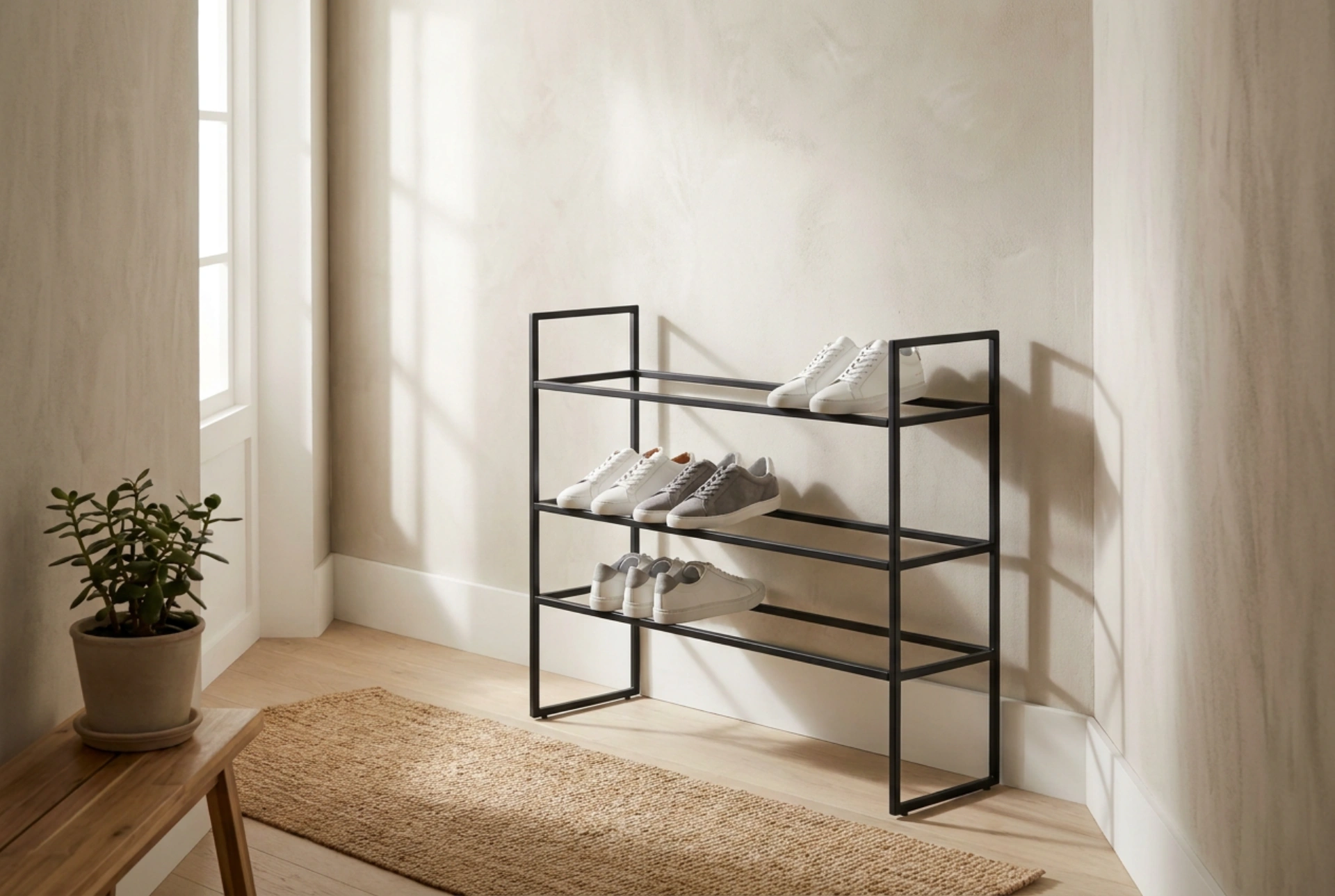


Narrow hallways demand furniture that minimises physical obstruction while maximising utility, making slimline metal shoe racks the ideal choice for tight entryways. By understanding the material properties of metal and the physics of airflow, you can transform a cramped transit zone into a highly functional, dry, and clean space.
The Science of Airflow: Why Metal Outperforms Wood
When wet or damp footwear is stored in enclosed wooden cabinets, the lack of air circulation creates a microclimate high in relative humidity. This environment accelerates the growth of bacteria and fungi, leading to unpleasant odours and material degradation. Metal shoe racks, particularly those featuring open mesh or parallel wire slats, resolve this issue through passive ventilation.
Air flows freely around the entire shoe, facilitating rapid evaporation of residual moisture from the soles and upper materials. Furthermore, unlike porous wood or medium-density fibreboard (MDF), powder-coated steel or aluminium does not absorb water, mud, or organic compounds. This non-porous surface prevents the harbouring of microscopic pathogens and ensures that odours do not cling to the furniture itself over time.
Optimising Spatial Geometry in Tight Corridors
In narrow hallways, every centimetre of floor clearance impacts safety and ease of movement. To maintain an unobstructed path of at least 70 to 80 centimetres, the physical depth of the shoe rack must be kept to a minimum. A metal rack with angled shelves is highly effective here, as it reduces the horizontal projection of the footwear by utilising vertical and diagonal space.
To maximise capacity on a narrow metal rack, implement the alternating placement technique. By positioning shoes in a heel-to-toe pattern, you neutralise the wider flare of the heel counter against the narrower toe box. This physical arrangement allows you to fit up to 20% more footwear across the same shelf width without crowding, which would otherwise restrict natural air drying.
Preventing Corrosion and Protecting Floor Surfaces
Metal furniture in entrance zones is routinely exposed to harsh conditions, including water, road salt, and abrasive grit. While modern steel racks are typically powder-coated, any deep scratch can expose the underlying iron to oxygen and moisture, initiating oxidation (rust). To protect your investment, conduct regular maintenance checks.
- Apply a protective barrier: Treat non-coated or wear-prone joints with a thin layer of silicone-based polish or carnauba wax to repel water and salt.
- pH-neutral cleaning: Avoid acidic or highly alkaline detergents which can strip protective clear coats. Clean the metal frame using a microfibre cloth dampened with a solution of warm water and a few drops of pH-neutral liquid soap.
- Manage dripping water: Place a shallow, easily washable plastic or silicone tray beneath the bottom tier to catch melting snow and mud, preventing water from pooling on sensitive floorboards.
Tactical Loading: Weight Distribution and Order of Operations
A tall, narrow metal rack has a higher centre of gravity, which can pose a stability risk in high-traffic zones. To ensure structural equilibrium, load the rack based on weight density. Heavy winter boots and leather shoes should occupy the lowest shelves, which lowers the overall centre of mass and prevents tipping. Lightweight trainers, sandals, and slippers should reside on the upper tiers.
Additionally, group your footwear by usage frequency. Position daily-wear shoes on the middle shelves for rapid, ergonomic access without excessive bending. Off-season or specialized sports footwear should be stored elsewhere, or strictly relegated to the absolute bottom shelf behind a protective drip tray to keep the main transit zone clear of clutter.