

Using a handheld garment steamer is the fastest way to relax fabric fibers and remove wrinkles without the structural pressure of a traditional iron. Understanding how steam interacts with different textiles ensures your clothes look pristine while preserving their structural integrity.
The Molecular Science of Steam and Wrinkle Removal
To use a garment steamer effectively, it helps to understand the chemistry of fabric creasing. Natural fibers like cotton, linen, and wool are made of polymer chains held together by hydrogen bonds. When fabric is crushed during wear or storage, these bonds break and reform in distorted positions, creating visible wrinkles. Steam delivers a highly effective combination of high temperature and moisture. Water molecules penetrate the fiber polymer chains, breaking the temporary hydrogen bonds. Simultaneously, the heat makes the polymer chains highly mobile. As you gently pull the fabric taut, the fibers realign into their natural, flat state. As the fabric cools and dries, new hydrogen bonds form in this relaxed configuration, keeping the garment smooth and refreshed.
Mastering the Tension and Movement Technique
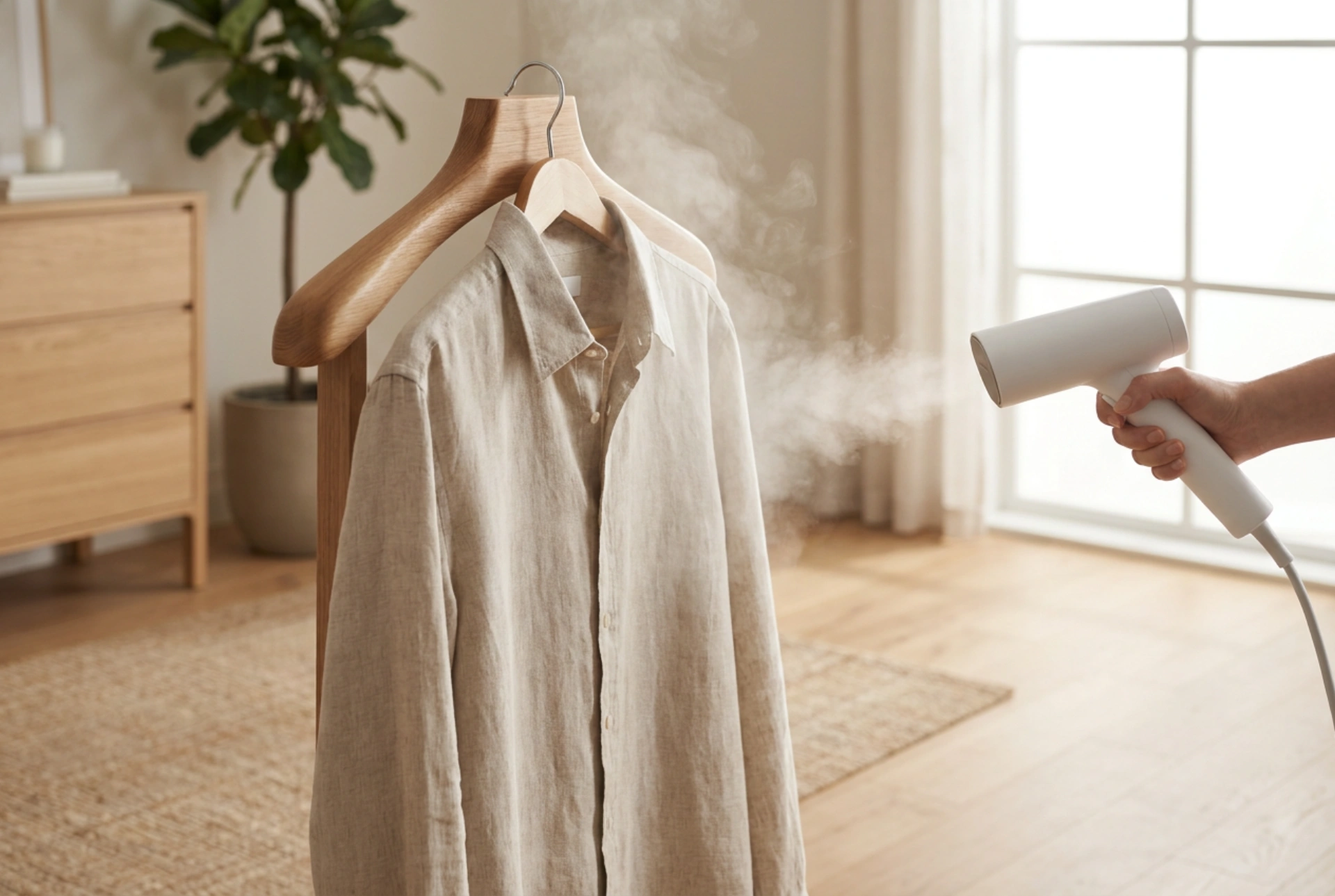
Effective steaming is not just about blowing hot air at a hanging shirt; it requires physical tension and controlled movement to achieve a crisp finish. Always hang the garment on a sturdy hanger at eye level to allow for comfortable, ergonomic movement. To steam, grip the hem of the clothing with one hand and pull it downward to create a flat, taut surface. Hold the steamer nozzle directly against robust fabrics like cotton or linen, moving it in slow, upward strokes. Moving from bottom to top allows the rising steam to pre-soften the fabric above the nozzle, making the process highly efficient. For delicate garments, hover the nozzle about one to two centimeters away from the surface to prevent water-spotting and heat damage.
Fabric Rules: Tailoring Steam to Different Materials
Different fibers react uniquely to moisture and heat, requiring specific handling techniques to prevent fiber degradation:
- Linen and Heavy Cotton: These dense, crystalline plant fibers require maximum steam volume and direct contact. Apply firm tension and run the plate directly along the inside of the garment to relax stubborn creases.
- Wool and Cashmere: These protein fibers are highly sensitive to dry heat but benefit greatly from moisture. Steam helps swell the fibers, restoring their natural loft and removing odors. Hover the steamer slightly away from the fabric and use a clean brush attachment to open up the pile.
- Silk and Synthetics: Polyester, nylon, and silk have low melting points. High, direct heat can glaze or melt synthetic fibers. Always steam these garments from the inside out, keeping the nozzle a safe distance away and working quickly to avoid localized overheating.
The Optimal Order of Operations for Daily Grooming
To avoid re-introducing wrinkles while handling the garment, follow a strict sequence. Start with the structured parts: the collar, the shoulders, and the sleeves. For sleeves, pull the cuff taut and run the steamer along the seam to create a soft, natural drape rather than a sharp, artificial crease. Next, move to the back of the garment, working from the top down, and finish with the front panels. Once the steaming process is complete, do not put the garment on immediately. The fabric still contains residual moisture and heat, meaning the hydrogen bonds are still malleable. Let the garment hang undisturbed for five to ten minutes to cool and dry completely, locking the smooth finish in place and preventing immediate re-creasing during wear.