

Maximising storage in tight living spaces requires utilising vertical surfaces and structural under-utilised zones. Selecting and positioning small clothes racks or wall hooks is not merely an aesthetic choice, but a practical exercise in managing daily foot traffic and material preservation.
Optimising the Entryway Transit Zone
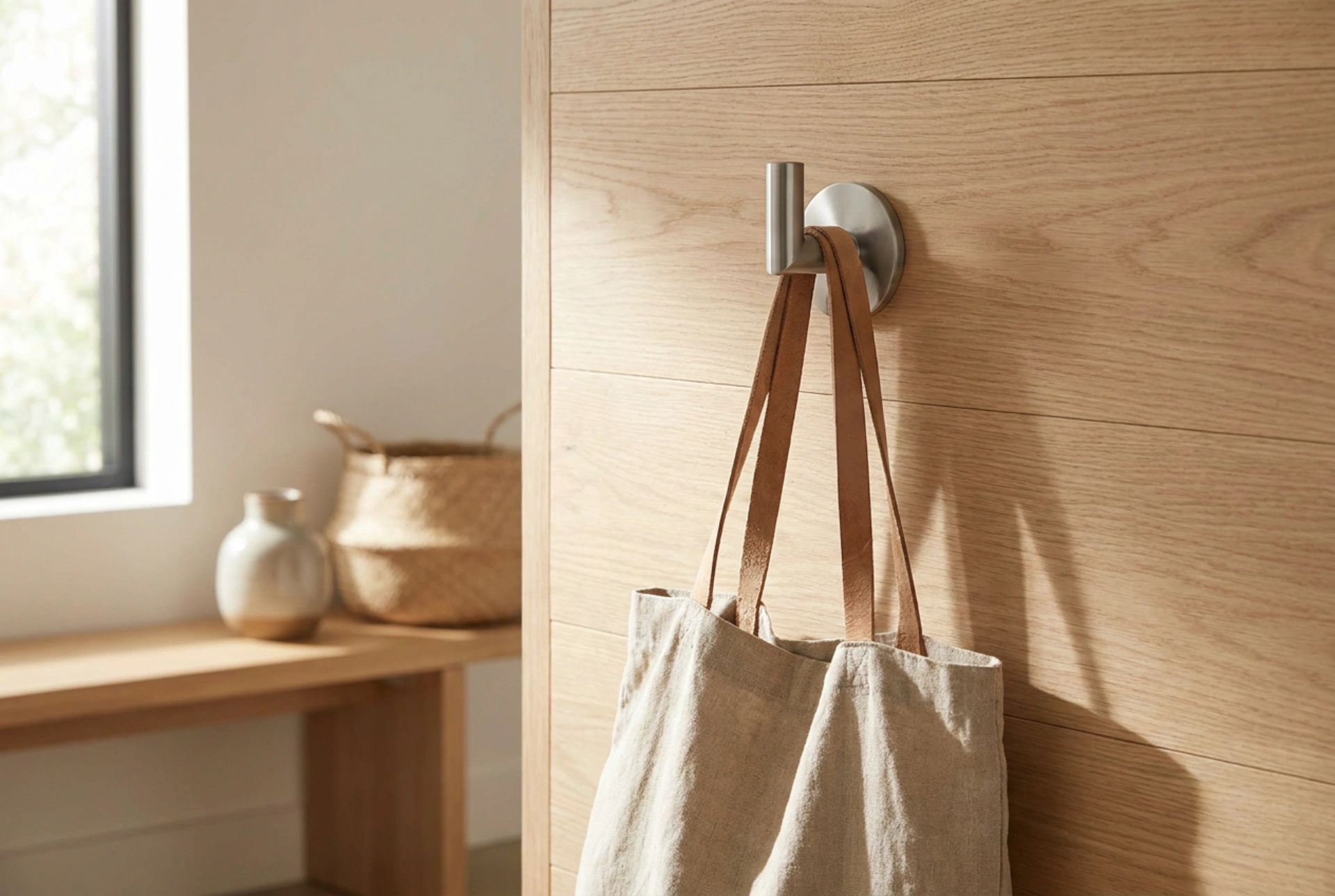
The entrance of any home serves as a high-velocity transition zone where outer garments, bags, and accessories must be temporarily deposited. A bulky wardrobe can restrict movement, making a small wall-mounted rack or a series of single hooks the ideal solution. When installing hooks in this area, physical spacing and height are critical to preventing clutter overlap.
To avoid a crowded visual and physical profile, space individual hooks at least 15 to 20 centimetres apart. This distance allows heavy winter coats or structured bags to hang naturally without pushing adjacent items off their mounts. Position the primary hooks at shoulder height (approximately 150 to 160 centimetres from the floor) for ergonomic access, and consider a lower secondary tier at 100 to 110 centimetres for children or bags.
The Science of Airing Out: Bedroom and Bathroom Niches
Hanging garments is not just about organisation; it is crucial for textile maintenance. Worn clothes that do not yet require washing retain body heat and minor moisture. Placing them directly into a closed wardrobe traps humidity, creating a microenvironment conducive to bacterial growth and musty odours. A small, strategically placed wall hook allows natural airflow to dissipate moisture and cool the fibres.
- Behind the door: This under-utilised clearance zone is perfect for lightweight garments. Ensure a door stopper is installed to prevent the hardware from impacting the drywall.
- Bathroom humidity zones: Towels and bathrobes require rapid evaporation to prevent mildew. Matte-finish or powder-coated metal hooks resist the corrosive effects of high humidity better than untreated wood or low-grade steel.
- Wardrobe flanks: Mounting a small rail to the exterior side panel of a wardrobe utilises dead space for preparing the next day's outfit, reducing morning decision fatigue.
Kitchen and Utility Room Efficiency
In kitchens and utility rooms, small hanging solutions keep essential textiles dry and clean. Aprons, oven gloves, and microfibre cloths must remain easily accessible but isolated from food preparation surfaces to maintain hygiene standards. Placing a small rail near, but not directly over, heat sources utilises gentle convection currents to dry damp tea towels quickly.
When selecting hooks for these areas, material science matters. Smooth, non-porous surfaces like stainless steel or powder-coated aluminium are highly recommended. These materials do not absorb grease, are easy to sanitise with standard surfactants, and resist the chemical degradation caused by kitchen oils and cleaning agents.
Mounting Mechanics: Ensuring Structural Stability
A small hanger is only as reliable as its mounting mechanism. To prevent damage to your walls and ensure longevity, you must match the fastening hardware to the wall substrate:
- Drywall (Plasterboard): Drywall has low shear strength. Never rely on simple screws. Use hollow-wall anchors or toggle bolts which expand behind the board to distribute the load across a larger surface area.
- Solid Masonry (Brick or Concrete): These materials offer high compressive strength. Use nylon expansion plugs paired with high-tensile steel screws to ensure a tight friction fit within the pre-drilled hole.
- Adhesive Mounts: Only suitable for lightweight items (under 1.5 kg) on completely smooth, non-porous surfaces like ceramic tiles. Ensure the substrate is thoroughly degreased with isopropyl alcohol before application to allow the polymer adhesive to bond correctly.