

Positioning a built-in oven at the correct height is not just a matter of aesthetic symmetry; it is a critical decision that influences ergonomic safety, thermal efficiency, and physical strain on the body. Placing the appliance at an optimal level minimizes the risk of burns and reduces lumbar load during daily culinary tasks.
The Biomechanics of Kitchen Ergonomics: The Elbow Rule
The human body is biomechanically optimized to handle weight closest to its center of gravity. When lifting heavy, hot dishes from an oven, the mechanical leverage exerted on the lumbar spine increases exponentially the further you bend or stretch. To achieve optimal ergonomics, the base of the oven cavity should align with the user's elbow height, or slightly below it.
The standard formula for calculating this height is based on the primary user's elbow level when standing. Measure the distance from the floor to the underside of the elbow bent at a 90-degree angle. Subtracting 10 to 15 centimeters from this measurement determines the perfect height for the oven's lowest wire rack. This placement ensures that you can slide heavy trays in and out without bending the spine or raising the shoulders, allowing the larger muscle groups of the arms and legs to bear the weight safely.
Thermal Physics and Safety: Heat and Steam Dispersion
When an oven door is opened, a rapid thermodynamic exchange occurs. Hot air, which is less dense than the surrounding room air, rises immediately, accompanied by steam. If an oven is installed too high—specifically, if the top of the appliance exceeds the eye level of the user—this convective rush of heat and steam is directed straight toward the face and eyes.
To prevent thermal injury, the control panel and top edge of the oven should remain below eye level. Ideally, the top of the appliance should not exceed 140 to 145 centimeters from the floor. This allows the rising hot air to disperse safely above the breathing zone while maintaining clear visibility of the food inside without requiring the user to look upward, which can cause cervical spine strain.
Comparing Under-Counter and Tower Installations
Traditionally, ovens were placed beneath the cooktop. While this saves counter space, it requires constant bending and lifting at awkward angles. From a materials science and safety standpoint, under-counter installation increases the risk of accidents, particularly when handling heavy cast-iron cookware or high-capacity baking dishes. The physical effort required to lift a weight from a height of 30 centimeters off the floor is significantly higher than lifting the same weight from 90 centimeters.
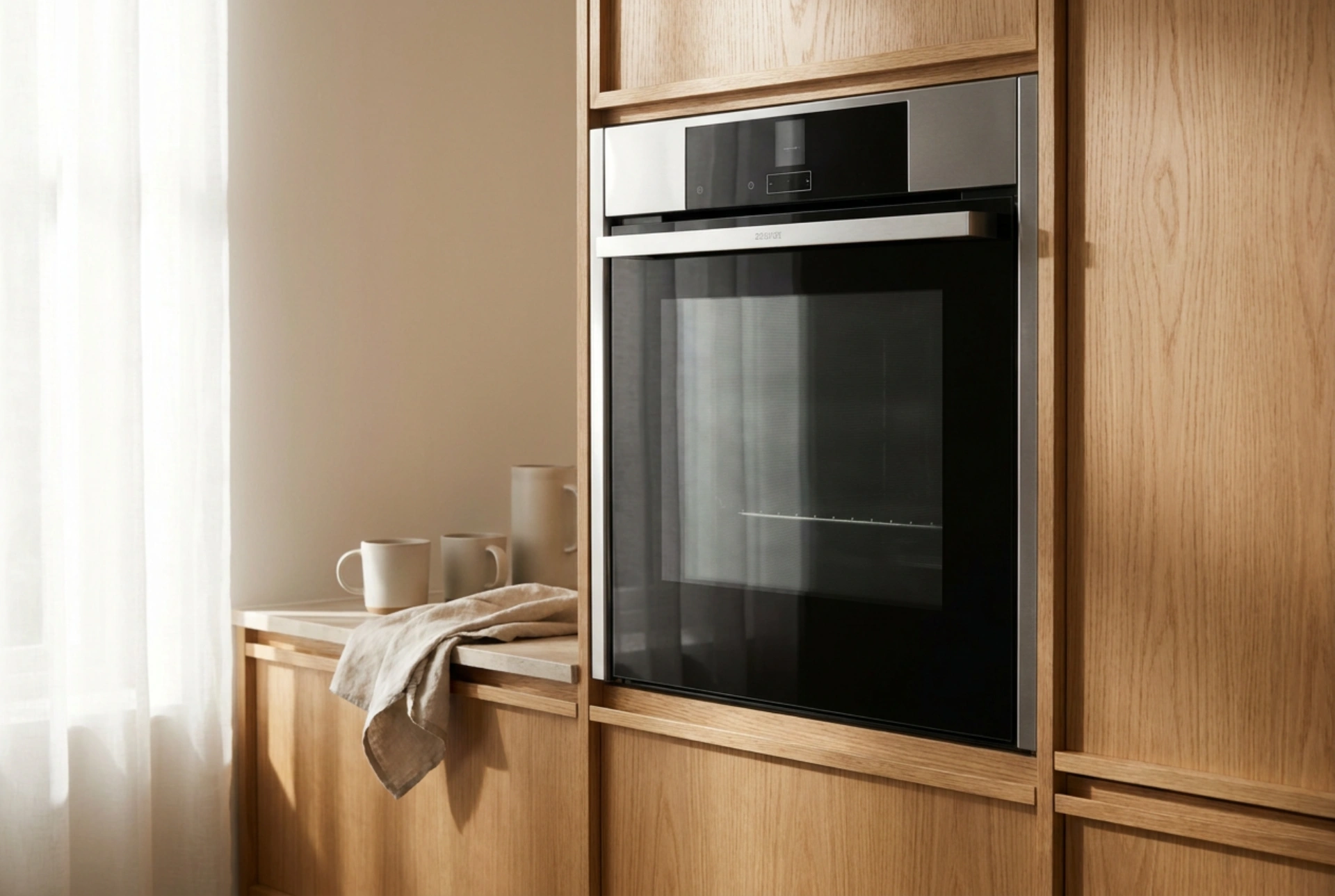
The modern tower installation (or eye-level cabinet integration) positions the oven at a mid-height range of 80 to 90 centimeters from the floor to the bottom of the appliance. This configuration is highly recommended for households where cooking is frequent. It eliminates the need to squat or bend, keeping the spine in a neutral alignment. Furthermore, it keeps the hot glass door out of reach of small children and pets, representing a significant safety advantage.
Determining the Precise Height: Standard Metric Frameworks
While personal height is the ultimate guide, kitchen planners use standardized structural dimensions to ensure compatibility with modular cabinetry. For a standard user height of approximately 165 to 175 centimeters, the following parameters offer the best balance of safety and comfort:
- Oven bottom height: 82 to 90 centimeters from the finished floor level. This aligns the main baking rack with the natural grip height of the hands.
- Control panel height: 130 to 140 centimeters. This keeps all controls fully visible and within easy reach without requiring high shoulder abduction.
- Double oven configurations: When installing a double oven, the midpoint between the two cavities should be aligned with the elbow height, ensuring that both the upper and lower units remain within a manageable physical reach.
Structural Considerations for Cabinetry and Surrounding Materials
Installing an oven at eye level requires careful consideration of the surrounding cabinetry materials. Modern built-in ovens generate significant external heat, which is typically managed by integrated cooling fans. This fan expels warm air through vents, usually located above the door. The surrounding cabinet walls must be constructed of heat-resistant materials capable of withstanding temperatures up to 90 degrees Celsius without warping. Additionally, ensuring a minimum ventilation gap behind the appliance is crucial for preventing heat buildup and maintaining the appliance's thermal efficiency.