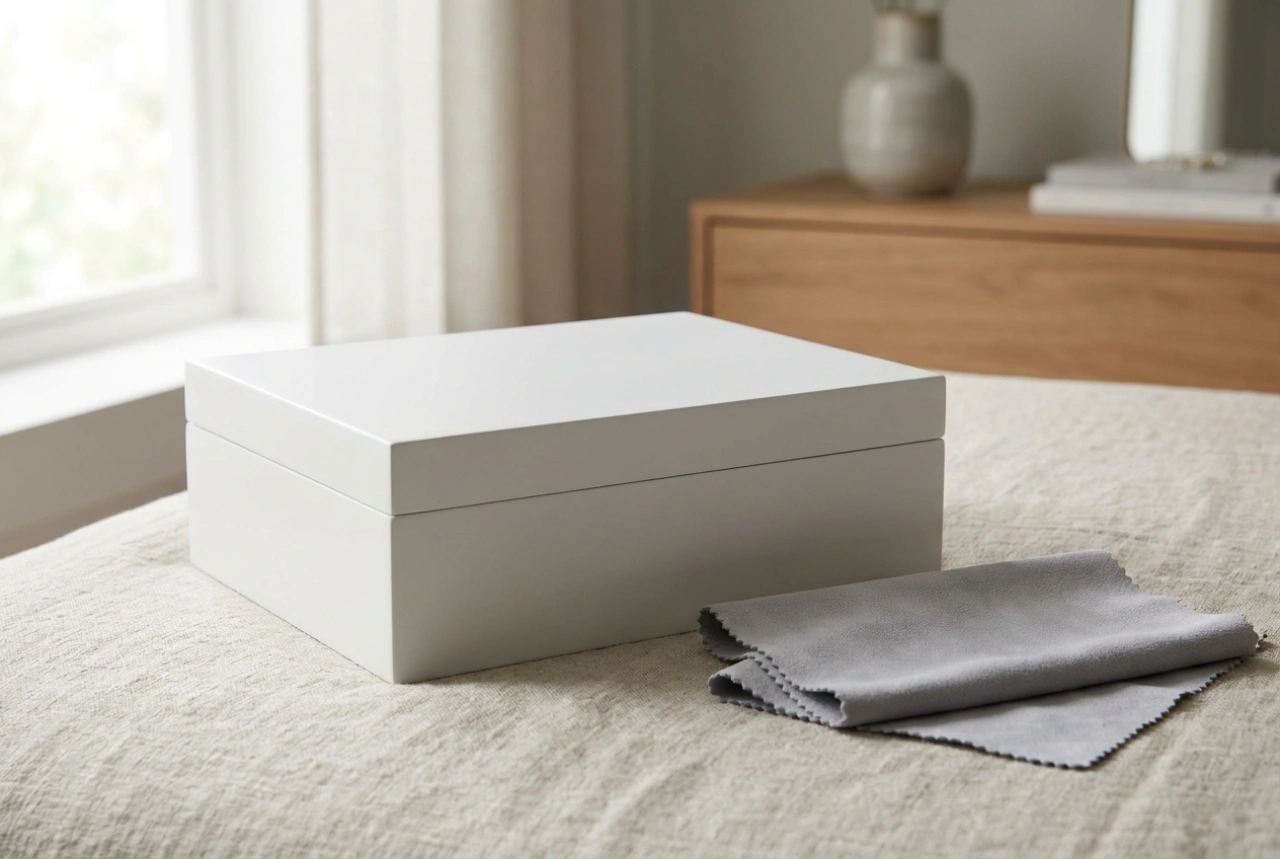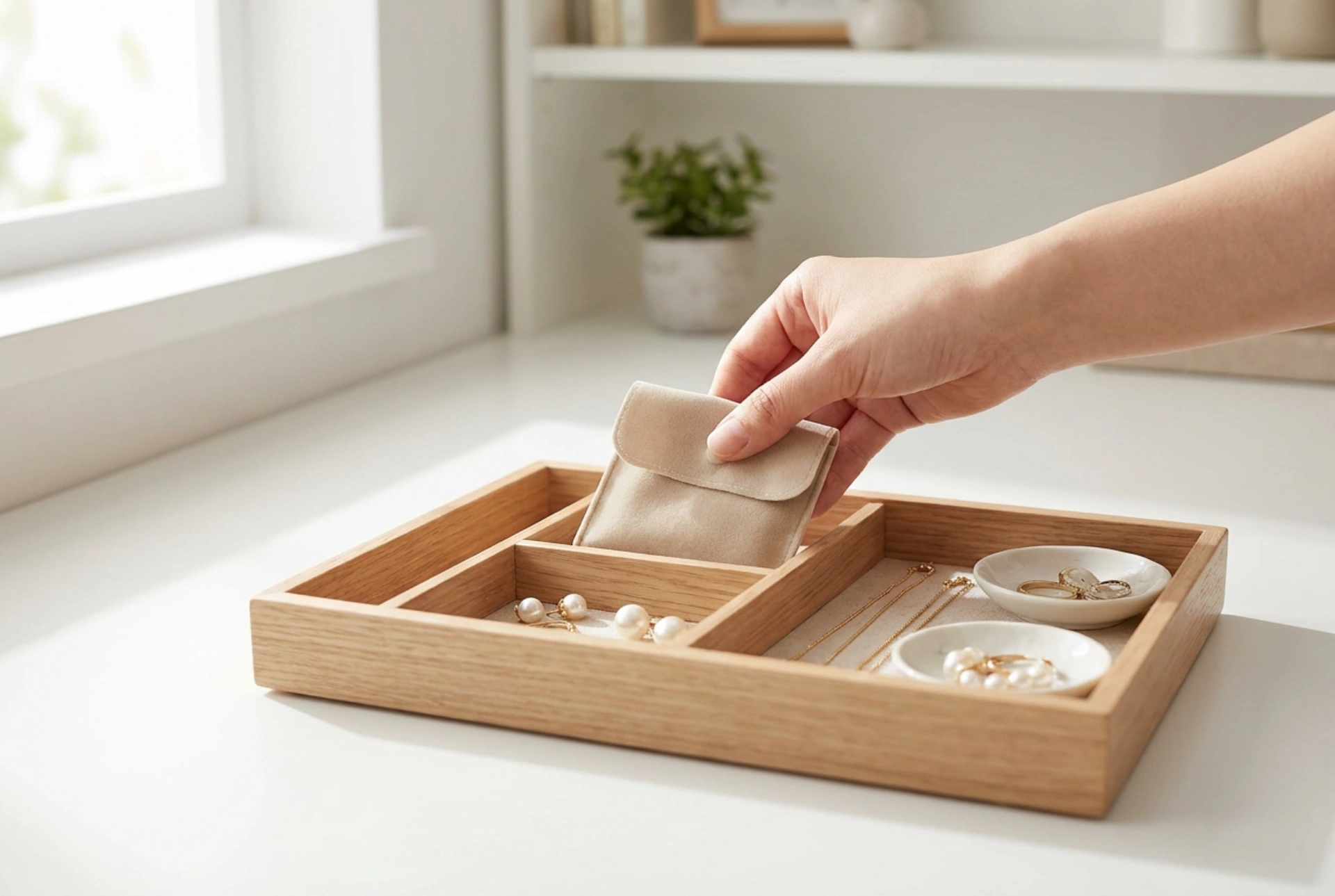


Introducing children to the concept of organisation often fails when we ask them to tackle large, chaotic spaces like entire playrooms or deep toy chests. Utilising a compartmentalised jewellery box provides a scaled-down, highly tactile system that teaches the fundamental principles of classification, spatial limits, and order.
The Cognitive Science of Micro-Organisation
Large storage bins encourage dumping, which creates visual noise and increases cognitive fatigue in young minds. In contrast, a jewellery box with designated drawers, slots, and hooks serves as a micro-organiser. This smaller scale allows a child's brain to easily process visual information and make quick decisions about where an item belongs.
From a developmental perspective, sorting small items—whether actual jewellery, polished stones, beads, or tiny keepsakes—strengthens spatial reasoning. When a child decides to place a ring in a padded slot or a necklace on a hook, they are engaging in active categorisation. This process builds mental models of structure and order that can later be scaled up to wardrobes, desks, and larger living environments.
Categorisation by Physical Properties
To make the sorting process intuitive, teach your child to classify items based on universal material science principles. Instead of arbitrary rules, guide them to group items by their physical attributes:
- Material and Texture: Separate metallic objects from textiles or wooden trinkets. This teaches sensory discrimination and helps children understand how different materials interact (e.g., keeping metals away from moisture to prevent oxidation).
- Geometric Fit: Match the shape of the object to the shape of the compartment. Long, linear items like chains belong on hooks or in long channels to prevent tangling (minimising physical friction and mechanical knotting). Circular items like rings or coins fit into small, square compartments or padded rolls.
- Frequency of Use: Place daily items in the most accessible upper compartments, while seasonal or delicate pieces go into lower, covered drawers. This introduces the concept of ergonomic efficiency.
The Order of Operations: A Step-by-Step Routine
Tidiness is not an abstract state of mind; it is a physical sequence of movements. Teach your child a systematic routine to maintain their organiser, turning it into an effortless habit:
Step 1: The Systematic Extraction
Before sorting, empty the compartments onto a clean, flat surface. This step prevents partial organisation, which often leads to hidden clutter. Grouping everything in one open field makes the total volume of items visually clear.
Step 2: Structural Pairing
Using a precise pincer grasp, the child should pick up one item at a time. This movement develops fine motor skills and encourages deliberate decision-making. Untangle any joined items carefully, explaining how friction and overlapping shapes cause knots.
Step 3: Precision Placement
Instruct the child to lower each item gently into its corresponding slot. Avoid throwing or dropping, which can damage delicate felt linings or scratch polished surfaces. Aligning the physical orientation of the item with the compartment walls maximises space utilisation.
Understanding Physical Capacity and Spatial Limits
One of the most valuable lessons a micro-organiser teaches is the physical law of finite space. A compartment has a strict volume limit; once it is full, it cannot accept more items without causing disorganisation or physical damage.
When a drawer becomes crowded, use it as a practical lesson in curation. Teach the child to evaluate which items no longer serve a purpose or fit their interests. By removing one item to make room for another, children learn the concept of equilibrium and prevent accumulation. This prevents the habit of hoarding and teaches them to respect the boundaries of their physical environment.