

Optimising the position and use of a magnetic knife holder is a precise science that directly impacts workshop safety and the longevity of your cutlery. By understanding the physics of magnetic attraction, friction, and ergonomic design, you can transform your kitchen countertop into a highly secure, efficient workspace.
The Physics of Magnetic Retention
To secure cutlery effectively, a magnetic block relies on the magnetic permeability of the steel alloy. High-quality kitchen knives are typically forged from martensitic stainless steel or high-carbon steel, both of which are highly ferromagnetic. However, the strength of the hold is not determined solely by the magnet inside the block; it is governed by the contact surface area and the coefficient of friction. When a knife is placed on a magnetic surface, the magnetic flux must penetrate the blade deep enough to create a strong shear hold. If the surface is damp or oily, the friction coefficient drops significantly, allowing gravity to overcome the magnetic pull and causing the knife to slide down. Always ensure both the blade and the block surface are completely dry before docking.
Strategic Positioning and Ergonomics
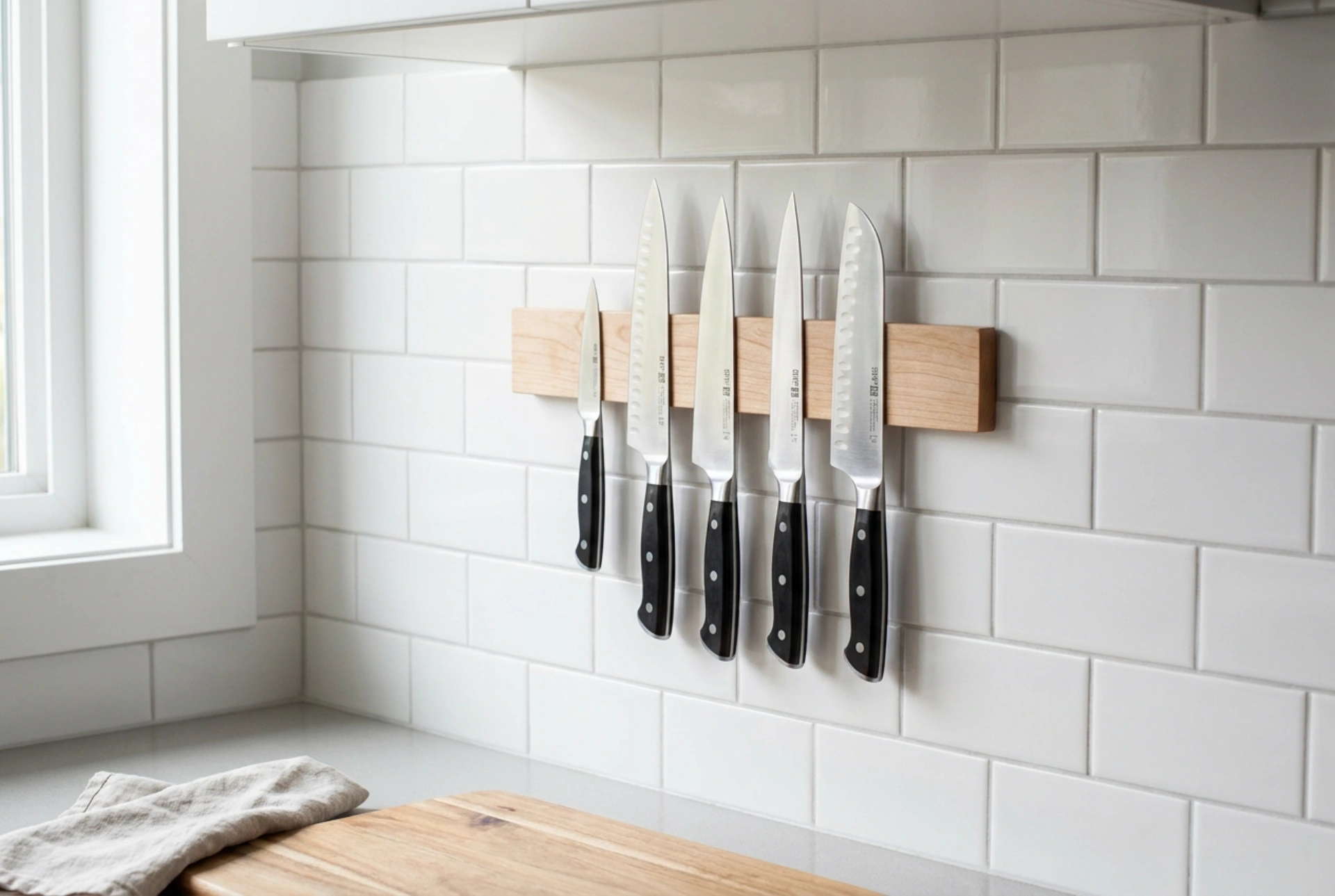
The placement of a magnetic block—whether free-standing on the worktop or mounted to a wall—must align with human ergonomics and movement patterns. Wall-mounted strips should be installed at a height of 130 to 150 centimetres from the floor, positioning them clearly above the workspace but below eye level. This height prevents accidental contact while preparing food and keeps the sharp implements out of reach of children. If utilising a free-standing magnetic block, position it in a low-traffic zone of the countertop, ideally in a corner or adjacent to a backsplash. This prevents elbows, plates, or chopping boards from knocking against the knife handles. Never position a magnetic storage unit directly above a heat source like a hob, or near a sink. High temperatures can degrade the adhesive bonds holding the internal magnets, and constant steam accelerates iron oxidation, leading to micro-corrosion along the delicate cutting edge of your knives.
The Spine-First Roll Technique
How you attach and detach a knife from a magnetic block determines its lifespan and your safety. Slamming the flat of the blade or, worse, the delicate cutting edge directly onto a magnetic surface causes micro-fractures in the steel structure, leading to premature dullness or chipping. To prevent this, always apply the spine-first technique. When docking a knife, approach the magnetic block at a slight angle so that the thick, unsharpened spine of the blade makes contact first. Once the spine is held firmly by the magnetic field, gently rotate the blade down so the flat surface rests against the block. When retrieving the knife, reverse this motion: grasp the handle and twist it outwards, pivoting the knife on its spine to break the magnetic seal before lifting the blade away. This rotational movement requires significantly less force than pulling the knife straight off, giving you complete control over the tool at all times.
Gravity and Weight Distribution
If you are using a free-standing magnetic board, the angle of inclination is a vital safety factor. A completely vertical block relies entirely on magnetic shear strength to hold heavy blades. Opt for a block with an incline of 15 to 20 degrees. This tilt uses gravity to pull the knife's centre of mass closer to the supporting structure, significantly reducing the risk of a heavy knife pivoting or sliding off. Additionally, always organise your knives by weight. Position the heaviest knives, such as cleavers or chef's knives, closest to the centre of the block where the magnetic core is typically strongest and most stable. Lighter utility and paring knives can occupy the outer edges. This balanced distribution prevents the block from tipping over due to an uneven centre of gravity.
Material Hygiene and Care
To maintain both safety and hygiene, the material of your magnetic block must be cared for correctly. Wooden and plastic blocks are gentler on steel than bare metal tracks, but they are porous and can harbor bacteria if not cleaned. Periodically wipe down the block with a damp cloth and a mild surfactant, then dry it immediately. Avoid harsh chemical solvents or chlorine-based detergents, as these can degrade the protective oils on wooden blocks and initiate corrosion on any exposed metallic components. Ensuring the block remains clean and smooth maintains the high-friction interface necessary to keep your knives safely in place.