

Fogged car windows are the direct result of temperature differentials and high relative humidity inside the cabin, which compromises driving visibility and safety. Understanding how moisture absorbers capture water vapor at the molecular level allows you to select the right material, position it effectively, and maintain it for clear glass year-round.
The Physics of Condensation Inside a Vehicle
Condensation occurs when warm, moisture-laden air inside the vehicle cabin comes into contact with the cold surface of the windshield and side windows. This drop in temperature cools the air immediately adjacent to the glass below its dew point—the temperature at which air can no longer hold all its water vapor, forcing the excess gas to transition into liquid water droplets. Factors such as wet shoes, damp umbrellas, breathing, and even microscopic leaks in door seals constantly introduce water vapor into the sealed environment of a car. To prevent this phase transition, you must lower the relative humidity inside the cabin below the threshold where condensation can form on cold glass surfaces.
How Car Moisture Absorbers Work: Material Science
Passive car dehumidifiers rely on specific materials that capture water molecules directly from the air. These materials are generally categorized by their absorption or adsorption mechanisms:
Silica Gel (Adsorption)
Silica gel consists of a highly porous amorphous form of silicon dioxide (SiO2). It works through adsorption, meaning water molecules physically adhere to the vast internal surface area of the gel's microscopic pores. Because this process is physical rather than chemical, silica gel is highly stable, non-toxic, and does not liquefy. A single gram of silica gel can have an internal surface area of up to 800 square meters, making it exceptionally efficient for its size. Once saturated, the water can be driven off with heat, making the absorber reusable.
Bentonite Clay (Adsorption)
Bentonite is a naturally occurring, chemically inert clay mineral rich in montmorillonite. Similar to silica gel, it works via physical adsorption, trapping water molecules within its layered crystalline structure. While it operates more slowly than silica gel, bentonite is highly cost-effective and environmentally friendly, performing exceptionally well in moderate humidity levels.
Calcium Chloride (Absorption and Deliquescence)
Calcium chloride is an inorganic salt with an extremely high affinity for water. Unlike silica gel, it works through chemical absorption and deliquescence. As it absorbs moisture, the solid salt chemically bonds with water molecules and eventually dissolves into a liquid brine solution. This material can absorb several times its own weight in water, making it incredibly powerful. However, because the resulting brine is highly corrosive to metals and can damage car upholstery, these absorbers must be housed in specialized, spill-proof containers.
Strategic Placement and Air Dynamics
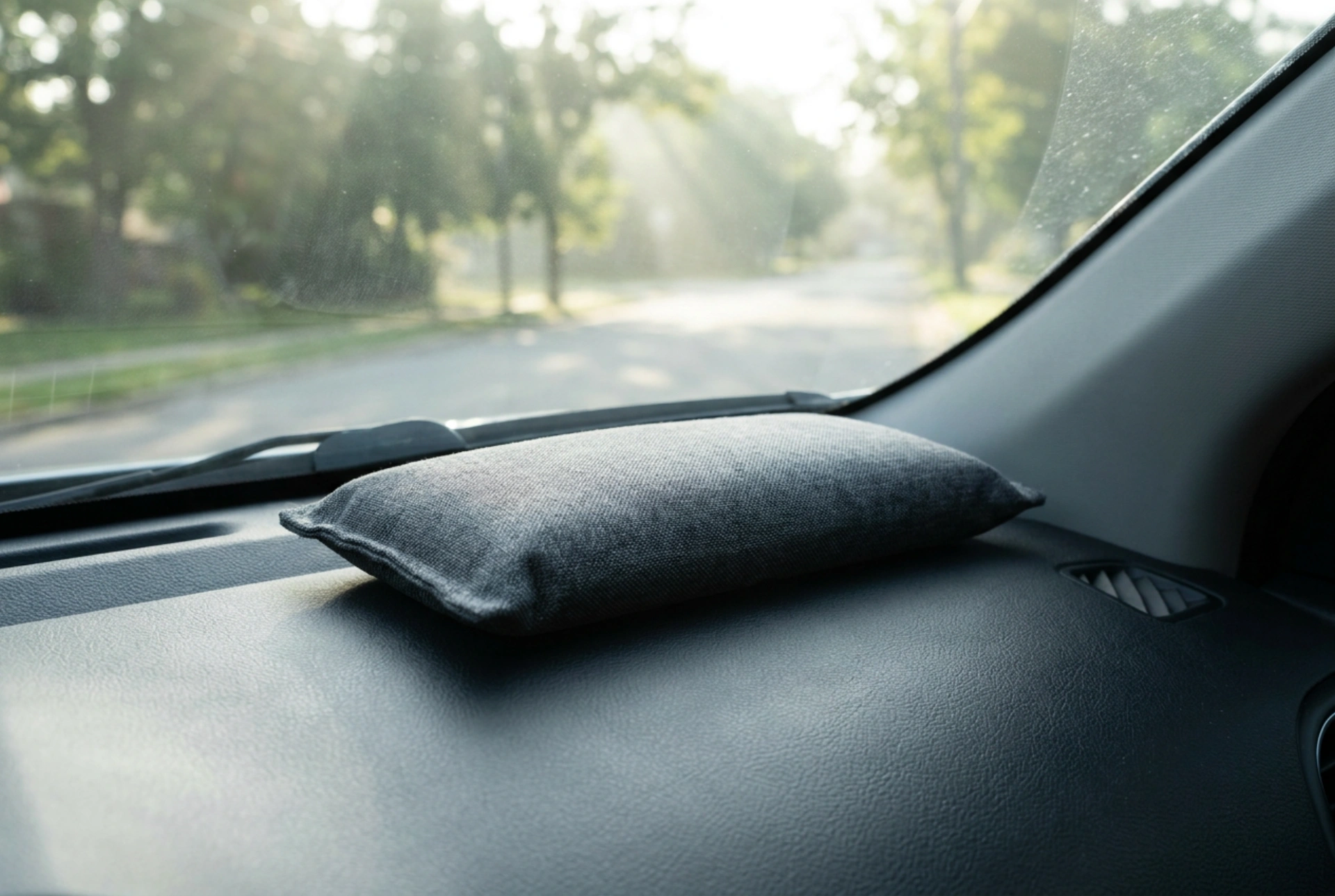
For a passive moisture absorber to work effectively, it must be placed where air circulation is highest or where condensation is most problematic. Placing a silica gel bag directly on the dashboard near the windshield allows it to intercept moisture right at the boundary layer where the temperature drop is most extreme. Alternatively, placing absorbers under the front seats targets the lower zone of the cabin where damp air often pools due to wet carpets. To maximize efficiency, combine passive absorbers with active cabin ventilation: running the air conditioning system cools the air below its dew point over the evaporator coils, stripping out moisture before the heater warms the dry air to clear the windows rapidly.
Regenerating Your Moisture Absorber
Reusable absorbers, particularly those containing silica gel, must be periodically regenerated to restore their capacity. When the material reaches saturation, the pores are full, and it can no longer pull water from the air. Regeneration involves applying heat to break the weak physical bonds between the water molecules and the silica surface. This can be achieved by placing the fabric pouch on a household radiator, in a low-temperature oven (around 100 degrees Celsius), or in a microwave for short intervals. Heating evaporates the trapped water, releasing it back into the atmosphere and leaving the dry silica gel ready to be returned to the vehicle cabin.