

Refrigerator door gaskets lose their flexibility over time, causing cold air leaks, increased energy consumption, and frost buildup. Restoring the physical properties of the rubber or silicone seal can easily be done at home using temperature control and simple chemical treatments.
The Science of Refrigerator Gasket Degradation
Refrigerator door gaskets are typically made of polyvinyl chloride (PVC) or synthetic rubber. These materials contain plasticizers—chemical additives that give the polymer its flexibility and elasticity. Over time, exposure to fluctuating temperatures, kitchen grease, and UV light causes these plasticizers to migrate out of the material. As a result, the gasket becomes brittle, loses its physical memory, and develops microscopic cracks. Additionally, the magnetic strip embedded inside the gasket can no longer pull the door tightly against the metal frame if the surrounding material has hardened and warped.
Deep Cleaning and Lipid Emulsification
Before applying any restorative techniques, the surface must be thoroughly cleaned of organic residue. Skin oils, food spills, and mold break down the elastomer matrix. However, choosing the right cleaning agent is critical to prevent further damage.
- Avoid strong solvents: Do not use alcohol, acetone, or heavy chlorinated bleach. These chemicals strip away plasticizers and accelerate the oxidation of synthetic rubber.
- Use mild surfactants: A solution of warm water and a small amount of neutral dishwashing liquid is ideal for emulsifying lipids and removing grease.
- Mild acid for sanitization: If mold is present, a 1:1 mixture of warm water and white distilled vinegar (acetic acid) can be used. Acetic acid breaks down mold spores without damaging the polymer structure of the gasket.
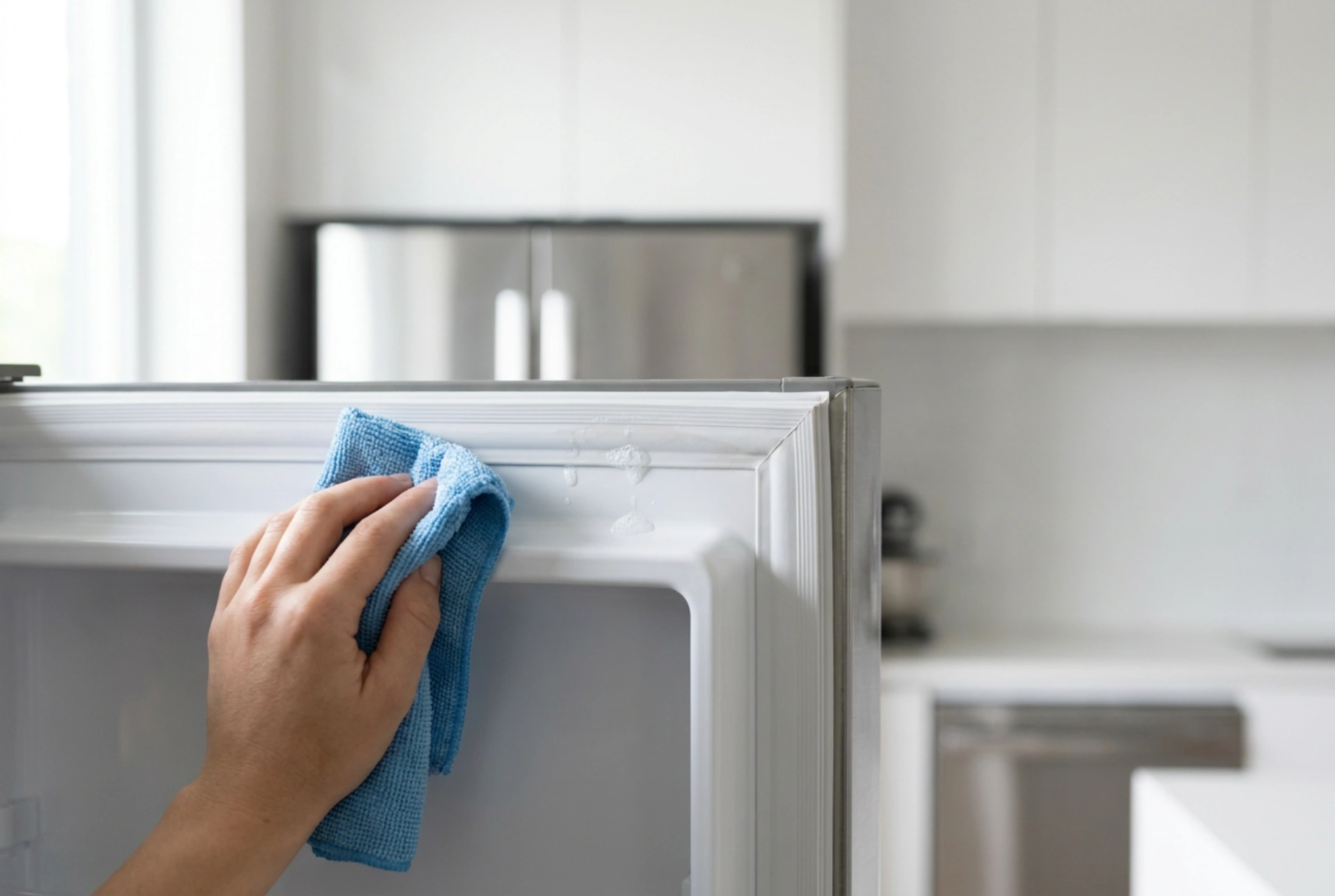
Using a soft microfiber cloth, clean deep inside the folds (the bellows) of the gasket. Ensure you wipe the surface dry with a clean cloth immediately after cleaning, as prolonged exposure to pooling water can lead to mold regrowth inside the rubber folds.
Thermal Expansion: Restoring Elasticity with Heat
To reverse the hardening of the gasket, you can utilize thermal energy. Polymers have a characteristic called "elastic memory." When heated, the intermolecular bonds relax, allowing the material to return to its original, flexible state. There are two primary methods to achieve this thermal expansion:
The Hot Water Method
Boil water and let it cool slightly to approximately 60-70°C. Using a syringe or a small spouted pitcher, carefully pour the hot water over the compressed or warped sections of the gasket. The heat will immediately soften the rubber. While the material is warm, gently massage and stretch the gasket with your fingers to reshape it so it makes full contact with the refrigerator frame.
The Convective Heat Method
Alternatively, you can use a handheld hair dryer. Set it to a medium heat setting and keep the nozzle at least 15 centimeters away from the gasket to prevent localized melting or warping. Move the dryer constantly along the stiff sections. As the rubber heats up and softens, pull the gasket outward slightly. Close the refrigerator door and hold it firmly in place for a few minutes to let the gasket cool down and adapt to the shape of the refrigerator frame.
Sealing and Preserving with Hydrophobic Barriers
Once the gasket is clean and reshaped, it must be conditioned to prevent future dehydration and oxidation. Applying a hydrophobic barrier seals the microscopic pores of the rubber, trapping moisture inside and keeping environmental degradation factors out.
Apply a very thin layer of pure silicone grease or medical-grade petroleum jelly (vaseline) to the entire surface of the gasket, focusing on the areas that make contact with the refrigerator frame. Silicone grease is highly compatible with synthetic elastomers and does not degrade them, unlike petroleum-based products on certain natural rubbers. This thin film keeps the rubber supple, prevents the door from sticking too hard (which can tear the gasket), and improves the airtight seal.
Evaluating the Seal Quality
After restoration, test the effectiveness of your work. Place a thin strip of paper between the refrigerator door and the frame, then close the door. Pull the paper outward. If you feel firm resistance, the gasket has successfully regained its seal. Repeat this test at various points around the door perimeter to ensure there are no remaining micro-gaps.