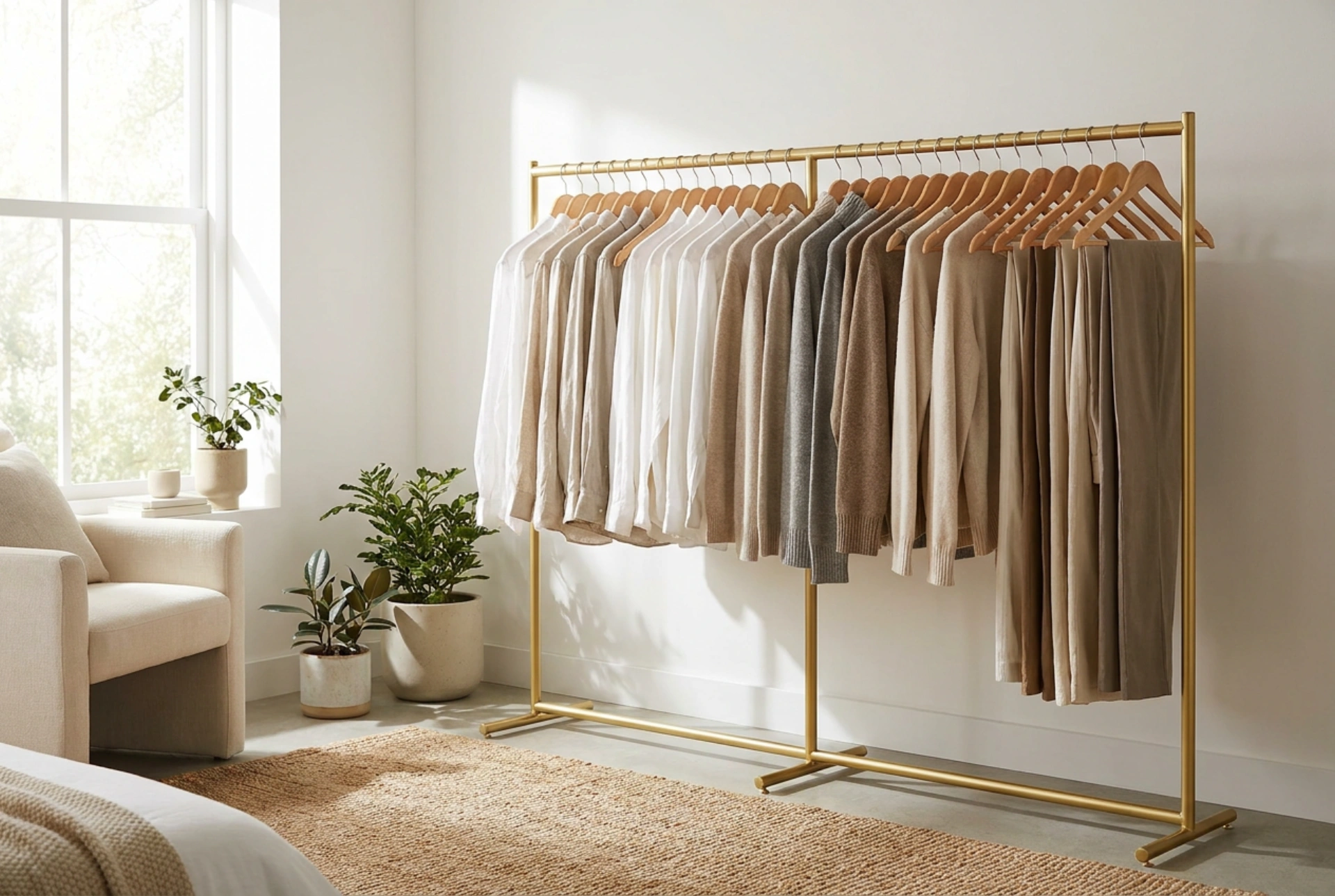


Using a freestanding gold clothes rack as an open wardrobe transforms your daily wear into a curated display, but maintaining this setup requires an understanding of structural physics and material preservation. By mastering weight distribution and protecting both the metal finish and your garments from environmental stressors, you can achieve a highly functional, damage-free clothing display.
Structural Balance and Weight Distribution
A freestanding rack is subject to the laws of gravity and leverage. Unbalanced weight distribution can lead to bowing of the top rail or, in worse cases, tipping of the entire structure. To ensure stability, always place the heaviest garments—such as lined wool coats, denim jackets, and heavy trench coats—closest to the vertical support pillars. This keeps the center of gravity low and reduces the bending moment on the center of the horizontal bar.
Lighter items, including silk blouses, linen shirts, and lightweight cotton tees, should be suspended in the middle of the rail. If your rack features a bottom shelf, use this space for heavy footwear or storage boxes. Placing weight at the very bottom increases the stability of the base, acting as an anchor that prevents the rack from wobbling when you slide hangers across the bar.
Material Protection: Preserving the Gold Finish
Whether your rack is finished with gold powder coating, brass plating, or an anodized layer, the surface is vulnerable to mechanical wear and chemical oxidation. When metal hangers slide across a metal rail, they cause friction and abrasive wear, scraping off the gold finish and exposing the raw base metal underneath to moisture and subsequent rust.
To prevent this, opt for high-quality wooden or velvet-flocked hangers with smooth, rounded hooks. Wooden hangers provide excellent structural support for garments while minimizing harsh metal-on-metal scraping. Additionally, avoid touching the gold-plated surfaces with bare, sweaty hands. Natural skin oils are acidic and can react with the metallic finish over time, leading to dullness or tarnishing. Periodically wipe down the entire frame with a dry, lint-free microfiber cloth to remove dust and oils without using abrasive chemical cleaners.
Fabric Preservation and Spatial Arrangement
Open wardrobes expose your clothes to different mechanical forces than traditional closets. Gravity exerts continuous tensile stress on hung garments. Knitted items, such as wool, alpaca, or cashmere sweaters, should never be hung on a rack. The weight of the knit pulls the fibers downward, permanently stretching the shoulders and distorting the shape of the garment. Keep these items folded on a lower shelf or in baskets.
For woven fabrics that are suitable for hanging, organize them by length and weight. Grouping garments from longest to shortest creates a clean, diagonal visual line that makes the space feel organized and deliberate. Ensure there is at least a two-centimeter gap between each hanger. Squeezing clothes too tightly together prevents air circulation, which can trap ambient moisture between the layers of fabric, leading to fiber degradation or musty odors.
Mitigating Dust and UV Exposure
The primary disadvantage of an open wardrobe is exposure to the surrounding environment. Without the protection of wooden cabinet doors, your garments are susceptible to dust accumulation and photo-degradation from sunlight. Position your gold rack away from direct window light. Ultraviolet (UV) rays break down chemical bonds in fabric dyes, causing uneven fading—especially on the shoulders of dark or natural-fiber garments.
To combat dust, run a soft-bristled clothes brush over the shoulders of infrequently worn garments once a week. This mechanically lifts settled dust particles before they can settle deep into the weave of the fabric. For seasonal items that will remain on the rack unused for months, consider using breathable cotton shoulder covers rather than synthetic plastic bags, which can trap moisture and accelerate fiber yellowing.