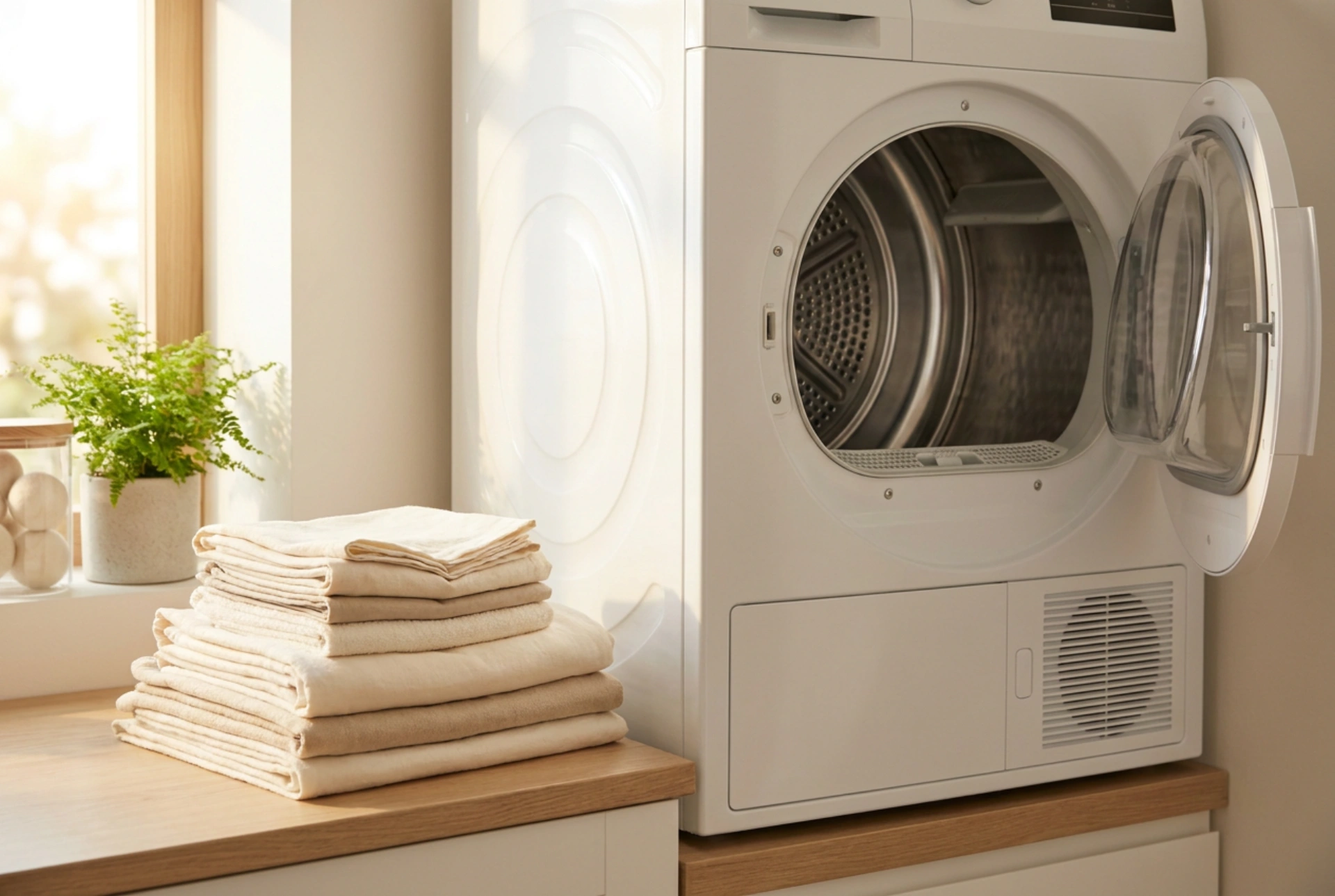


Heat pump tumble dryers revolutionised home laundry by recycling thermal energy instead of venting it outdoors. Understanding the thermodynamic principles behind this system allows you to optimise its performance and unlock significant electricity savings.
The Closed-Loop System: Recycling Heat Energy
Traditional condenser and vented dryers operate on an open thermodynamic loop: they draw in ambient air, heat it using high-consumption electrical elements, pass it through the wet laundry to absorb moisture, and then either vent the damp, hot air outside or cool it down using cold water or ambient room air. This process wastes massive amounts of thermal energy.
In contrast, a heat pump dryer uses a closed-loop system powered by a refrigerant cycle, similar to a refrigerator operating in reverse. Instead of releasing the hot, moist air, the dryer directs it through an evaporator. Here, the refrigerant absorbs the heat from the air, causing the water vapour to condense and drain away. The now dry, cool air is not expelled; instead, it passes through the condenser, where the compressor-heated refrigerant transfers its thermal energy back into the air. This dry, hot air is then recirculated into the drum. Because the heat is continuously reclaimed and reused rather than wasted, energy consumption is slashed by up to 50% compared to traditional models.
Low-Temperature Drying and Fabric Preservation
One of the key advantages of the heat pump mechanism is its operating temperature. Traditional dryers rely on brute-force heating, often reaching temperatures of 75°C or higher, which can damage delicate fibers, cause shrinkage, and degrade synthetic materials over time.
Because a heat pump system relies on highly efficient moisture condensation rather than extreme heat, it dries clothes at much lower temperatures—typically between 50°C and 55°C. At this temperature, the kinetic energy of water molecules is still high enough to facilitate rapid evaporation from the fabric fibers, but it remains well below the thermal degradation threshold of delicate textiles like wool, silk, and modern synthetic sportswear. This lower thermal load preserves the tensile strength of the fibers and prevents the warping of elastic components.
When Does a Heat Pump Dryer Save the Most Energy?
While heat pump technology is inherently efficient, its energy-saving potential depends heavily on external factors and usage habits. To maximise efficiency, consider the following parameters:
- High spin speeds in the washing machine: The energy required to remove water mechanically via centrifugal force in a washing machine (spinning at 1200–1400 RPM) is a fraction of the thermal energy required to evaporate that same water in a dryer. Reducing the initial residual moisture content of the laundry significantly shortens the drying cycle.
- Ambient room temperature: Heat pump dryers operate most efficiently in rooms where the temperature stays between 15°C and 25°C. If the room is too cold (e.g., an unheated garage or basement in winter), the compressor must work significantly harder and longer to elevate the refrigerant to its optimal operating temperature, which increases electricity consumption.
- Optimal load volume: Under-loading the drum prevents the closed-loop system from reaching its optimal thermodynamic balance, leading to short, inefficient cycles. Over-loading restricts airflow, preventing dry air from circulating evenly and prolonging the cycle unnecessarily.
Essential Maintenance to Prevent Efficiency Loss
Because heat pump dryers rely on laminar airflow across the evaporator and condenser coils, any restriction in the air path directly degrades thermodynamic efficiency. Fine lint particles that bypass the primary fluff filter can deposit on the wet evaporator fins, forming a thermal barrier that reduces heat transfer rates. This forces the compressor to run longer, eroding your energy savings.
To maintain peak efficiency, clean the primary lint filter after every cycle. Additionally, inspect the lower heat exchanger filter at least once a month. Gently vacuuming the delicate metal fins of the evaporator ensures unhindered airflow and optimal heat exchange, keeping your appliance running at its rated energy class for years to come.