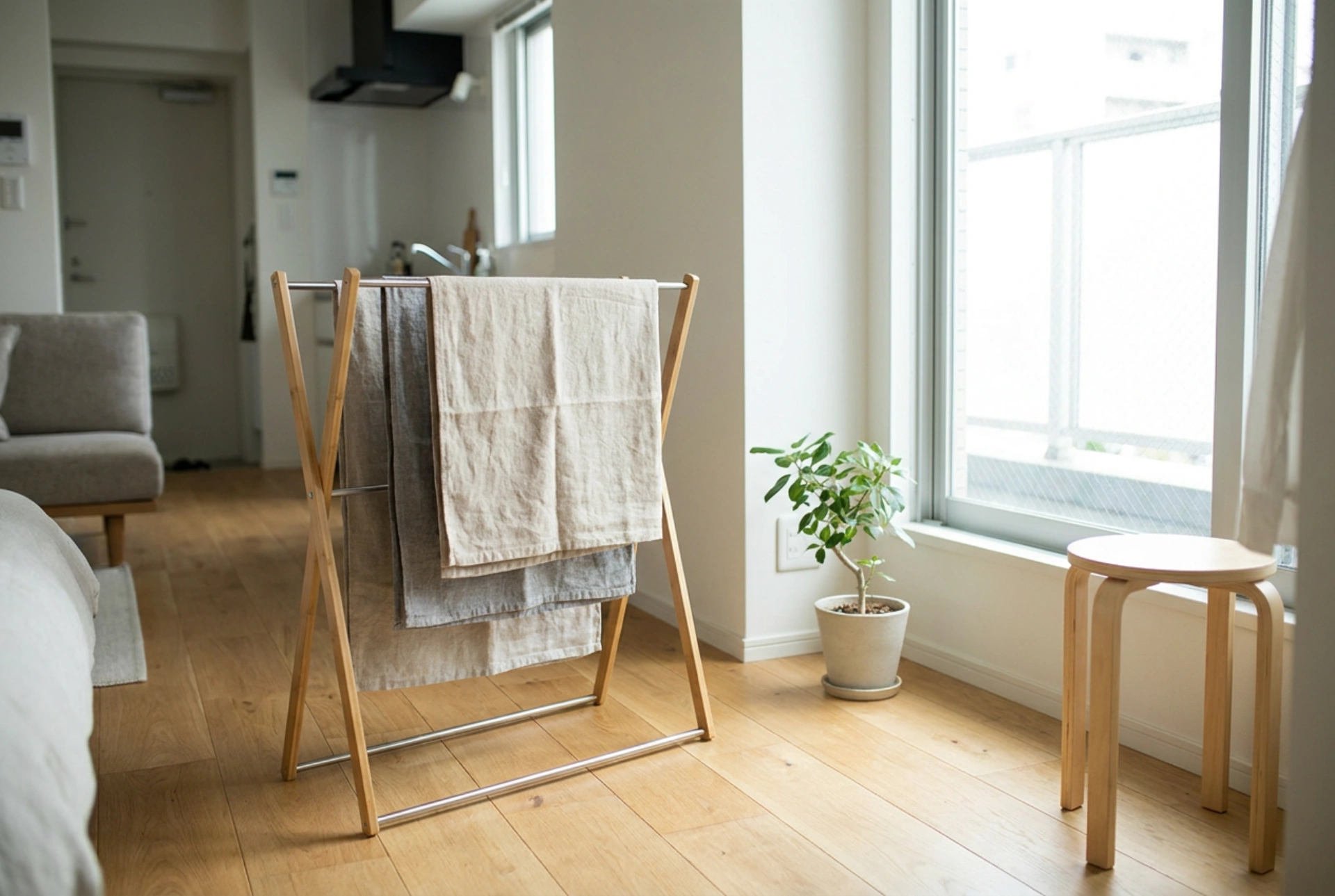


Drying laundry indoors in a confined space is more than a storage challenge; it is a delicate balancing act of thermodynamics, relative humidity, and airflow. When space is limited, a mini drying rack must be utilised with scientific precision to prevent dampness, avoid stale odours, and protect your living environment from excessive moisture accumulation.
The Science of Evaporation: Understanding Air Saturation
To dry wet clothes, liquid water trapped within fabric fibres must transition into water vapour. This process of evaporation relies heavily on the surrounding air’s relative humidity and temperature. In a small apartment, the volume of air is limited. As water evaporates from your garments, the relative humidity of the room rises rapidly. Once the air near the fabric becomes saturated—reaching its dew point—evaporation slows to a crawl, leaving clothes damp for days and creating a breeding ground for mould spores.
To counteract this, you must actively disrupt the boundary layer of saturated air that clings to wet fabrics. Air movement is critical. Placing your mini drying rack in a location with natural convection currents, such as near a passive air vent or in a hallway where doors are frequently opened, encourages continuous air exchange. For optimal results, position the rack close to an indoor heat source, as warmer air can hold significantly more moisture before reaching saturation, thereby accelerating the evaporation process.
Strategic Hanging Techniques for Maximum Airflow
With a mini drying rack, space is at a premium, making the temptation to pack garments tightly together very high. However, overcrowding is counterproductive. When fabrics touch, they restrict airflow and trap moisture, drastically increasing drying times. To optimise your limited rack space, employ these systematic hanging techniques:
- Prioritise Spacing: Always leave at least one empty rung or a clear gap of five centimetres between hanging items to allow air to circulate freely.
- Graduated Hanging: Position shorter, thinner garments (such as synthetic activewear or underwear) in the centre or lower rungs of the rack, and drape longer, heavier items (like cotton trousers or heavy towels) on the outer edges. This prevents larger items from blocking air currents from reaching the rest of the load.
- Utilise Vertical Space: Hang delicate shirts and blouses on plastic hangers suspended from the outer frame of the rack. This increases the total surface area exposed to the air and keeps garments naturally stretched, reducing the need for ironing.
- The Air Tunnel Effect: Arrange the rack so the longest side is parallel to the direction of airflow in the room, creating an unobstructed corridor for air to travel through the hanging clothes.
Controlling Moisture and Preventing Structural Condensation
A standard washing load can hold up to two litres of water, all of which is released into your indoor air during the drying process. In a small flat, this sudden influx of moisture can lead to condensation on cold surfaces, such as window panes and external walls, which eventually causes structural damage and mould growth.
To manage this moisture load, you must control the room's ventilation. Whenever your mini drying rack is loaded, crack open two opposing windows slightly to create a gentle cross-draft. This allows moisture-laden air to escape while drawing in drier outdoor air. If outdoor humidity is exceptionally high, or if window ventilation is not feasible, operating a compact domestic dehumidifier nearby is highly effective. The dehumidifier works by cooling a metal coil, condensing the airborne water vapour into a collection tank, and releasing dry, slightly warmed air back into the room, which further speeds up the drying cycle.
The Pre-Drying Phase: Maximising Centrifugal Extraction
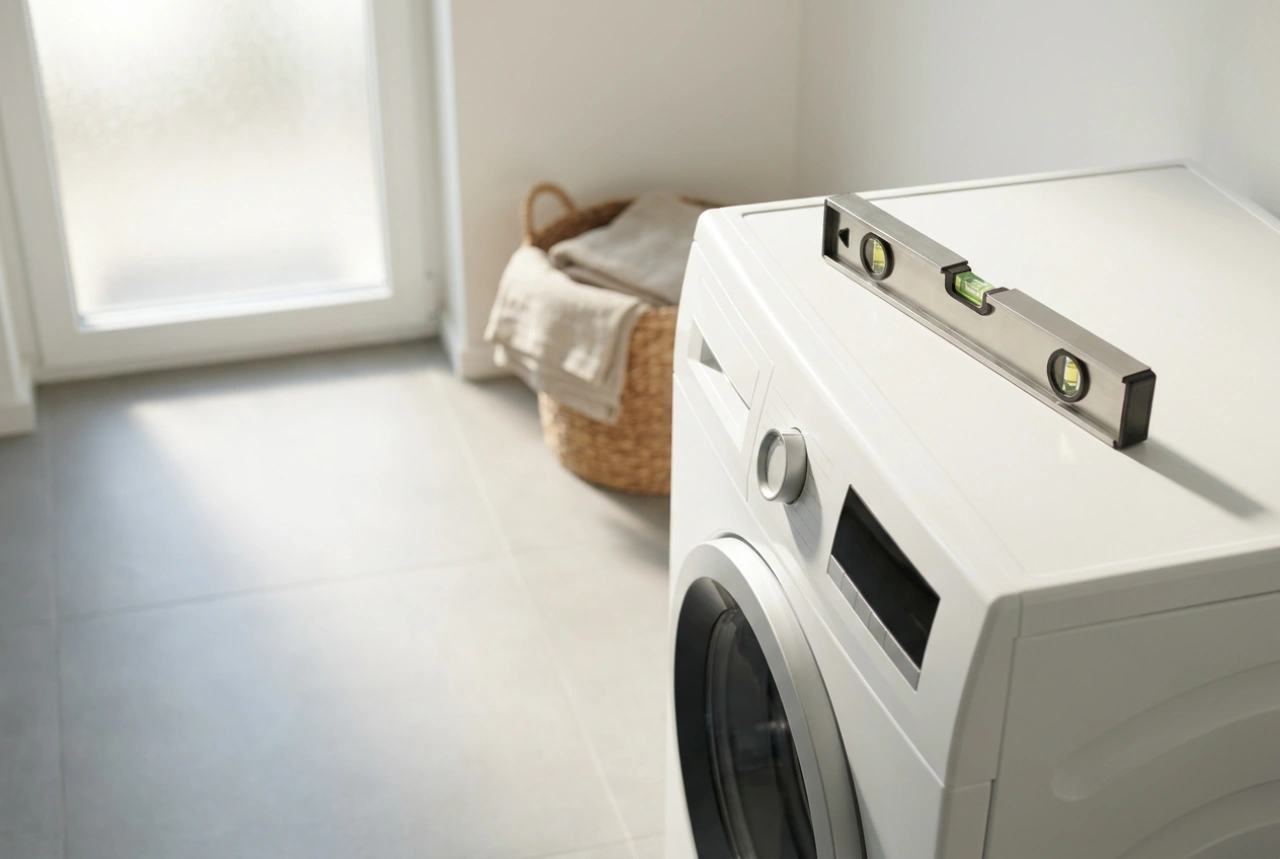
Efficient drying begins inside the washing machine. Before hanging your laundry on a mini rack, you must extract as much free water as possible through mechanical means. Adjusting your washing machine’s spin cycle is the most energy-efficient way to reduce drying times.
For robust fabrics such as cottons, synthetics, and linens, select a high spin speed of 1200 to 1400 RPM (revolutions per minute). The intense centrifugal force flings water out of the fabric fibres, leaving the clothes damp rather than wet. For delicate woollens or silks, lower spin speeds (600 to 800 RPM) are necessary to protect the delicate structural proteins of the fibres. In these cases, you can accelerate drying by rolling the garment flat inside a dry, clean towel and pressing gently to absorb excess moisture before transferring it to the mini drying rack.