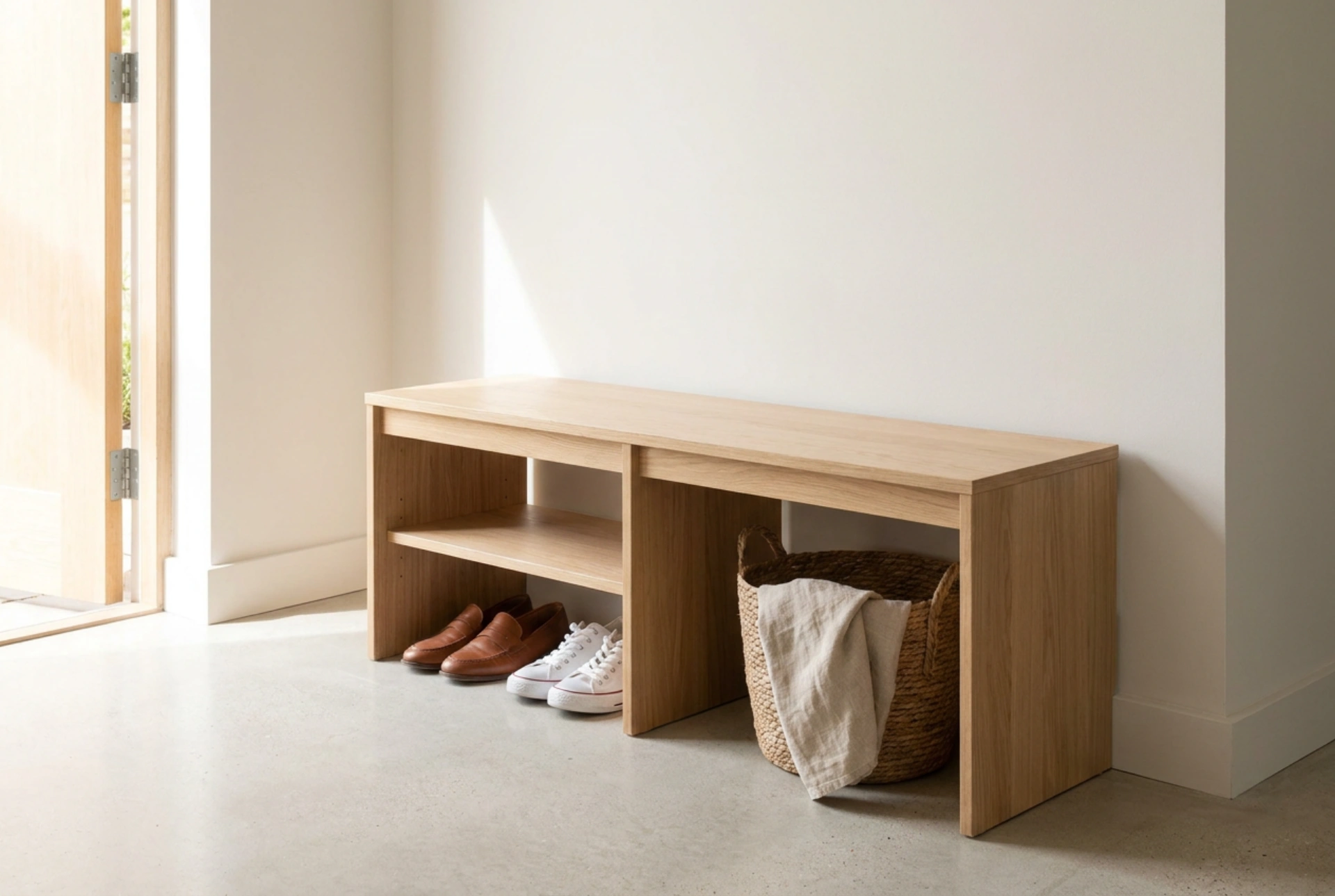


Creating an efficient entryway transition zone requires a careful balance of ergonomics, structural physics, and material science to manage shoe storage, airflow, and soil control. A dedicated hallway bench with integrated seating serves as the primary barrier against outdoor contaminants while organising footwear systematically.
The Ergonomics and Structural Physics of Entryway Seating
The primary function of a hallway bench is to facilitate the transition between outdoor and indoor environments. From a biomechanical perspective, sitting down to remove footwear reduces strain on the lower back and joints, stabilising the body's centre of gravity. For optimal comfort and safety, the seating platform should maintain a height of 40 to 45 centimetres from the floor, allowing the knees to bend at a neutral 90-degree angle with feet flat on the ground.
Structural integrity is critical to withstand dynamic loads. Unlike static storage, a seating bench experiences sudden, concentrated forces when a person sits down. To prevent structural fatigue over time, construction materials must possess high tensile and compressive strength. Solid hardwoods (such as oak, beech, or ash) or welded metal frames provide the necessary resistance to bending and warping. Joinery techniques like mortise-and-tenon or heavy-duty steel dowels ensure the frame remains rigid under shifting lateral loads.
Moisture Control and Ventilation Dynamics
Footwear worn outdoors accumulates moisture from rain, snow, and perspiration. Storing damp shoes in closed, unventilated compartments creates a microclimate with high relative humidity, which accelerates the hydrolysis of shoe adhesives, degrades leather, and encourages the proliferation of fungal spores and odour-causing bacteria. To prevent this, the storage zone beneath the bench must facilitate continuous airflow.
Open-slat shelving utilises natural convection. As warmer air rises, cooler air is drawn through the gaps between the slats, evaporating residual moisture from the shoe soles and uppers. If closed cabinet designs are preferred for aesthetic reasons, they must incorporate ventilation grilles near the top and bottom of the rear panel to establish a chimney effect, promoting constant air exchange. Furthermore, shelves made of metal wire or rust-resistant aluminium grates prevent water pooling and allow loose dirt to fall through to an easily cleanable tray below.
Material Science: Selecting and Maintaining Surfaces
The materials within the shoe zone must withstand mechanical abrasion, moisture, and chemical exposure from road salts or cleaning agents. Unsealed wood is highly porous and will absorb water, leading to swelling, cracking, and rot. Therefore, all wooden components must be treated with a high-performance polyurethane varnish, natural oils with water-repellent additives, or specialist marine-grade sealants that block moisture absorption while maintaining surface flexibility.
For high-traffic zones, non-porous materials like powder-coated steel, high-pressure laminates (HPL), or composite materials are highly effective. These surfaces resist chemical degradation from de-icing salts (primarily sodium chloride and calcium chloride) carried in on winter footwear. To clean these surfaces safely, avoid abrasive pads or highly alkaline cleaners, which can strip protective coatings. Instead, utilise a mild surfactant solution (neutral pH) to lift dirt particles, followed by a dry microfibre wipe to prevent water spots.
Systematic Maintenance and Decontamination
To preserve the hallway bench and keep the indoor air clean, implement a strict three-step maintenance protocol:
- Debris Extraction: Vacuum loose dirt, sand, and dried mud from the shelves weekly using a soft brush attachment to prevent abrasive scratching of the surface finish.
- Chemical Sanitisation: Periodically sanitise the storage compartments using a highly diluted oxygen bleach solution or an isopropyl alcohol spray (70% concentration). This denatures the proteins of bacterial cell walls and neutralises mould spores without releasing toxic fumes or damaging resistant finishes.
- Barrier Protection: Place a heavy-duty, lip-edged rubber tray underneath or inside the lower shelf during wet seasons. This acts as a physical barrier, collecting water, melting snow, and salt runoff, which can be easily removed, rinsed, and dried separately.