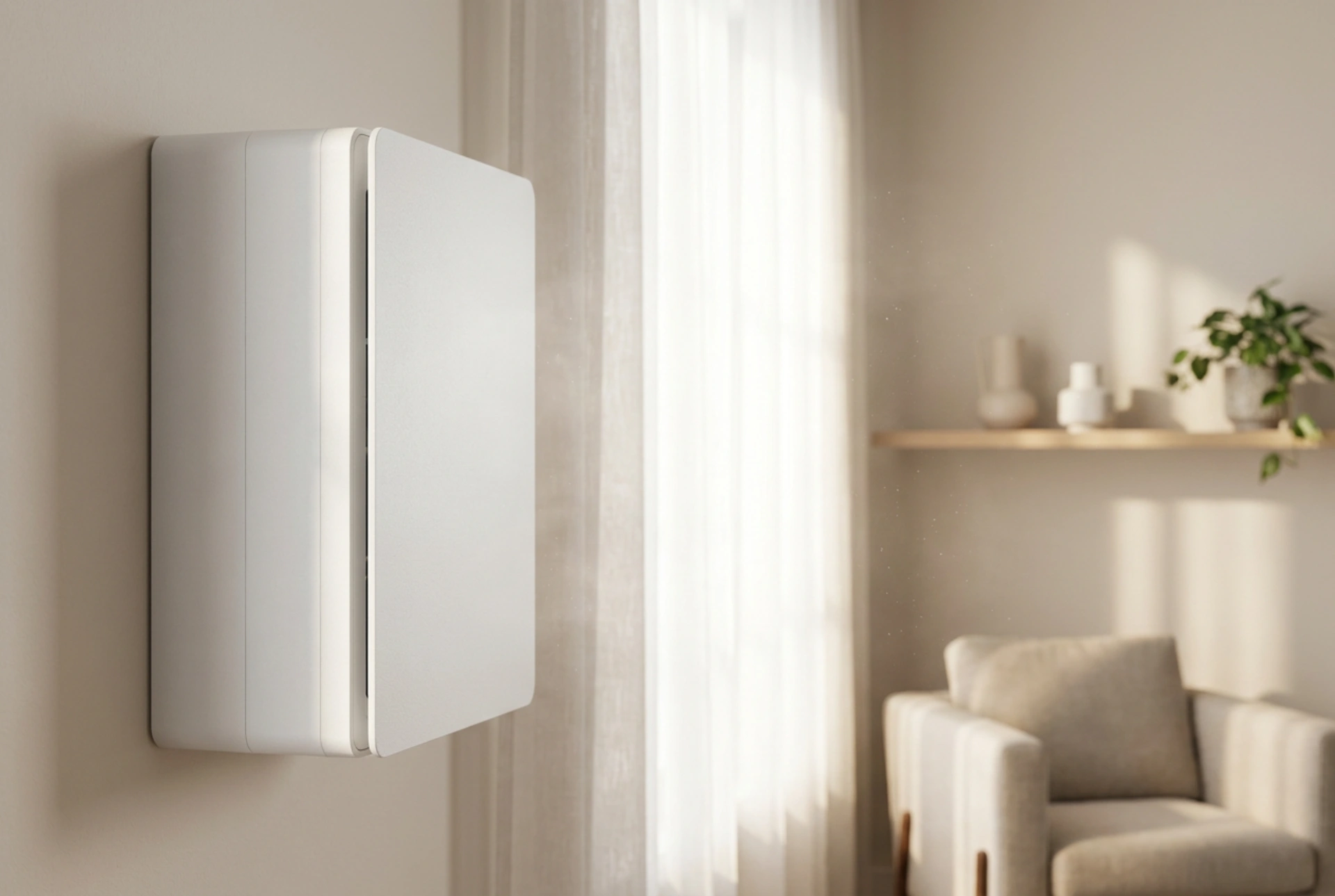


Wall-mounted monoblock air conditioners solve the problem of cooling spaces where installing an external condenser unit is restricted by architectural or historical preservation rules. By integrating both the evaporator and condenser into a single indoor chassis, these devices rely on dual-duct thermodynamic cycles to manage indoor heat.
The Thermodynamics of Single-Unit Refrigeration
Standard split-system air conditioners separate the heat-absorbing evaporator (indoors) from the heat-rejecting condenser (outdoors). A monoblock system collapses this physical separation into a single wall-mounted unit. The underlying physics, however, remains governed by the vapor-compression refrigeration cycle. Within the sealed chassis, a compressor circulates a chemical refrigerant through two distinct heat exchangers.
The cycle begins at the evaporator coil, where low-pressure liquid refrigerant absorbs thermal energy from the indoor air. As the refrigerant absorbs this heat, it undergoes a phase change, transitioning from a liquid to a gas. A centrifugal fan draws warm room air over these cold evaporator coils, cooling the air before blowing it back into the room. The gaseous refrigerant, now carrying the indoor heat, travels to the compressor. The compressor increases the pressure and temperature of the gas, preparing it to release its thermal payload.
Dual-Duct Airflow Management
Because the condenser coil is located inside the room rather than outdoors, the system must establish an artificial thermal bridge to the outside environment. This is achieved through two dedicated ducts drilled directly through the external wall. These ducts, typically ranging from 150 mm to 200 mm in diameter, manage two separate air streams.
- Intake Duct: A high-pressure fan draws ambient outdoor air into the unit. This air is routed directly over the hot condenser coils.
- Exhaust Duct: As the outdoor air passes over the condenser, it absorbs the heat concentrated by the compressor. This now-heated air is immediately expelled back outside through the second duct.
By keeping these two airflows strictly isolated from the indoor room air, the monoblock unit prevents the mixing of conditioned indoor air with hot outdoor air, preserving the cooling efficiency of the cycle.
Condensate Management and Latent Heat
Cooling indoor air inherently reduces its capacity to hold moisture, leading to condensation on the cold evaporator coils. In traditional split systems, this water drains via gravity to the outside. In a monoblock unit, managing this liquid requires specific engineering to prevent indoor leakage and mold growth.
Many modern monoblock units utilize the physics of latent heat vaporization to dispose of this water. The accumulated condensate is pumped or directed onto the hot condenser coils. As the hot condenser heats the water, it evaporates, transforming back into water vapor. This vapor is then swept out of the room through the exhaust duct along with the hot air. If the humidity levels are extremely high and the evaporation rate cannot keep pace with condensation, a secondary gravity drain line or an internal reservoir with an automatic shut-off switch prevents overflow.
Thermodynamic Limits and Wall Seal Integrity
While highly convenient, monoblock units operate under distinct thermodynamic constraints. Because the compressor is located indoors, acoustic energy is transferred directly into the living space. Sound dampening materials and variable-speed compressors are used to minimize decibel levels.
Furthermore, the physical proximity of the intake and exhaust grates on the exterior wall can sometimes cause "thermal short-circuiting," where the expelled hot air is drawn back into the intake duct. Proper external grille design, utilizing directional louvers to deflect the exhaust air away from the intake path, is critical to maintaining system efficiency. Additionally, the duct channels must be perfectly sealed with elastomeric foam insulation to prevent thermal bridging through the wall, which could otherwise introduce hot outdoor air and condensation into the wall cavity itself.