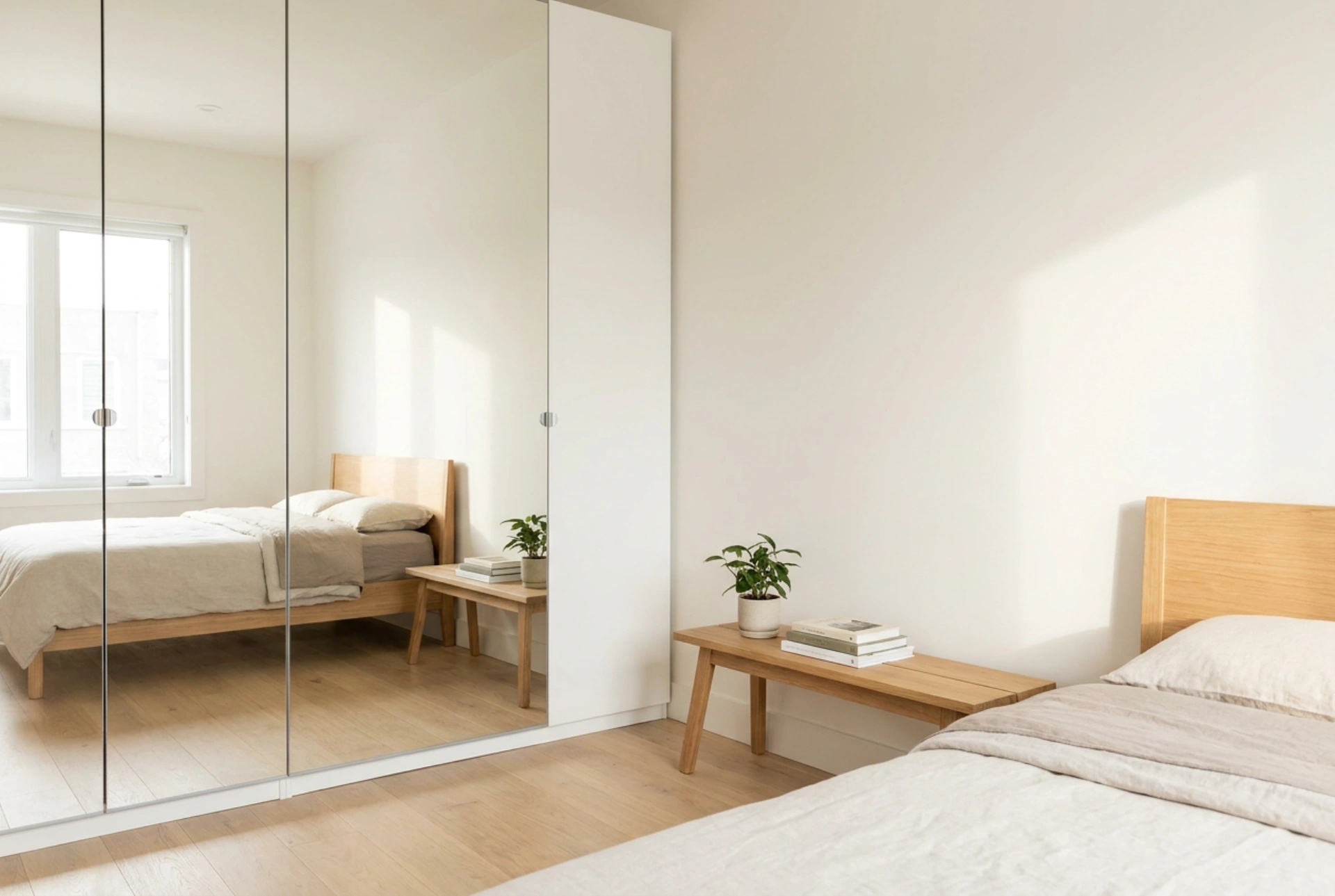


Integrating mirror wardrobe doors into a room requires careful spatial planning to balance light reflection, visual enlargement, and physical traffic flow. Proper furniture arrangement ensures safety, maximizes natural illumination, and prevents daily ergonomic bottlenecks.
The Physics of Light Reflection and Room Orientation
Mirrors operate on the principle of specular reflection, where light rays bounce off a smooth silvered glass surface at the same angle they arrive. Placing a mirror wardrobe opposite a direct light source, such as a south-facing window, can cause harsh glare. Instead, positioning the mirror perpendicular to the window allows incoming light to diffuse gently across the room, effectively doubling the perceived ambient brightness without creating blinding hotspots. This setup is particularly beneficial in narrow or north-facing bedrooms that suffer from limited natural daylight.
Ergonomic Clearances and Traffic Paths
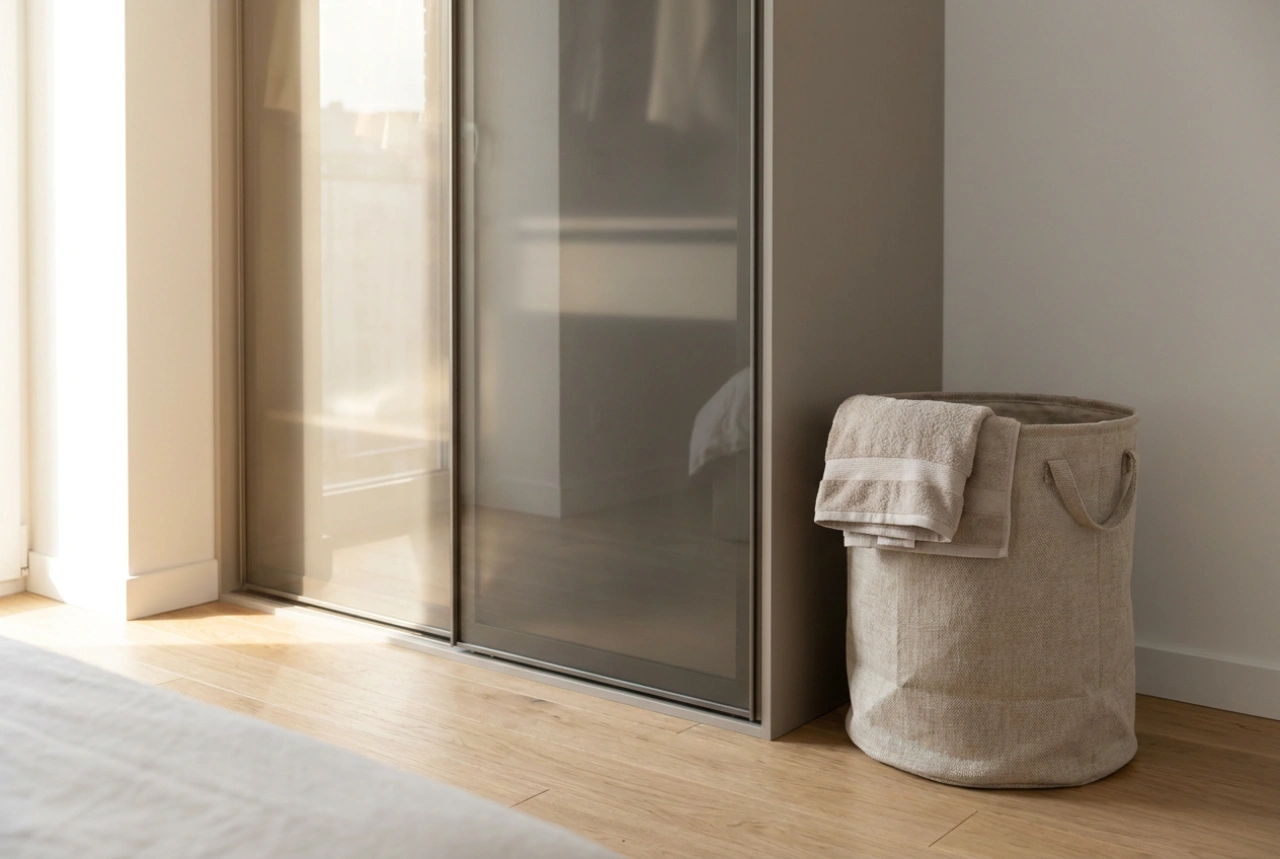
For a room to feel comfortable, physical movement must not be obstructed. When planning the layout around a wardrobe, apply standard architectural clearance rules. A sliding mirror door requires no outward opening space, making it ideal for tight walkways, but it does require a slightly deeper wardrobe frame to accommodate the double-track system. In contrast, hinged wardrobe doors need a clearance radius equal to the width of the door panel plus at least thirty centimeters of buffer space for a person to stand and access the interior. The absolute minimum distance between the wardrobe and the edge of a bed should be eighty centimeters to allow for comfortable passage and bending.
Visual Balance and the Angle of Incidence
Where a mirror points dictates what it amplifies. Reflected clutter can double the visual noise in a room, inducing subconscious stress. Position the wardrobe so that the mirror reflects a clean, organized zone, such as a plain wall, a neat reading corner, or a window showing natural foliage. Furthermore, avoid placing large mirror panels directly opposite the bed. Movement during sleep or waking hours reflected in peripheral vision can trigger a startle response, disrupting the circadian cycle. Aligning the wardrobe parallel to the bed's length or slightly offset mitigates this visual disturbance.
Structural Considerations and Leveling Mechanics
Mirror-clad doors are significantly heavier than standard wood composite panels due to the density of the float glass and safety backing. This increased mass exerts continuous force on hinges, rollers, and tracks. To prevent warping and structural fatigue, the wardrobe frame must be perfectly plumb and level. Even a minor tilt of two millimeters can cause sliding doors to roll open on their own or strain the hinges of swing doors. Always use a spirit level to check both the horizontal and vertical planes, adjusting the leveling feet or utilizing high-density plastic shims beneath the base until the frame is perfectly squared. This distributes the weight evenly, ensuring smooth operation and prolonging the life of the hardware.
Reducing Track Friction and Wear
To ensure long-term durability, the mechanical friction of sliding tracks must be minimized. Heavy mirror panels slide on nylon or brass rollers. Over time, household dust, pet hair, and fibers settle into the lower track, increasing friction and putting lateral stress on the glass panels. Vacuuming these tracks weekly and cleaning them with a dry microfibre cloth prevents debris buildup. Avoid liquid lubricants like oil or grease, as they attract dust and form an abrasive paste that wears down the rollers prematurely. If lubrication is necessary, a dry PTFE spray is recommended because it does not leave a sticky residue.
Safety Film and Glass Integrity
Because mirror wardrobe doors represent a large expanse of glass in a high-traffic area, material safety is paramount. High-quality mirror doors are manufactured with a tensile safety backing film. In the event of a high-energy impact, this adhesive layer holds the broken glass shards together, preventing sharp fragments from scattering and causing injury. When arranging furniture, ensure that heavy, swinging objects—such as metal chair backs or heavy drawers—are positioned well away from the mirror's swing path to avoid accidental impacts that could compromise the integrity of the tempered or laminated glass.