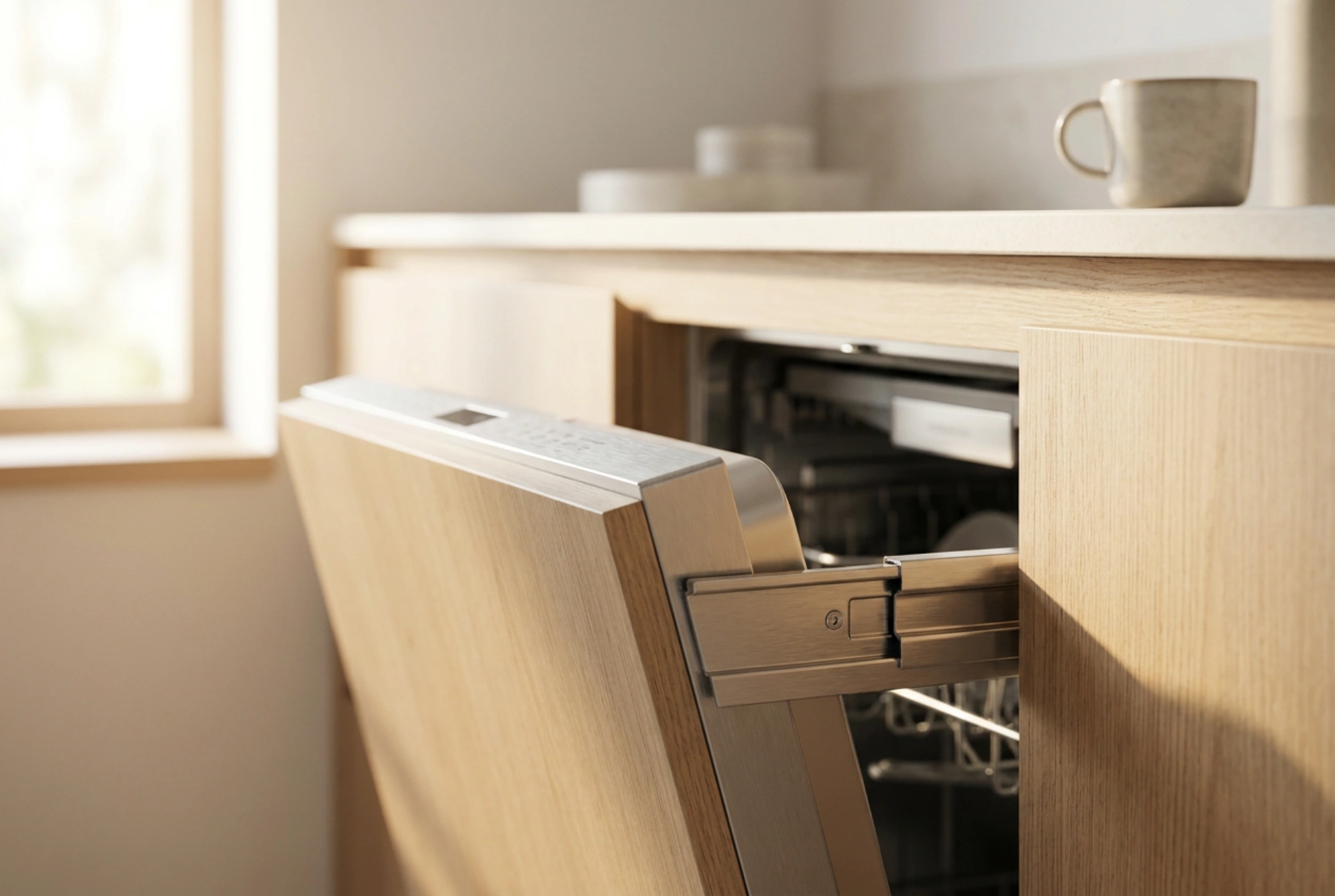


Fully integrated dishwashers require a specialized mechanism to allow the decorative cabinet front to move seamlessly without colliding with the kitchen plinth. Sliding hinges solve this architectural conflict by shifting the door panel upward as it opens, ensuring smooth operation and tight tolerances.
The Mechanics Behind Sliding Hinges
Standard door hinges rotate around a single fixed axis. In a fully integrated kitchen, a fixed dishwasher door front would swing downward and strike the baseboard or the bottom of the appliance carcass. To bypass this geometric limitation, sliding hinges utilize a dual-axis mechanical linkage. As you pull the door handle, the hinge mechanism does not just pivot; it guides the entire decorative timber or composite panel along a vertical track, sliding it upwards by several centimeters relative to the dishwasher door itself. This kinetic shift clears the plinth, allowing for a flush cabinet design with minimal gaps, often as narrow as two millimeters.
The Physics of Weight and Tension
The operation of a sliding hinge relies on a delicate balance of torque and tension, governed by counterbalancing springs or friction dampeners. When a heavy custom cabinet panel is attached to the dishwasher door, the center of gravity shifts forward. The hinge must counteract this gravitational pull to prevent the door from dropping abruptly under its own weight. At the same time, the sliding tracks must withstand horizontal shear forces. If the tension is set too low, the door will slam open, risking damage to the mechanical slides and the structural integrity of the kitchen cabinet carcass. Conversely, excessive tension makes the door difficult to open and can cause it to spring shut unexpectedly.
When Do Sliding Hinges Require Adjustment?
Over time, the physical forces of daily operation, temperature fluctuations, and humidity variations in the kitchen can cause minor shifts in the alignment of the door. There are several indicators that your sliding hinges require recalibration:
- Scraping or Friction: A distinct scraping sound when opening or closing the door indicates that the sliding panel is contacting the adjacent cabinets or the lower plinth.
- Uneven Gaps: If the horizontal or vertical lines between the dishwasher panel and the surrounding cabinetry are no longer parallel, the hinge alignment has drifted.
- Failure to Stay Open: If the dishwasher door refuses to remain flat at a ninety-degree angle when fully lowered, the spring tension is too high relative to the panel weight.
- Resistance During the Cycle: Difficulty in latching the door fully closed can point to a misalignment in the upper slide limiters.
Step-by-Step Alignment and Maintenance
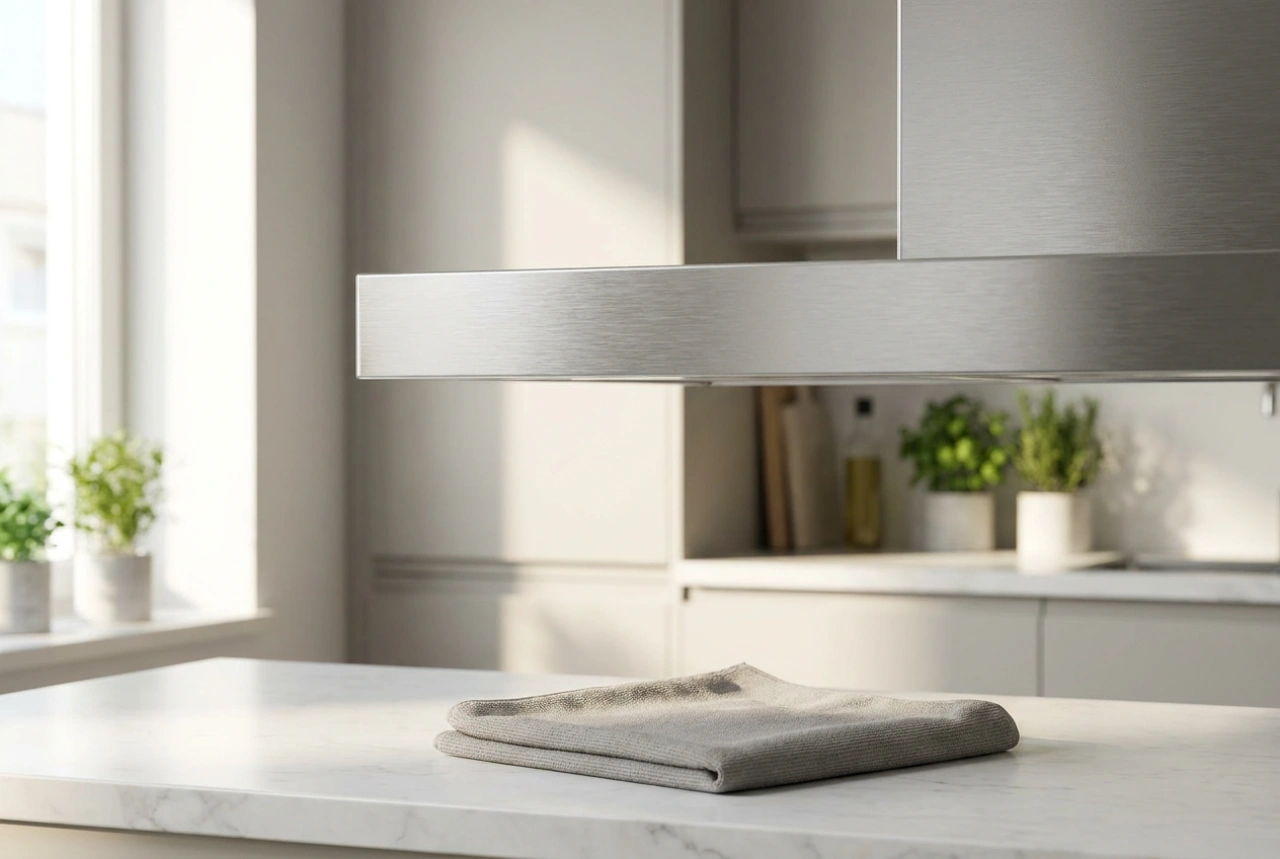
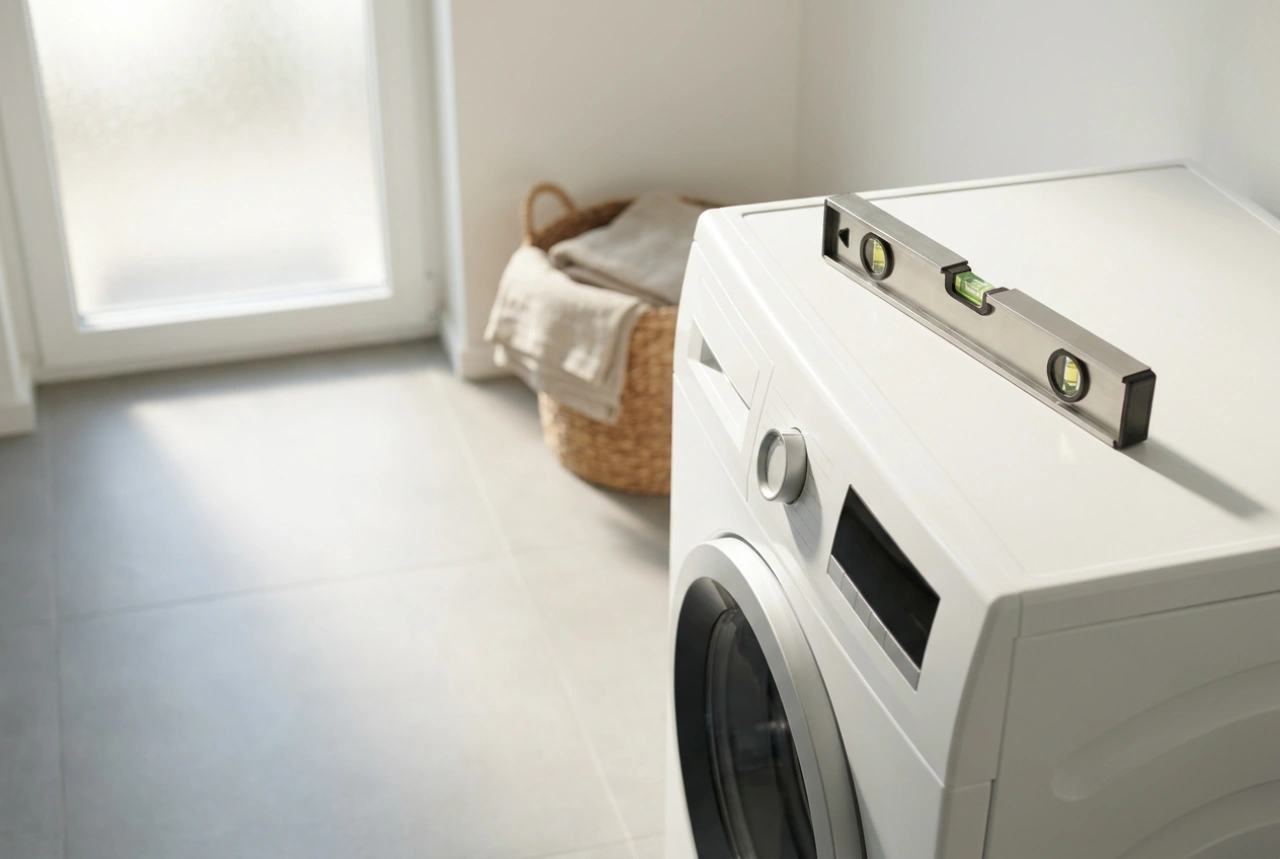
Adjusting sliding hinges is a matter of precision leveling and tension calibration. First, examine the lateral alignment screws, which are typically accessible on the sides of the hinge arms when the door is partially open. Turning these screws shifts the panel left or right by fractions of a millimeter to restore parallel lines with adjacent cabinets. Next, locate the tension adjustment bolts, usually situated at the lower base of the dishwasher behind the kickplate. Using a manual hex key or screwdriver, turn the bolts in small, equal increments on both sides to balance the spring tension. Ensure both sides are adjusted symmetrically to prevent twisting forces on the sliding tracks. Finally, clean any accumulated kitchen grease or dust from the slide tracks using a dry microfiber cloth and apply a microscopic layer of dry silicone lubricant to ensure smooth sliding action without attracting debris.