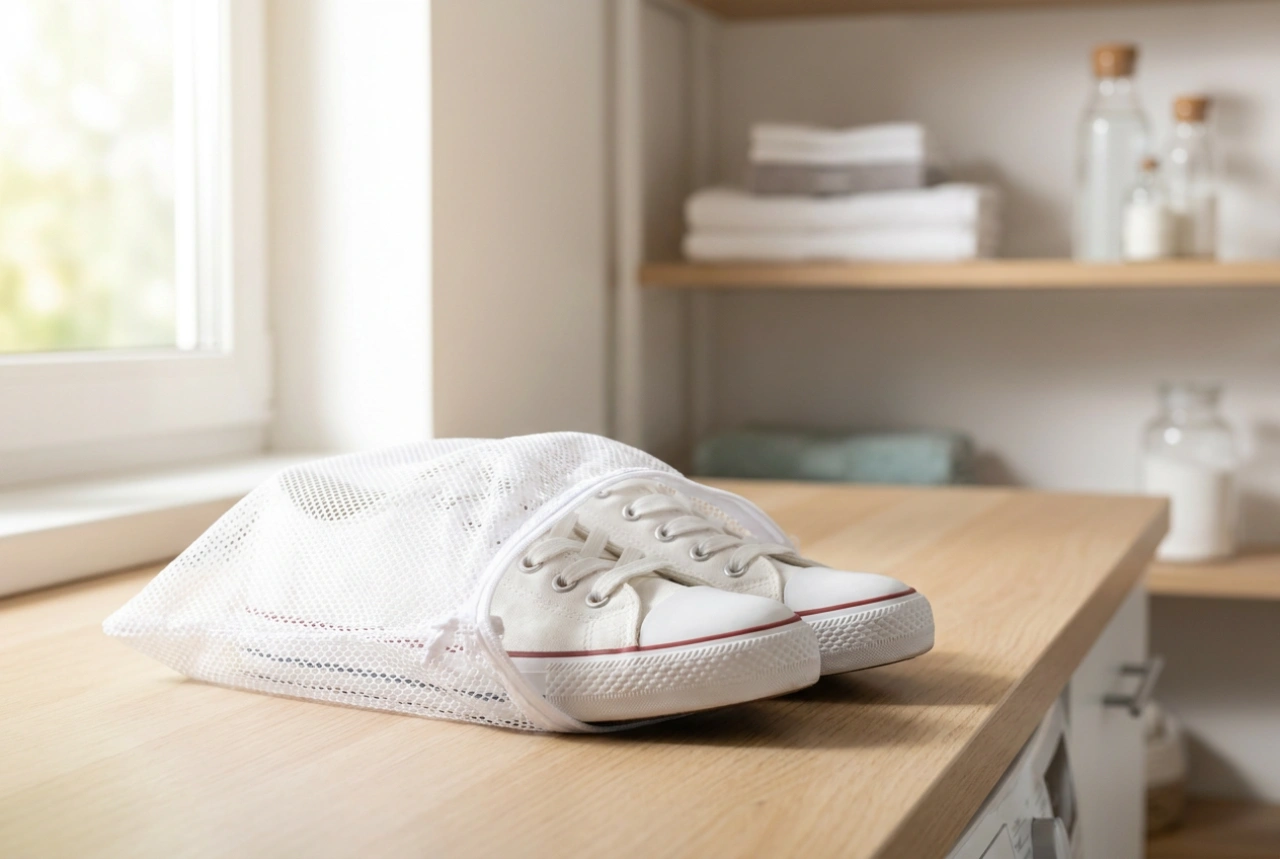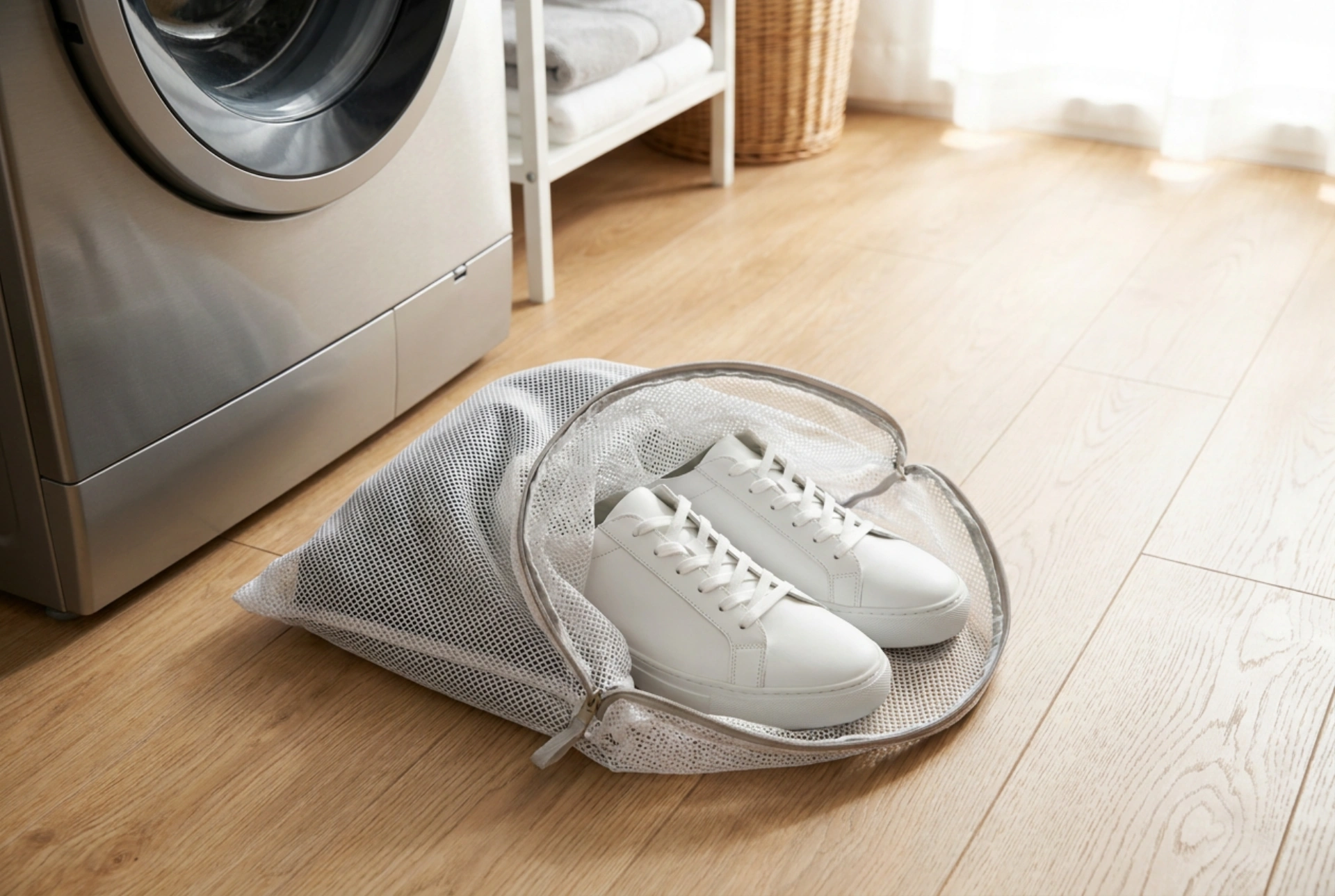


Using a dedicated mesh wash bag is more than a simple convenience; it is a critical mechanical buffer that preserves both the structural integrity of your footwear and the internal suspension of your washing machine.
The Physics of Drum Impact: How Shoes Strain Your Machine
Washing machines are engineered to handle pliable, absorbent textiles that distribute water and weight evenly across the spinning drum. Footwear, by contrast, consists of dense, non-yielding structures. When unbound shoes tumble freely during a cycle, they act as solid projectiles. Each impact against the stainless steel drum transmits kinetic energy directly to the machine's internal components.
This mechanical stress primarily targets the drum suspension system, which relies on springs and shock absorbers to dampen movement. The asymmetrical weight of free-rolling shoes prevents the machine from achieving a balanced load, particularly during the spin cycle. As centrifugal forces increase, this imbalance causes violent oscillations, putting immense strain on the drive shaft, bearings, and motor. A high-quality mesh bag solves this by restricting the shoes' range of motion, holding them together to form a more predictable, dampening mass that reduces high-velocity impacts against the drum walls.
Material Science: Preventing Delamination and Abrasion
From a material perspective, modern athletic and casual shoes are complex assemblies of synthetic polymers, adhesives, and woven fibers. The primary threat during machine washing is mechanical shear stress combined with water immersion. Unprotected shoes suffer from localized friction, where the drum's lifters scrape against delicate mesh uppers, causing pilling, fraying, or tearing of technical fabrics.
Furthermore, many shoe soles are bonded using thermoplastic adhesives. The combination of warm water and aggressive mechanical agitation can initiate delamination—the peeling apart of the outsole from the midsole. A structured wash bag, especially one featuring padded foam ribs, acts as a shock absorber. It absorbs the shear forces generated by the drum's rotation, ensuring that the water flows through the fabric to clean the shoes while preventing the direct abrasive contact that weakens glued seams.
The Chemistry and Temperature of a Safe Wash Cycle
To maximize the protective benefits of a wash bag, the physical wash parameters must be carefully calibrated. Chemical interactions and thermal limits dictate the success of the process:
- Temperature Control: Never exceed 30°C. Thermoplastic adhesives used in footwear construction begin to soften at relatively low temperatures. Keeping the water cold ensures these structural glues remain rigid and intact.
- Detergent Selection: Opt for mild liquid detergents formulated with non-ionic surfactants. Avoid powder detergents, as undissolved grains can become trapped within the shoe's inner mesh or the bag itself, acting as a physical abrasive during the cycle. Absolutely avoid chlorine-based bleaches, which degrade the polymer chains in rubber and synthetic foams.
- Ballast Integration: Always balance the load by adding several light, color-fast towels alongside the bagged shoes. This ballast absorbs water, creating a cushioning medium that assists the washing machine’s internal sensors in balancing the drum before high-speed spinning begins.
Selecting and Using a High-Performance Wash Bag
Not all laundry bags are created equal. To ensure adequate protection, look for a bag designed specifically for footwear. It should feature a multi-layered, thick polyester mesh that allows optimal water and detergent circulation while retaining its structural shape. A critical detail is the zipper closure: it must feature an elastic guard or sleeve where the metal tab can be tucked away. An exposed zipper tab will scrape the drum interior, potentially creating micro-scratches that can rust over time or snag other fabrics in future washes. By ensuring the zipper is fully locked and shielded, you maintain a completely non-abrasive barrier throughout the cycle.