

Storing ceramic and porcelain plates vertically in deep kitchen drawers improves ergonomics and accessibility, but it exposes delicate rims to chipping from kinetic impact during drawer movement.
The Physics of Drawer Movement and Impact Damage
When a kitchen drawer is opened or closed, inertia acts upon every object inside. According to Newton’s first law of motion, plates resting in a vertical rack will attempt to maintain their state of rest or motion. When the drawer decelerates abruptly—especially at the end of its track—the plates slide forward within their slots, colliding with the wooden or metal pegs of the organiser. This concentrated impact on the thin, fragile edges of glazed ceramic or fine bone china is the primary cause of chipping.
To mitigate this force, you must address two factors: the acceleration of the drawer and the friction between the plates and the rack. Minimising sudden movements and absorbing kinetic energy are essential for long-term tableware preservation.
Configuring the Rack for Optimal Spacing
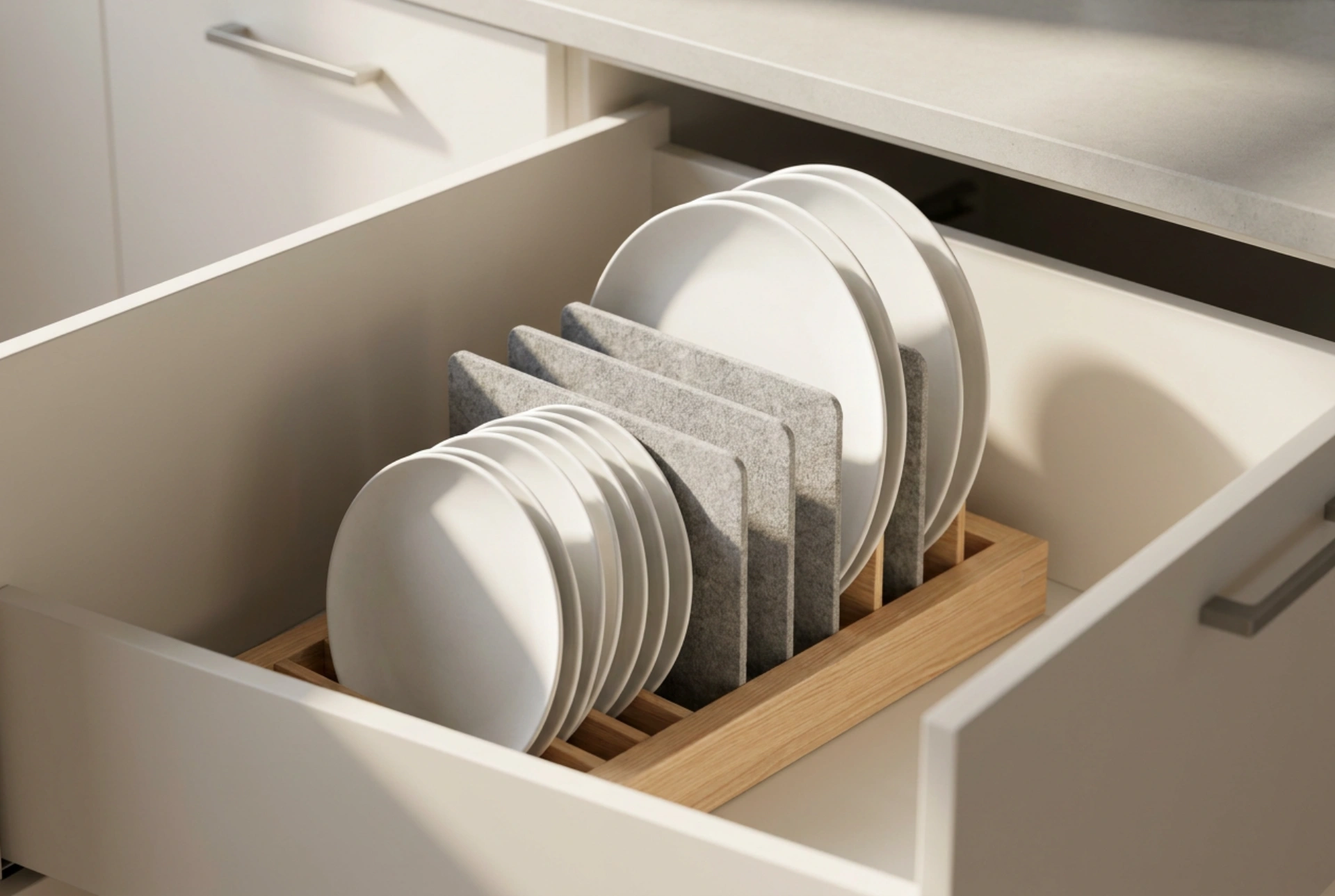
An adjustable pegboard or dowel system is the most effective rack type for deep drawers. Proper configuration prevents lateral movement while allowing easy extraction. Follow these steps to set up the system:
- Measure the plate profile: Do not group deep soup bowls with flat dinner plates in the same spacing interval. Measure the maximum depth of each plate type to determine the exact dowel distance required.
- Set the dowel intervals: Position the wooden or plastic pegs so that each plate stands nearly vertical, with a slight tilt of no more than 5 to 10 degrees. Too much tilt increases the surface area exposed to gravity, putting constant pressure on a single point of the rim.
- Maintain snug but free clearance: There should be roughly 5 to 8 millimetres of clearance on either side of the plate. If the slot is too wide, the plate will rattle and gain momentum before striking the peg; if it is too narrow, you risk scraping the rim against the pegs during extraction.
Using Dampening Materials to Absorb Kinetic Energy
Unprotected wood or metal organiser pegs can still chip ceramic glazes over time through repetitive friction. Introducing dampening materials is crucial for absorbing impact energy.
First, apply high-friction silicone or rubber sleeves over the vertical dowels. These sleeves serve a dual purpose: they increase grip, preventing the plates from sliding back and forth, and they act as a shock absorber during sudden drawer stops. Alternatively, place thin, round felt dividers between each plate. When plates are stacked vertically, a felt pad suspended between them cushions the face-to-face contact points, eliminating micro-scratches on the glaze.
Second, ensure the entire rack system is anchored. Use a non-slip, rubberised drawer liner beneath the pegboard itself. If the base board of the organiser slides even a few millimetres when the drawer is shut, it transfers that kinetic energy directly to the plates inside.
Ergonomic Loading and Weight Distribution
How you distribute weight inside the drawer affects both the wear on your drawer runners and the stability of the plates. Always place the heaviest dinner plates towards the back of the drawer (closest to the cabinet carcass) and lighter salad plates or saucers near the front. This distribution keeps the centre of gravity low and close to the main support system of the drawer slides, ensuring a smoother glided motion with less vibration.
When loading plates, always use a vertical drop-in motion. Avoid sliding the plate in at an angle, which scrapes the bottom rim against the base of the rack. Hold the plate securely by its opposite edges, lower it straight down into the cushioned slot, and release it gently.
Maintaining Drawer Slide Calibration
The mechanical performance of your kitchen cabinet hardware plays a silent but critical role in plate preservation. Soft-close mechanisms rely on hydraulic or air dampeners to slow the drawer down before it fully closes. Over time, dust, grease, and crumbs can accumulate in the runners, causing the mechanism to stick or release unevenly, leading to sudden, jarring movements.
Periodically vacuum the drawer tracks using a narrow crevice tool to remove debris. Wipe the metal runners with a dry microfibre cloth. If your drawer slides are adjustable, calibrate the tension so that the soft-close system engages smoothly and decelerates the drawer gradually over the final few centimetres of travel, eliminating the hard stop that causes plates to crash forward.