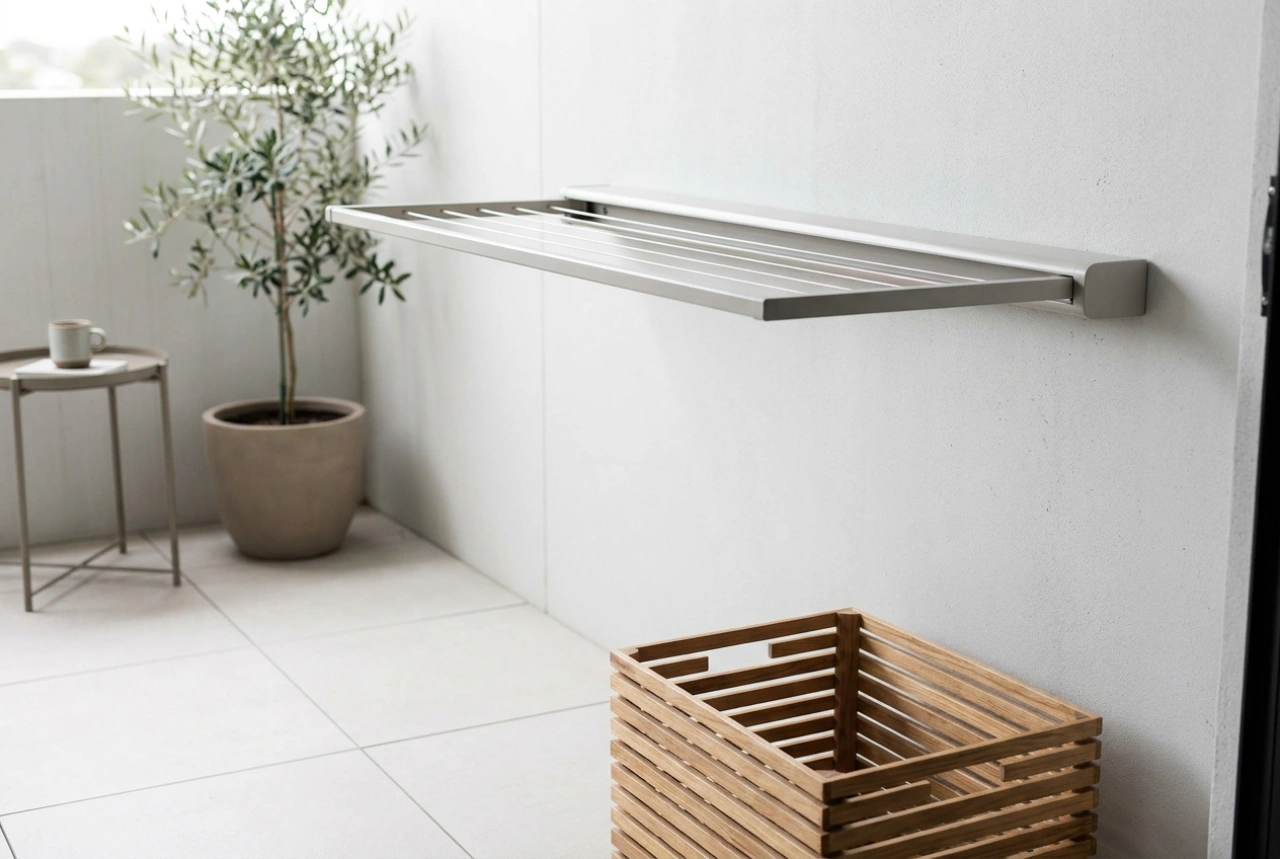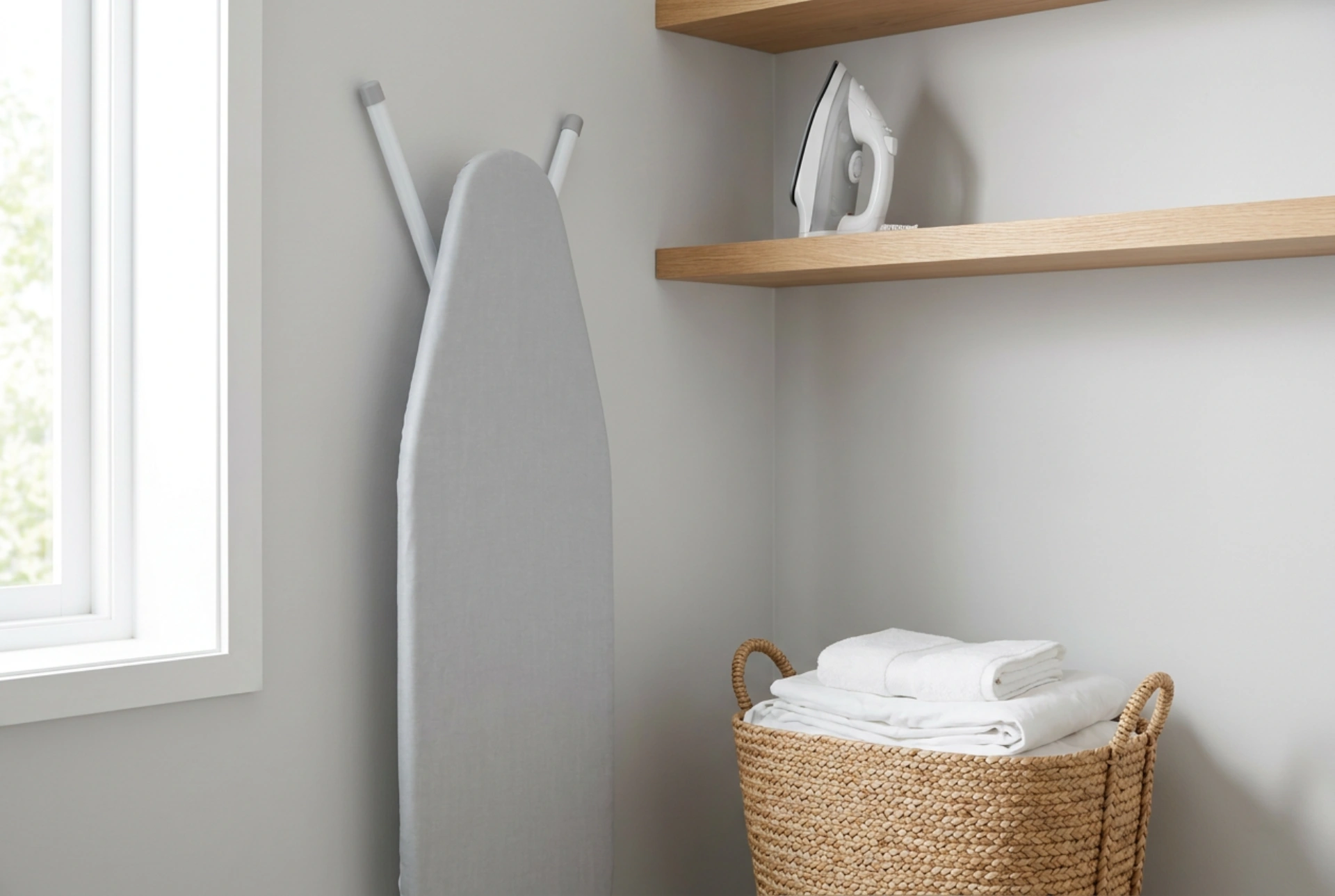


Maximising efficiency in a compact laundry room requires smart spatial design and robust mechanical solutions. A wall-mounted folding ironing board eliminates the footprint of a traditional free-standing model while maintaining structural stability and optimal ergonomics.
The Physics of Wall Mounting and Load Distribution
Installing a wall-mounted ironing board involves managing lever arms and rotational force. When extended, the board acts as a cantilever, amplifying the force applied at the tip. For example, applying five kilograms of downward pressure at the far end of a one-metre board exerts a significantly higher moment of force at the wall bracket. This requires secure anchoring into structural wall studs rather than dry lining alone.
Locating and Securing to Studs
Drywall or plasterboard cannot support the shear stress and tension of a cantilevered board. You must secure the mounting bracket directly into timber studs or masonry using heavy-duty steel screws. If stud alignment does not match your desired layout, mount a solid wooden patress plate securely across two studs first, then attach the ironing board mechanism to this plate. This distributes the load evenly across the wall's structural frame.
Thermodynamics of Ironing Covers and Heat Reflection
The efficiency of your ironing is directly affected by the thermodynamic properties of the board's textile cover. In a small space, managing steam and moisture is critical to preventing rust on the folding metal frame and mould on the surrounding walls.
- Metallised Cotton Covers: These fabrics feature a thin layer of metallic particles bonded to the cotton fibres. This layer reflects heat back through the garment, effectively ironing both sides simultaneously and reducing the thermal energy required from your iron.
- Felt Padding vs. Foam: Thick needle-punched felt padding absorbs moisture from steam without breaking down. Polyurethane foam, while common, degrades quickly under high temperatures and holds moisture, which can corrode the underlying steel mesh.
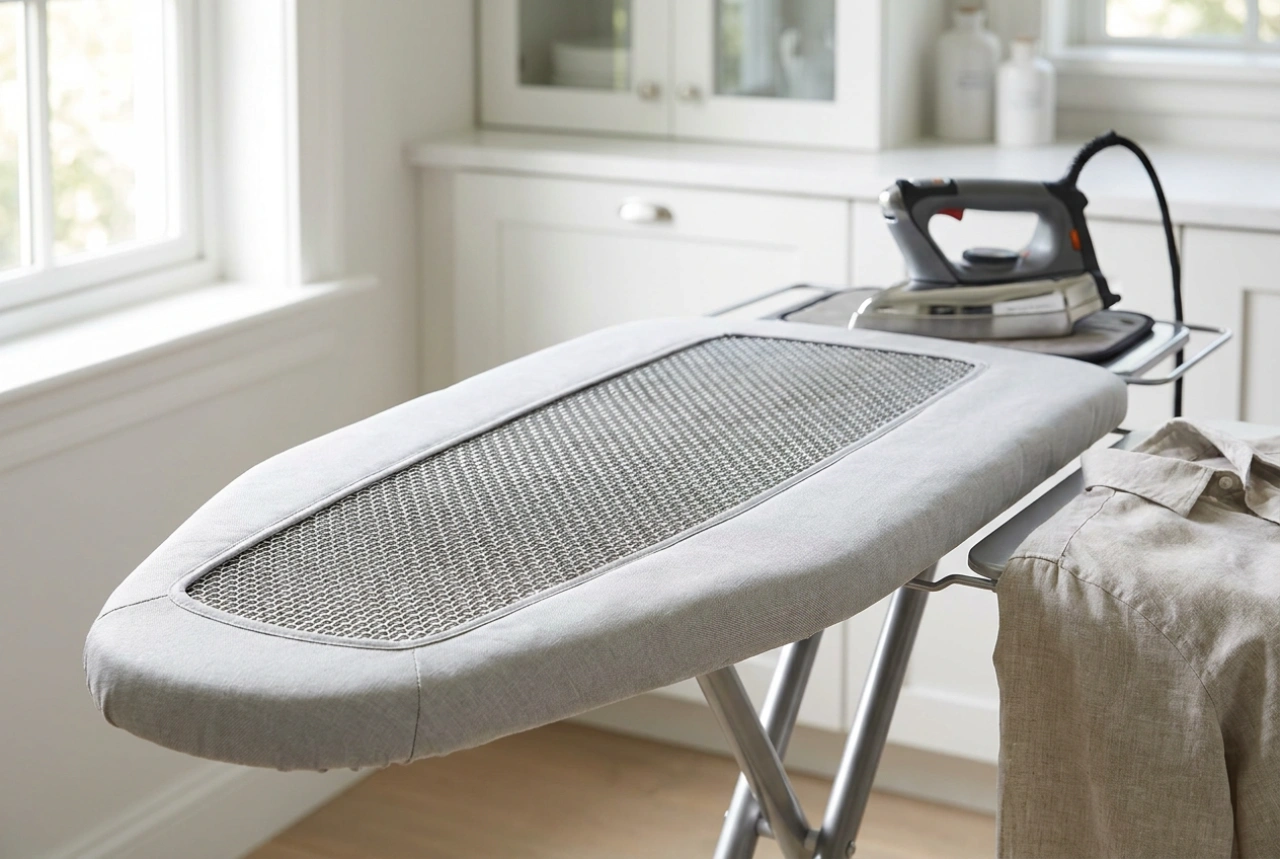
- Steam Permeability: The underlying board must feature a perforated metal mesh. This allows steam to escape downwards, preventing water droplets from condensing on the frame and causing rust over time.
Ergonomic Mechanics and Spatial Clearance
Proper physical alignment prevents muscle strain during prolonged laundry tasks. Traditional boards are often set at incorrect heights, leading to back pain. A wall-mounted board allows you to customise the installation height precisely to your anatomy.
Ideally, the board should sit at hip height—approximately 85 to 100 centimetres from the floor, or level with the bend of your elbow when standing. When planning the installation, ensure there is at least one metre of clear workspace around the extended board. This allows you to navigate around the tip easily and handle larger linens, such as sheets or tablecloths, without the fabric dragging on the floor or bunching against nearby appliances.
Mechanical Maintenance of Folding Hardware
The longevity of a wall-mounted board relies on the smooth operation of its pivot hinges and locking mechanisms. Over time, friction and moisture can cause stiffness or noise.
Periodically inspect the hinge pins for wear. Applying a dry PTFE (polytetrafluoroethylene) lubricant to the pivot points once a year keeps the mechanism moving smoothly without attracting dust or lint, which wet oils tend to do. Ensure that the safety catch or locking latch engaging when folded is fully operational to prevent the board from accidentally deploying.