

Maintaining a pristine, light-coloured desk organiser requires a systematic approach to both spatial management and material care to prevent visible dust, ink stains, and surface wear. Understanding the physics of clutter and the chemistry of stain removal ensures your workspace remains a focused, highly functional environment.
The Mechanics of Workspace Organisation
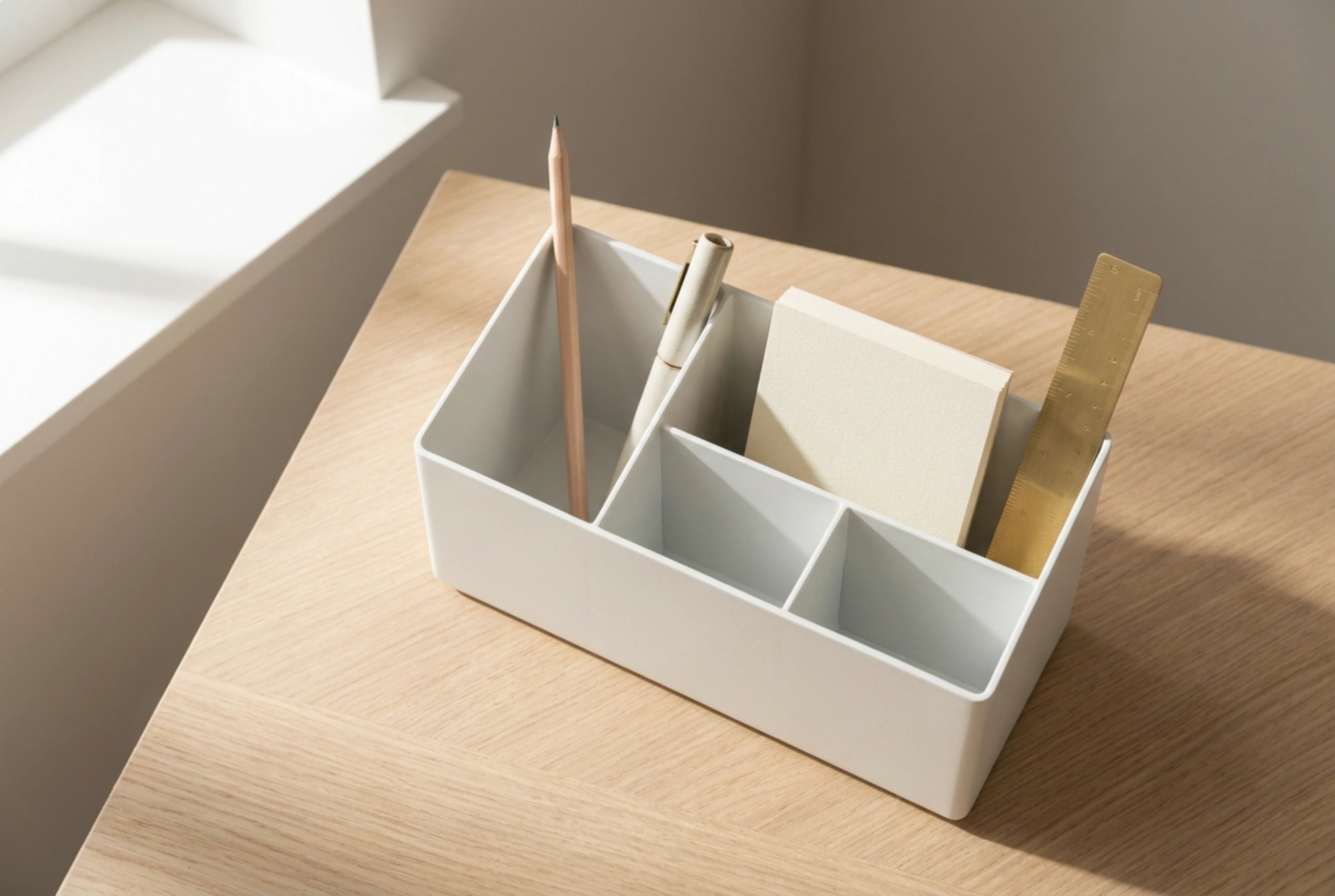
To keep a light-coloured desk organiser from becoming chaotic, you must design a system based on frequency of use and physical reach zones. A white or light-grey surface exposes clutter instantly because of high visual contrast. Therefore, every compartment must have a strict functional assignment.
- Primary Zone (Immediate Reach): Reserve the front compartments for items used multiple times an hour, such as pens, scrap paper, or a stylus.
- Secondary Zone (Arm's Length): Use the deeper, back compartments for tools used daily but less frequently, like scissors, rulers, or highlighters.
- Tertiary Zone (Deep Storage): Keep paperclips, spare cartridges, and cables in closed drawers or the bottommost sections of the organiser to minimise visual noise.
By categorising items according to physics-based access patterns, you eliminate the friction of returning tools to their designated spots, preventing the accumulation of miscellaneous items on the organiser’s edges.
Understanding Static Charge and Dust Accumulation
Light-coloured materials, especially plastics, acrylics, and lacquered wood, are highly susceptible to dust buildup. This is driven by electrostatic attraction. Synthetic materials easily accumulate a negative static charge, pulling positively charged ambient dust particles from the air.
To combat this, avoid dry dusting with standard paper towels or polyester cloths, which generate more friction and increase static electricity. Instead, utilise a damp microfibre cloth. The split fibres of a microfibre cloth create a massive surface area that physically traps dust particles through capillary action rather than merely pushing them around. For synthetic organisers, wiping the surface with a highly diluted solution of water and a drop of mild dishwashing liquid (a surfactant) breaks the surface tension and neutralises static charges, keeping dust away for longer periods.
The Chemistry of Ink and Stain Removal
One of the main challenges of maintaining a light organiser is dealing with ink leaks, graphite smudges, and adhesive residues. Because light surfaces offer zero camouflage, immediate and correct chemical intervention is required to avoid permanent discolouration.
For ballpoint pen and permanent marker ink, water-based cleaners are ineffective because the pigments are bound in hydrophobic solvents. To dissolve these stains, apply a small amount of isopropyl alcohol (70% concentration) to a cotton swab. Isopropyl alcohol acts as a solvent, breaking the chemical bonds of the ink without damaging most acrylic or plastic surfaces. Always test a small, inconspicuous area first, as high concentrations of alcohol can cloud certain low-grade plastics.
For graphite marks and scuffs, avoid abrasive chemical scrubs that can create micro-scratches on the surface. These microscopic grooves will permanently trap dirt and look grey over time. Instead, use a soft, non-abrasive polymer eraser. Gently apply mechanical pressure in circular motions to lift the carbon particles off the material.
Preventive Maintenance and Protective Barriers
The easiest way to maintain a light-coloured organiser is to prevent stains from occurring in the first place. Implementing simple protective barriers can significantly extend the lifespan and appearance of your organiser.
Consider lining the bottom of deep compartments with thin, washable silicone liners or heavy-duty cardstock in a matching light shade. This acts as a physical barrier against leaking ink or graphite dust from pencils. If a leak occurs, you simply wash or replace the liner without needing to scrub the actual organiser body. Additionally, make it a habit to cap pens securely and store them tip-up if they are gel- or felt-based, reducing gravity-assisted leaks.