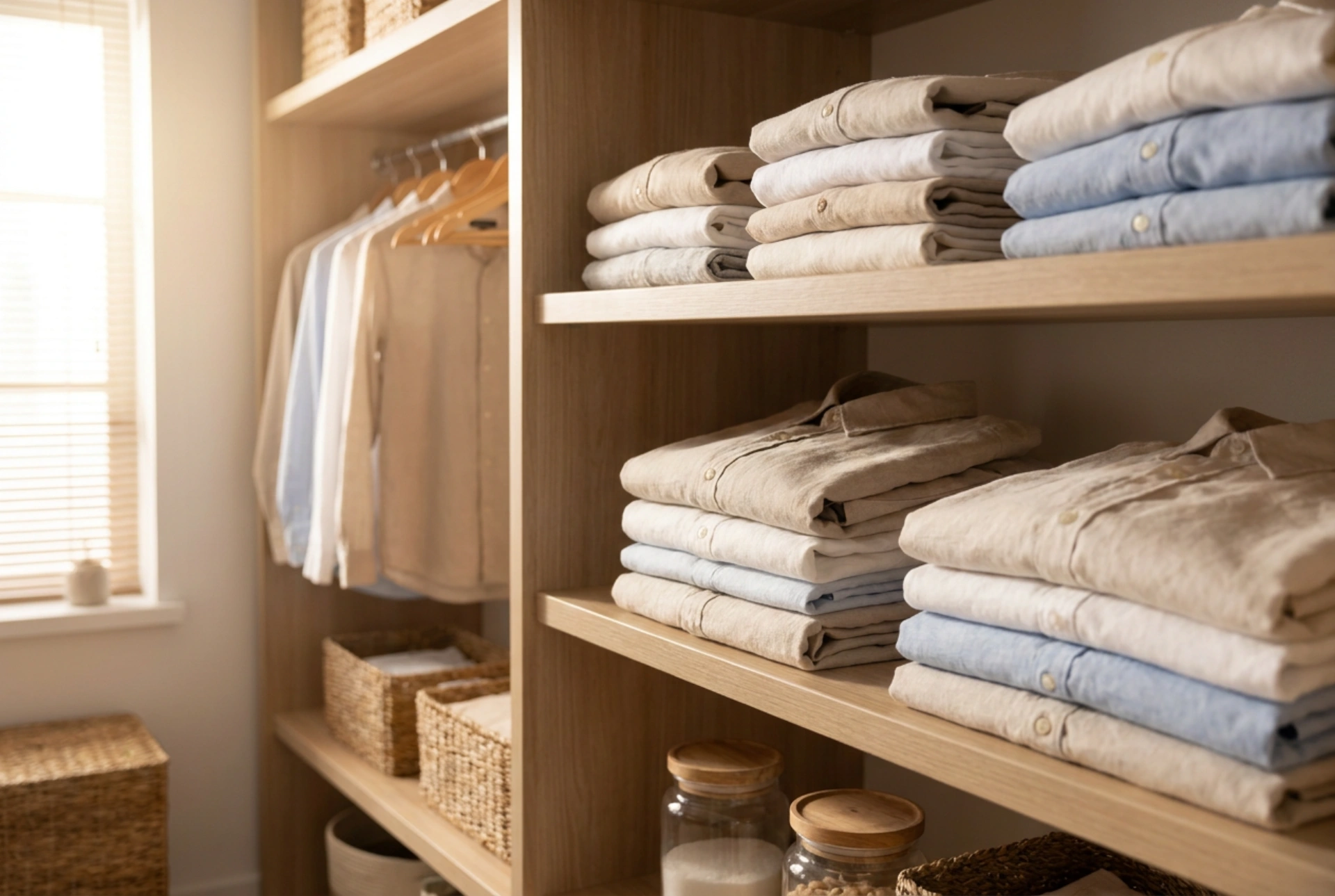


Maximising the efficiency of a large wardrobe with shelves requires more than just neat folding; it demands an understanding of fabric physics, weight distribution, and micro-climates within enclosed spaces. By applying systematic structural principles, you can prevent fabric degradation, eliminate stubborn creases, and maintain an easily accessible storage system.
The Physics of Fabric Friction and Stack Stability
To understand why stacks of clothes frequently topple or sag, one must look at the friction coefficient of different textiles. Coarse, natural fibres like cotton and linen have a high surface friction, meaning they naturally grip one another when stacked. Conversely, silk, satin, and highly polished synthetics have a low coefficient of friction, making them prone to sliding. When building stacks on open shelves, never mix these two categories. A heavy cotton sweatshirt placed on top of a slippery polyester jersey creates an unstable shear force, causing the stack to lean and eventually collapse.
Furthermore, structural stability is governed by the height-to-base ratio of the stack. For optimal balance, a stack of folded garments should never exceed a 3:2 ratio (height to width). Exceeding this limit increases the centre of gravity, making the stack highly susceptible to tilting whenever a single item is retrieved from the middle.
The Weight-Distribution Principle
Gravity is the primary enemy of pristine, unwrinkled garments. When clothes are stacked, the weight of the upper items exerts continuous pressure on the lower items. Over time, this pressure compresses the air pockets between the textile fibres, locking in any micro-creases and flattening the loft of knitwear. To mitigate this structural stress, implement a strict weight-gradient system:
- Base Layer: Place heavy, high-density fabrics such as denim, heavy-gauge woollen jumpers, and thick corduroy at the very bottom of the shelf stack. These materials possess high resilient elasticity and can withstand compression without fibre damage.
- Middle Layer: Position medium-weight cottons, flannels, and structured knits in the centre. These fabrics provide a stable transition zone.
- Top Layer: Reserve the apex of the stack for lightweight linens, fine cotton t-shirts, and delicate synthetics. Minimising the downward load on these materials prevents the setting of deep wrinkles that require high heat or steam to remove.
Zoning and the Airflow Micro-Climate
Enclosed wardrobes are highly susceptible to micro-climatic fluctuations. Warm, humid air naturally rises, while cooler, denser air settles at the bottom of the wardrobe. Without proper ventilation, stagnant air pockets can form, trapping residual moisture within natural fibres and creating an environment ripe for mildew or fibre oxidation (which causes yellowing). To counter this, never pack shelves to their physical limits.
Always maintain a minimum gap of five centimetres between the top of a garment stack and the shelf above it. This headspace facilitates natural convection currents, allowing air to circulate freely over and through the fabrics. Additionally, group garments by seasonal usage to ensure that items left undisturbed for long periods are placed in the dry, mid-level zones of the wardrobe rather than the humid bottom or the stagnant, warm top shelves.
Folding Mechanics for Deep Shelves
Deep shelves present a unique challenge: items at the back are often forgotten, leading to chaotic searching. To utilise deep shelving effectively without sacrificing visibility, employ the "rectangular-block" folding method. Instead of folding garments into wide, flat squares, fold them into compact, uniform rectangles with the spine (the folded edge) facing outward.
For deep shelves, arrange your folded rectangles in a tandem double-row system. Place out-of-season or rarely worn items in the rear row, and daily essentials in the front. Because each garment is folded to the exact same depth, the front row acts as a clean, uniform barrier that prevents the rear row from shifting or collecting dust, while still allowing easy access when seasonal shifts require a quick swap.