

Achieving a professional-grade carpet clean at home often ends in two common frustrations: unsightly drying streaks and a stiff, crunchy texture underfoot. Both issues are the direct result of surfactant residue and improper moisture management rather than the detergent itself. By understanding the chemistry of carpet fibers and utilizing proper extraction techniques, you can achieve a soft, flawless finish every time.
The Chemistry Behind Crunchy Carpet Fibers
To understand why carpet fibers turn stiff after cleaning, we must look at the behavior of surfactants. Surfactants are the primary active ingredients in carpet detergents; they possess a water-attracting head and an oil-attracting tail. This dual nature allows them to bind to greasy soils and lift them from the carpet pile. However, if the detergent solution is too concentrated or if it is not thoroughly rinsed out, these molecules remain bound to the fibers.
As the moisture evaporates, the left-behind surfactants dry into a crystalline, sticky film. This residue bonds individual fibers together, creating a stiff, cardboard-like texture. Furthermore, this dried film remains chemically active, meaning it will immediately attract dirt and oils from footwear, causing the carpet to re-soil much faster than before.
Why Drying Streaks Occur: Wicking and Water Hardness
Streaks and dark patches post-cleaning are typically caused by a physical phenomenon known as wicking. When a carpet backing becomes overly saturated with water, the moisture dissolves deeply embedded soil within the base. As the carpet dries from the top down, capillary action draws this dirty water up to the tips of the fibers. When the water evaporates at the surface, the dissolved soil is left behind, forming dark, uneven streaks.
Water hardness also plays a significant role. High levels of calcium and magnesium in tap water react with anionic surfactants in detergents, creating insoluble mineral deposits. These minerals cling to the fibers, dulling their color and contributing to both the stiffness and the streaky appearance. Using softened or distilled water for your cleaning solution can dramatically improve the final texture.
The Acidic Rinse Technique to Neutralize Residues
Most carpet cleaning detergents are alkaline (pH 8 to 10) to effectively break down organic soils and grease. However, leaving fibers in an alkaline state keeps them swelled and rough. To restore the natural softness of the carpet, you must neutralize the pH at the end of the cleaning process.
An acidic rinse step utilizing a very mild solution of citric acid or white vinegar (acetic acid) formulated at a pH of around 4 to 5 works wonders. The acid neutralizes the alkaline surfactant residues, dissolving the mineral deposits and relaxing the fibers. This step mimics the industrial rinsing process used by professional textile restorers, ensuring the carpet dries soft and free of sticky residues.
A Step-by-Step Protocol for Flawless Results
Following a precise sequence of operations ensures deep soil removal without damaging the delicate twist of the carpet yarns.
- Thorough Dry Extraction: Before introducing any moisture, vacuum the carpet slowly in multiple directions. Up to 80% of carpet soil is dry particulate matter which, if wetted, turns into muddy slurry that is incredibly difficult to extract.
- Precise Dilution: Always measure the detergent precisely according to instructions. More soap does not equal more clean; it only guarantees residue. Use lukewarm water (around 40°C), as excessive heat can shrink wool or unravel the heat-set twist of nylon fibers.
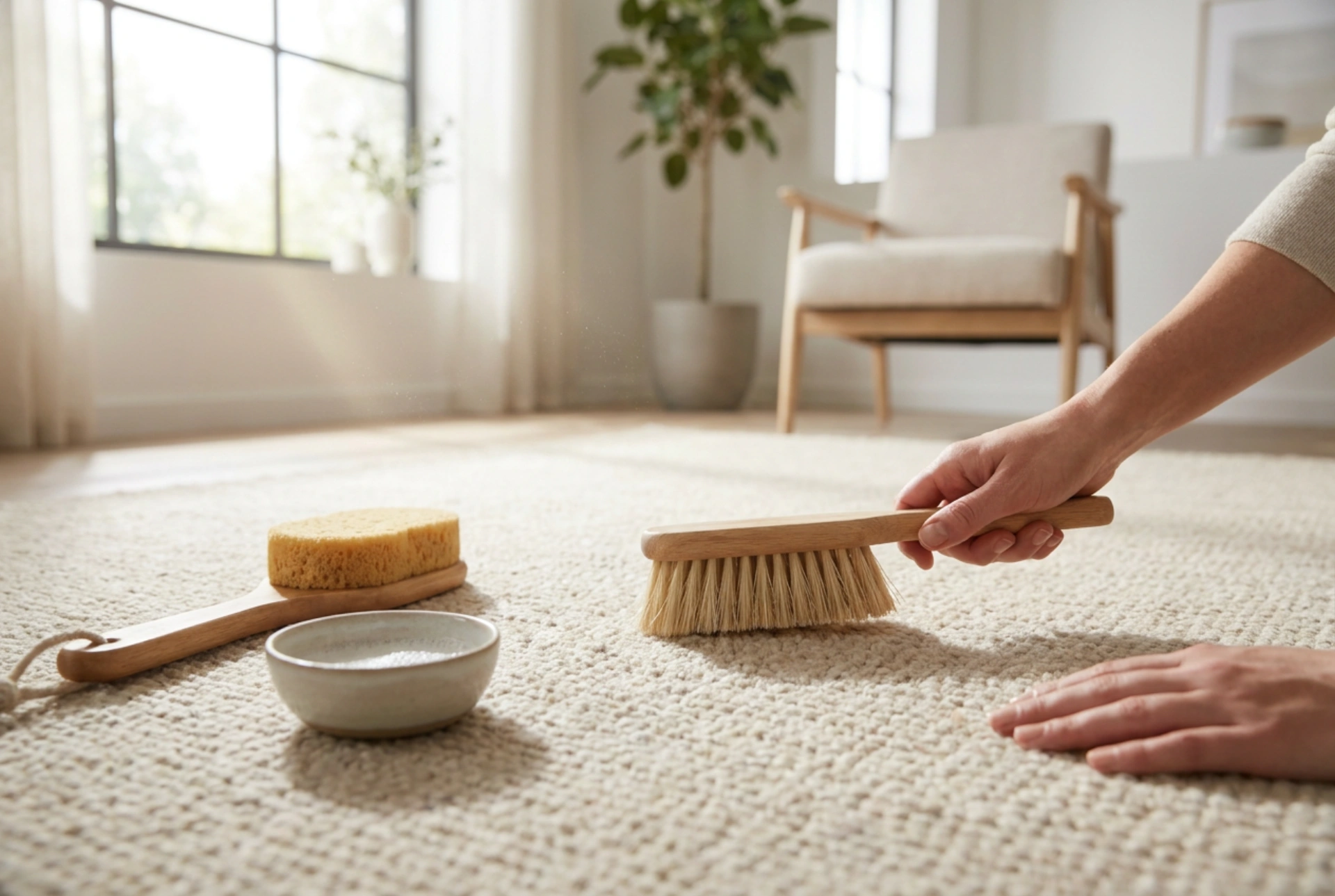
- Application of Foam: If cleaning manually, whip the detergent solution into a rich foam. Apply only the dry foam to the carpet using a soft-bristled brush. This minimizes backing saturation and prevents wicking.
- Gentle Agitation: Work the foam into the fibers using gentle, circular motions. Never scrub aggressively, as this untwists the yarn bundles and permanently distorts the pile texture.
- Rinse and Neutralize: Blot the area repeatedly with clean, dry white cotton towels. Next, mist the fibers lightly with a mild acidic rinse solution (one tablespoon of citric acid per liter of water) and blot once more with a fresh towel to lift remaining residues.
- Pile Grooming: Use a clean, dry carpet brush or a squeegee to comb all the damp fibers in a single direction. This ensures even drying and prevents light refraction differences that look like streaks once dry.