

Removing stubborn residue, paint splatters, or mineral deposits from window panes often requires more than a simple cloth, leading many to turn to copper scrapers. The physical principles of material hardness guarantee that pure copper cannot scratch standard window glass, provided you understand the mechanics of lubrication and surface contaminants.
The Science of Materials: Mohs Hardness Scale
To understand why copper is safe for glass, we must look at the fundamentals of mineral hardness. The Mohs scale ranks materials from 1 (the softest, such as talc) to 10 (the hardest, such as diamond). Standard float glass used in residential windows consists primarily of silicon dioxide, sodium oxide, and calcium oxide, yielding a Mohs hardness rating of approximately 5.5 to 6. Pure copper, by comparison, sits much lower on the scale, at roughly 3.
Because a softer material cannot physically deform or cut into a harder material, a clean copper blade will glide over glass without causing damage. The copper itself will wear down or leave microscopic trace deposits on the surface before it can ever indent the silicate structure. This differential in hardness makes copper an ideal metal for removing stubborn debris without compromising the integrity of the underlying pane.
The Culprit of Scratches: Abrasive Contaminants
If copper is physically softer than glass, why do some homeowners still report scratches after cleaning? The answer lies not in the metal itself, but in the microscopic particles trapped beneath the blade. Common outdoor dust contains high concentrations of silica, quartz, and tiny granite fragments. Quartz has a Mohs hardness rating of 7, making it significantly harder than both copper and glass.
If you drag a copper scraper across a dry, dusty window, the copper blade acts as a carrier. It traps these microscopic quartz particles, pressing them into the glass surface under pressure. The resulting scratch is caused entirely by the high-hardness dust being dragged along, not by the copper metal. Therefore, ensuring a completely clean surface before scraping is the absolute foundation of safe window maintenance.
The Critical Role of Lubrication and Surfactants
Dry scraping is a recipe for surface damage. Introducing a liquid barrier is critical for two reasons: it reduces friction and suspends particulate matter. Plain water is a poor lubricant on its own because of its high surface tension, which causes it to bead up and leave dry patches. Adding a mild surfactant, such as standard dishwashing liquid, lowers this surface tension, allowing the water to spread evenly and encapsulate abrasive dust.
This liquid barrier creates a hydrodynamic boundary layer. When the copper scraper moves across this wet film, any remaining fine particles are suspended in the fluid and pushed ahead of the blade rather than being ground into the glass. The lubricant also cools the interface, preventing friction-induced heat from binding materials together.
Proper Ergonomics, Angle, and Movement
The physics of force distribution play a key role in preventing localized high-pressure points. To scrape glass safely, you must control the angle and direction of the tool:
- Keep a Low Angle: Maintain the scraper at a low angle, roughly 30 to 45 degrees relative to the glass surface. A steep angle increases the vertical force vector, which can trap particles and strain the glass structure.
- One-Directional Movement: Always push the scraper forward in a single, fluid direction. Never pull it backward or use a sawing, back-and-forth motion. Lifting the blade at the end of each stroke prevents the accumulation of abrasive sludge along the cutting edge.
- Apply Moderate Pressure: Let the sharpness of the copper edge do the work. Excessive vertical force is unnecessary and increases the risk of trapping stray grit beneath the blade.
Step-by-Step Execution for Pristine Glass
To ensure a scratch-free result, always follow a strict order of operations when using a copper tool:
- Pre-rinse: Use a low-pressure spray of water to flush away loose dust, sand, and grit. Never skip this initial rinsing phase.
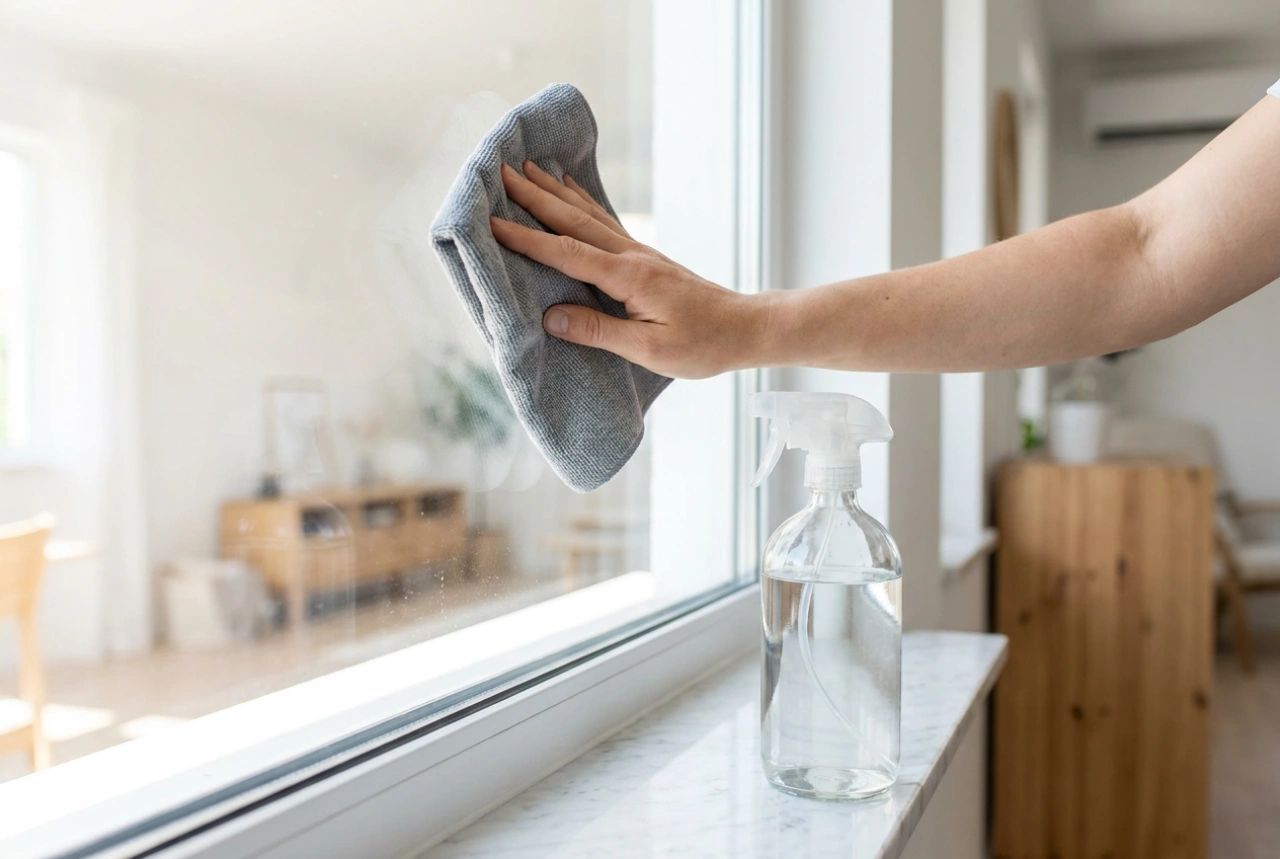
- Apply Lubricant: Generously spray the glass with a water-and-surfactant solution until the surface is completely wet.
- Inspect the Blade: Ensure the copper blade is perfectly flat, clean, and free of burrs, rust, or embedded grit from previous jobs.
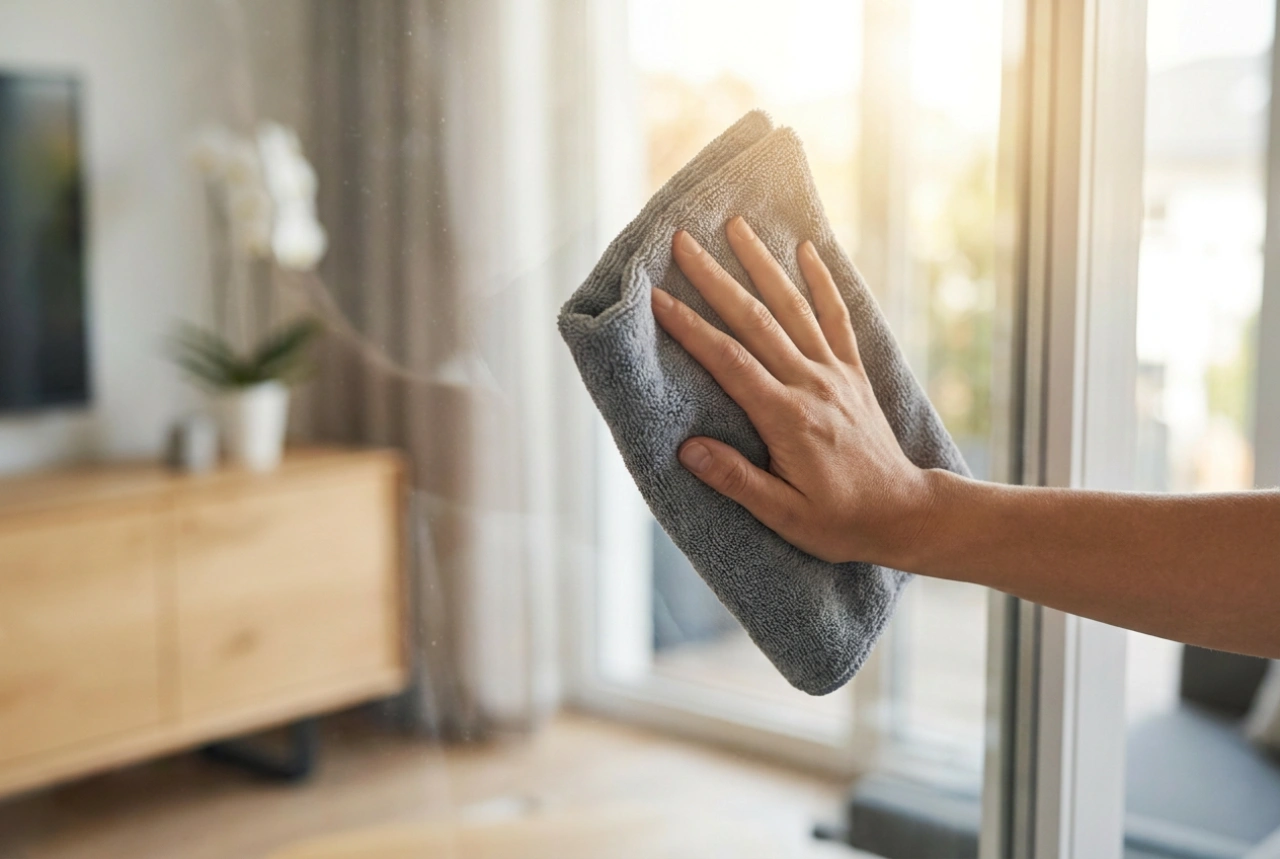
- Execute the Pass: Hold the tool at the correct angle, push forward smoothly, lift, wipe the blade clean with a microfibre cloth, and repeat.
- Final Rinse and Dry: Wash away the emulsified residue and dry the window with a clean squeegee or lint-free cloth to check your progress.