

Maintaining a well-organised home first aid kit ensures that crucial medical supplies are immediately accessible during an emergency, reducing panic and preventing critical delays. Applying systematic storage principles and understanding material preservation will protect the integrity of your sterile supplies and extend their shelf life.
Categorisation by Urgency and Function
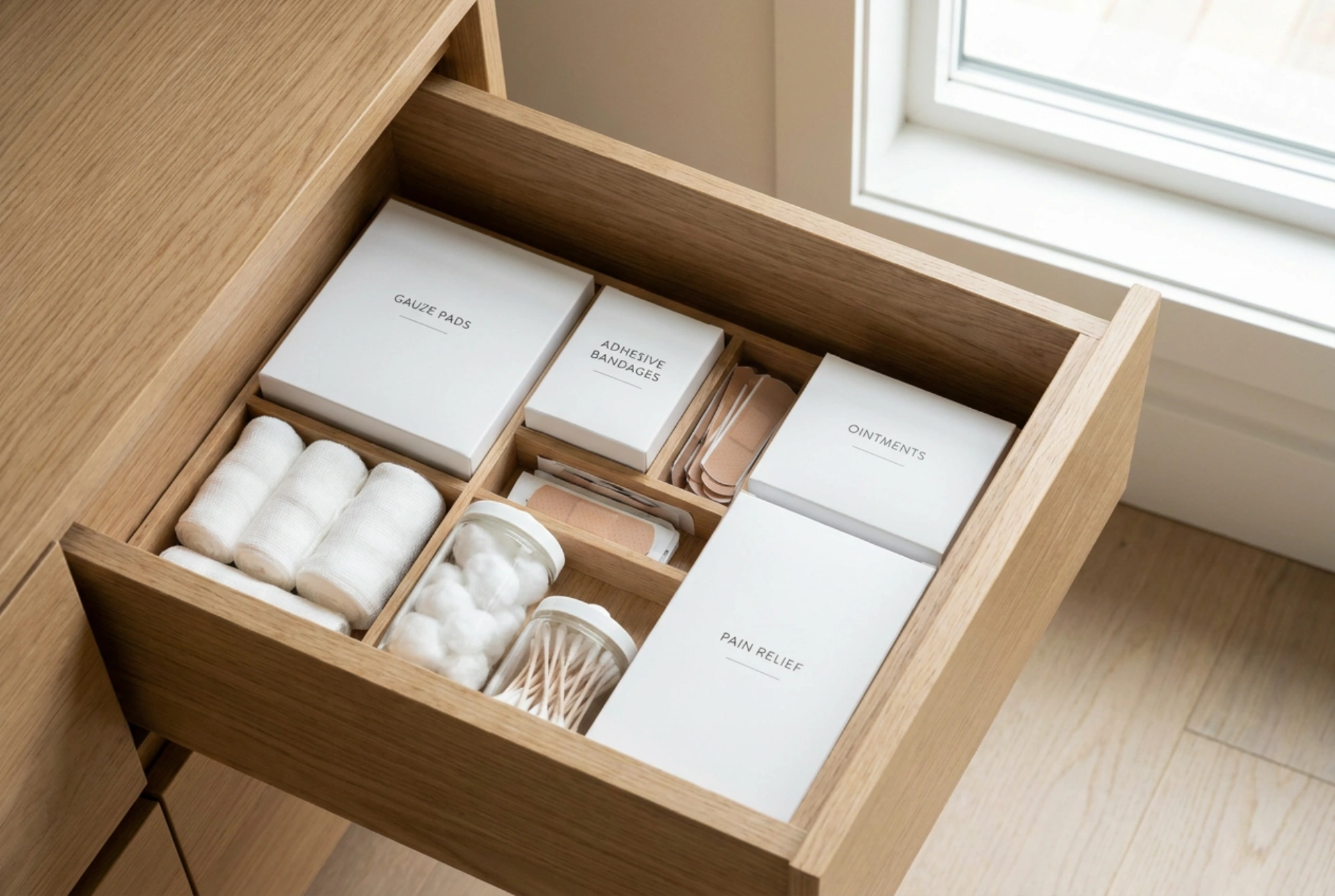
In high-stress situations, cognitive load increases, making it difficult to search through a cluttered box. To counteract this, group your supplies into distinct, logical categories based on the type of injury. This functional grouping allows you to bypass irrelevant items instantly and find what you need within seconds.
- Trauma and Bleeding Control: Group sterile gauze compresses, pressure bandages, cohesive elastic wraps, and medical shears. These items must occupy the most accessible, top-tier position of your storage system.
- Minor Wound Care: Place adhesive plasters of various sizes, hydrocolloid dressings, and antiseptic wipes together in a single secondary compartment.
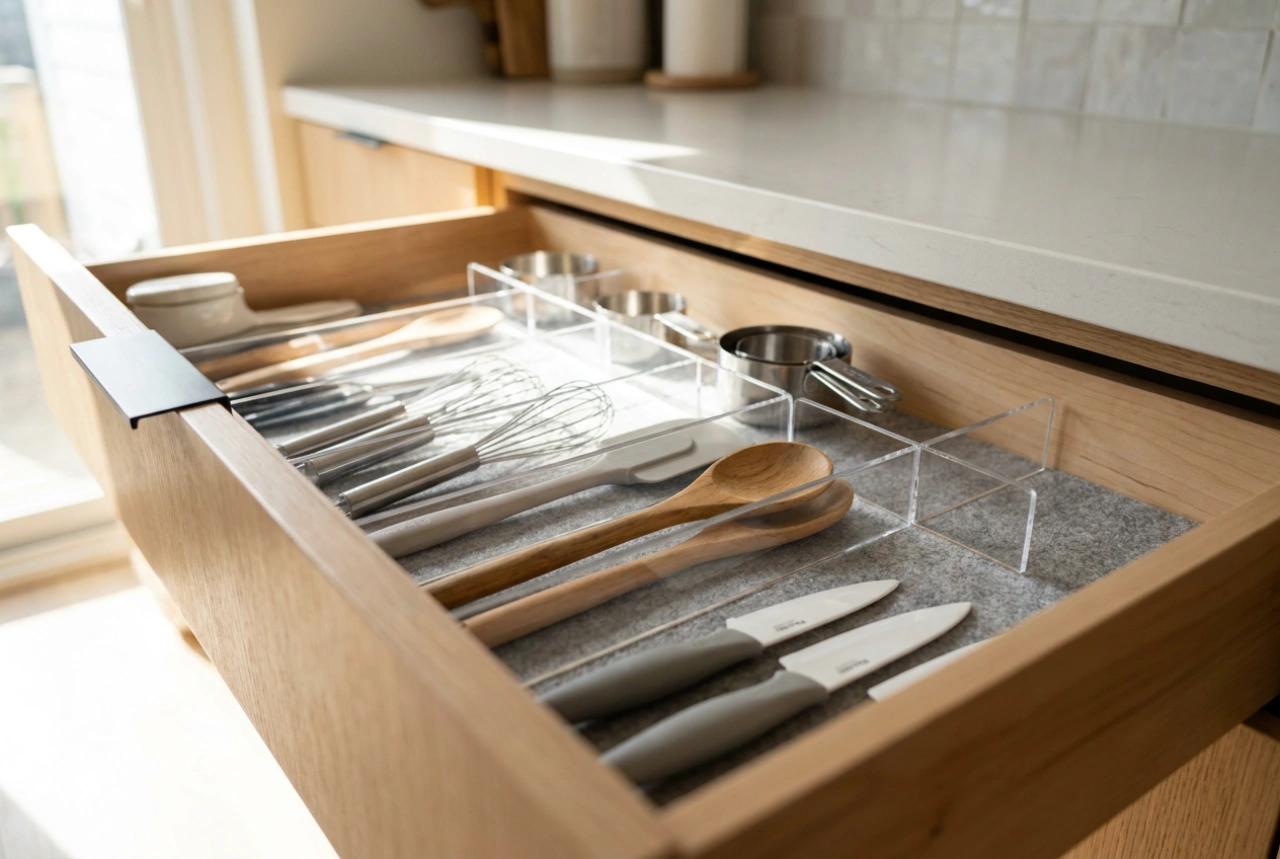
- Instruments and Tools: Store tweezers, safety pins, medical tape, and thermometers in a dedicated rigid container to prevent sharp edges from compromising other sterile packaging.
Material Preservation and Environmental Controls
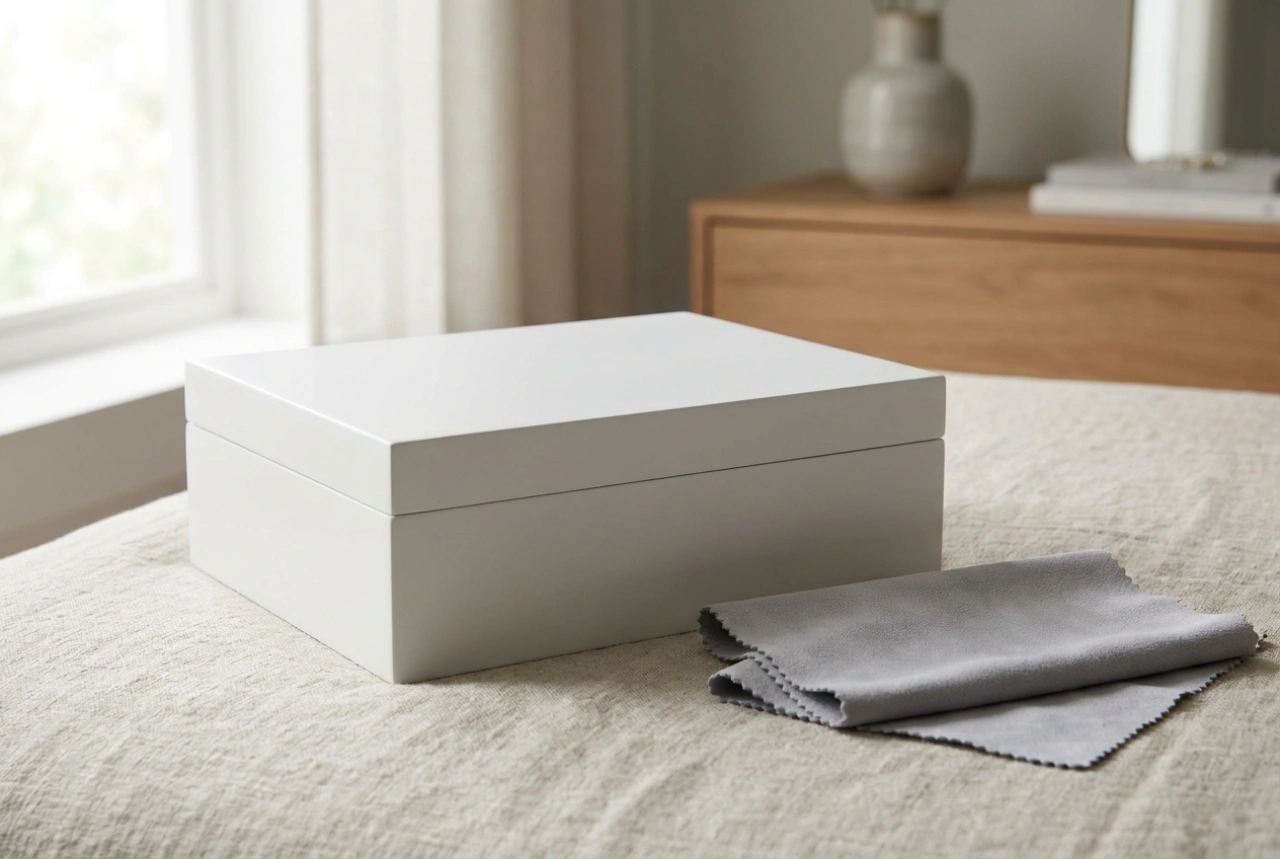
The chemical stability of medical supplies is highly sensitive to environmental factors. Standard adhesive plasters rely on pressure-sensitive adhesives formulated from synthetic elastomers. Exposure to high humidity and fluctuating temperatures accelerates the hydrolytic degradation of these polymers, rendering the adhesive useless or causing it to melt and migrate through the paper backing.
Furthermore, elastic bandages containing natural rubber latex or synthetic elastomers will degrade, lose their elasticity, and become brittle if exposed to ozone and ultraviolet light. Liquid antiseptic solutions can undergo thermal decomposition, reducing their efficacy. For these reasons, storing a first aid kit in a bathroom is highly discouraged due to the frequent moisture and heat fluctuations. Instead, select a cool, dark, and dry location, keeping the storage temperature consistently between 15°C and 25°C.
Systematic Layout and Container Architecture
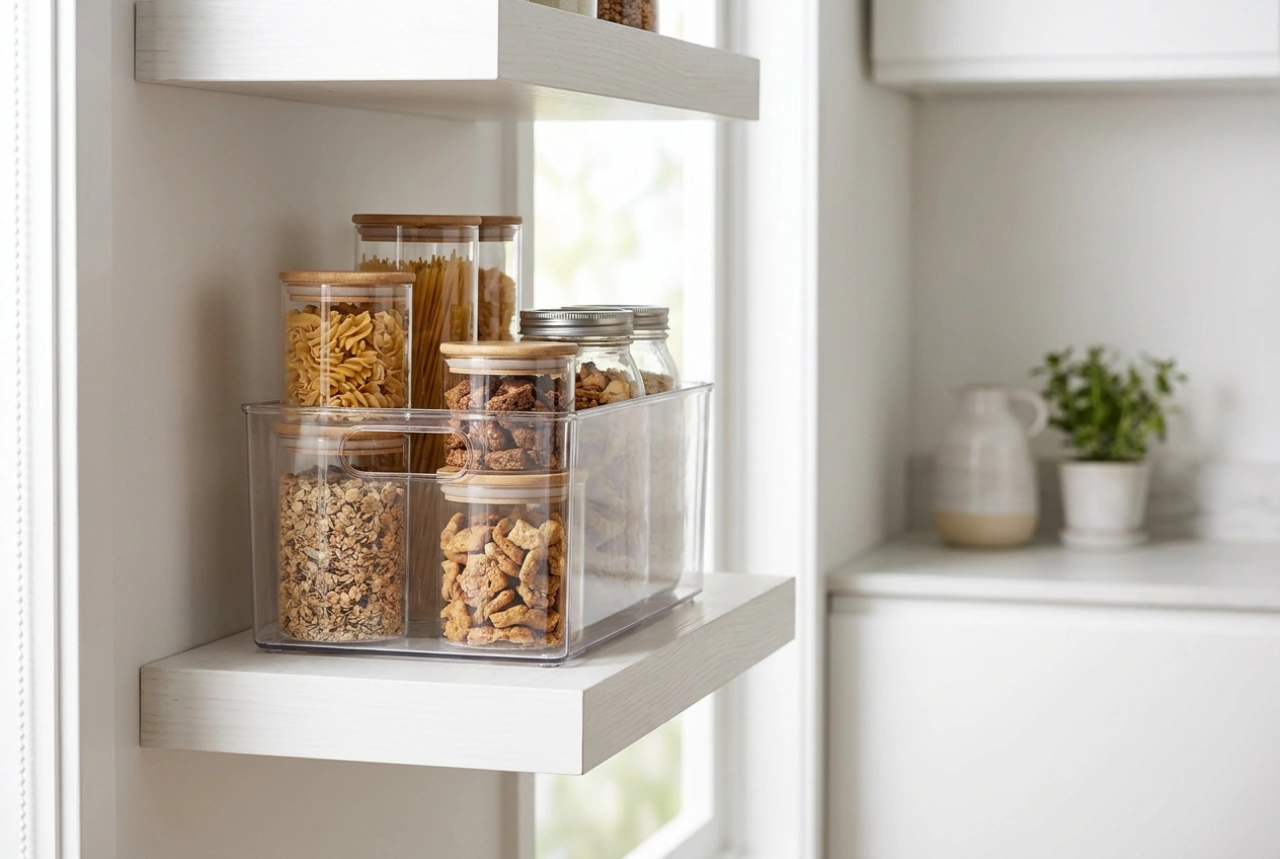
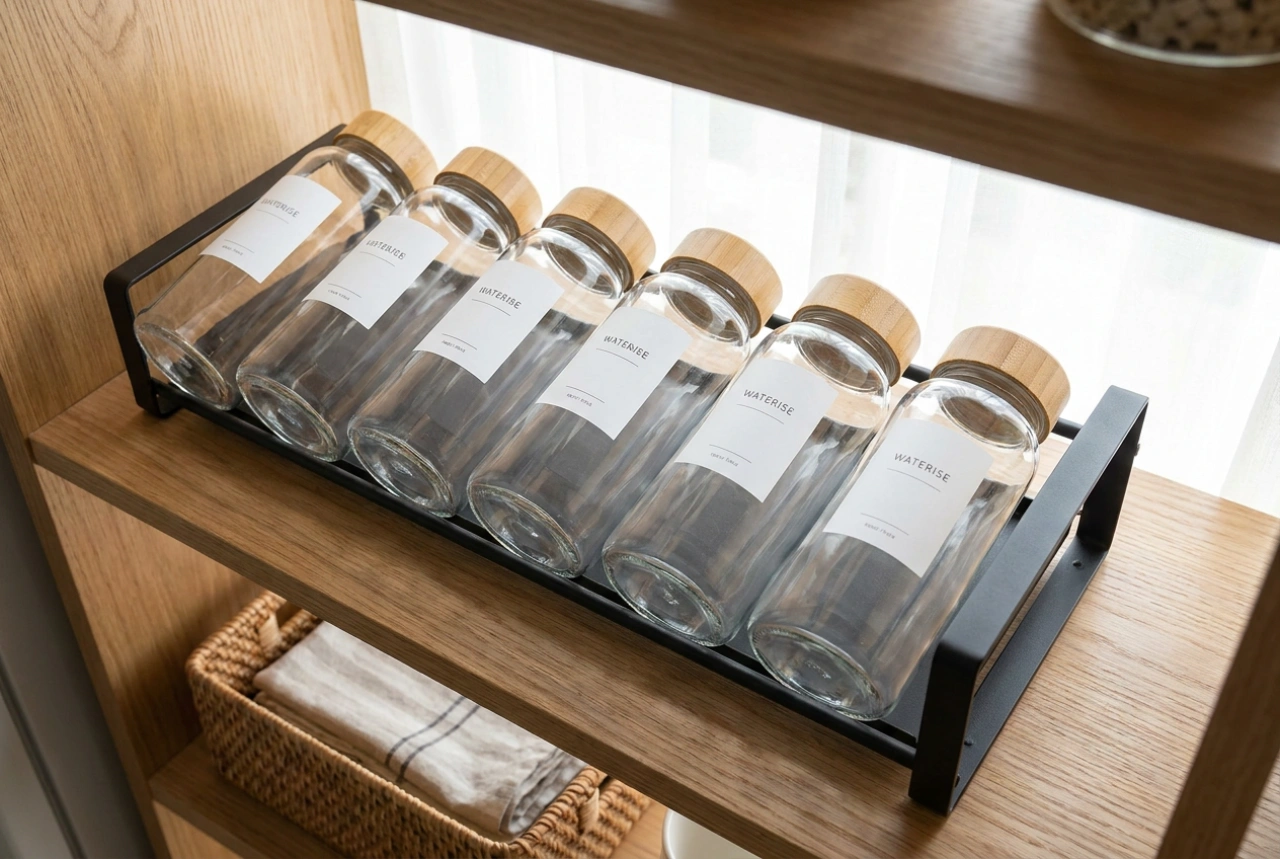
To maintain order, utilise modular, transparent containers within your main storage unit. Visual transparency allows you to locate items before even opening a specific compartment, saving precious seconds. Shallow drawers or flat boxes with adjustable dividers are far superior to deep chests, as deep storage encourages stacking, which inevitably buries essential items at the bottom.
Apply the First-In, First-Out (FIFO) inventory method. When replenishing supplies, place newly purchased items at the back or bottom of their respective compartments, moving older items with closer expiry dates to the front. Write expiry dates in bold, black marker on the outer packaging of sterile items so they are visible at a glance without needing to extract the item from its slot.
Maintaining Sterile Integrity and Safety
Sterility is binary; a compromise in packaging integrity means the item is no longer sterile. Ensure that paper-backed sterile dressings are stored flat and never bent or compressed, as physical stress can create micro-fissures in the paper barrier, allowing airborne bacterial contamination. Do not store sharp tools loose in the same compartment as sterile dressings, as they can easily puncture the protective plastic or paper films during transit or retrieval.
Conduct a systematic audit of your first aid kit every six months. Check the seal integrity of all sterile items, replace dried-out antiseptic wipes, and test the batteries of any electronic devices, such as thermometers, storing the batteries adjacent to the device rather than inside it to prevent chemical leakage and corrosion over time.