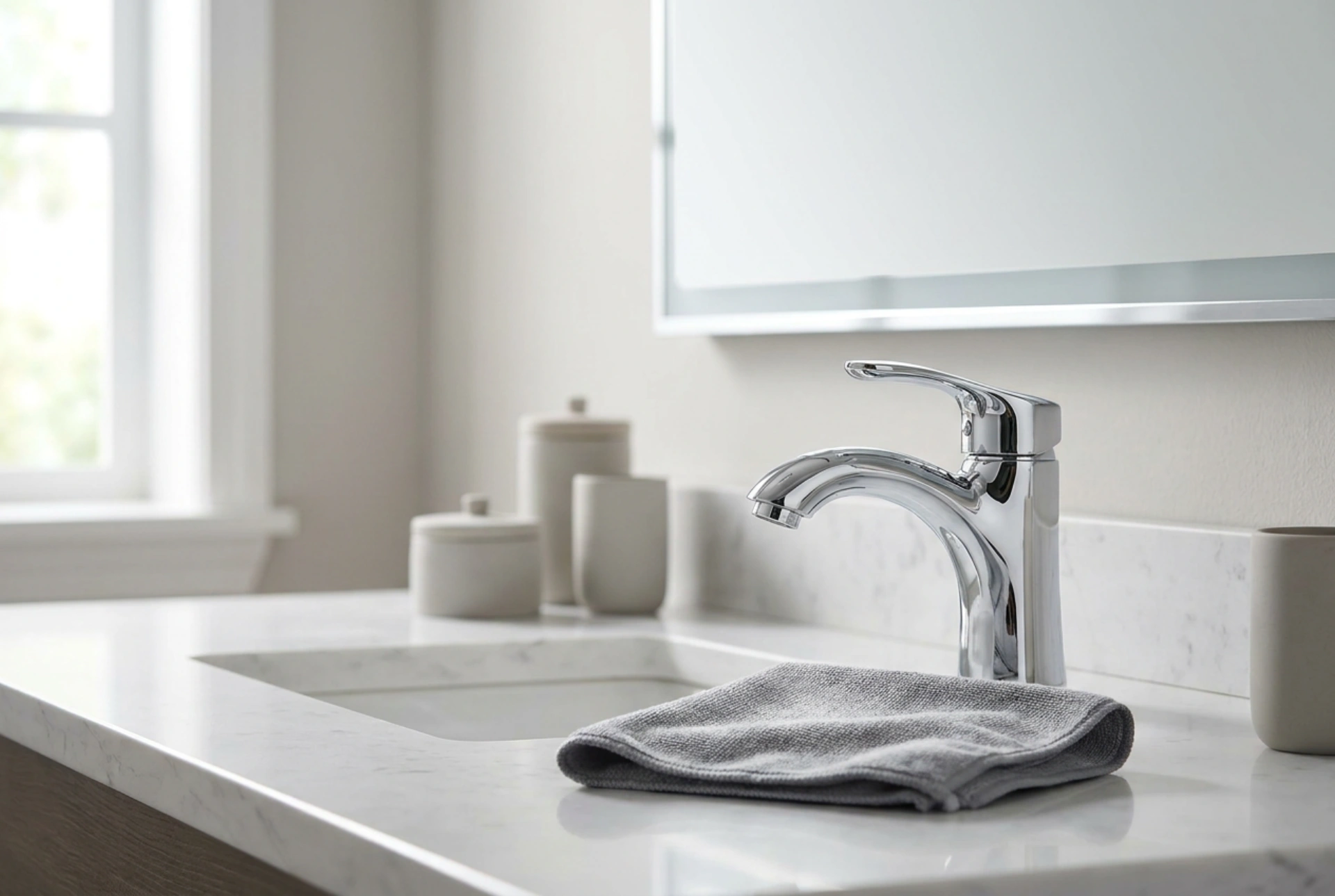


Chrome fixtures add a brilliant, mirror-like finish to bathrooms and kitchens, but they are highly vulnerable to limescale and chemical damage. To restore their shine without causing permanent dullness, you must balance chemical dissolution with physical care.
Understanding the Vulnerability of Chrome Plating
To clean chrome effectively, we must first understand what it is. Chrome fixtures are not solid chromium; instead, they feature an incredibly thin layer of chromium electroplated over a base metal like brass, copper, or nickel. This outer layer is extremely hard but also highly susceptible to micro-scratching and chemical stripping. Limescale consists primarily of calcium carbonate, which binds strongly to the metal surface. Attempting to scrape this mineral layer off mechanically will inevitably scratch the chromium. Conversely, using highly aggressive mineral acids, such as hydrochloric or phosphoric acid, can penetrate the microscopic pores in the chrome layer, attacking the underlying nickel or copper and causing the plating to bubble, peel, or turn permanently gray.
The Chemistry of Safe Scale Removal
The safest way to dissolve calcium carbonate without compromising the chromium oxide passivation layer is through mild, organic acids. Citric acid and diluted acetic acid (white vinegar) are ideal because they donate hydrogen ions that react with the insoluble calcium carbonate, converting it into soluble calcium compounds and carbon dioxide gas. This chemical reaction allows the solid scale to dissolve into a liquid form that can be wiped away without any physical abrasion. For standard maintenance, a 5% to 10% solution of citric acid in warm water provides the optimal balance of reaction speed and material safety. Warm water increases the kinetic energy of the acid molecules, accelerating the breakdown of the mineral bonds without requiring a lower, more hazardous pH level.
The Proper Technique: Dwell Time and Mechanical Action
When cleaning chrome, physical force should never replace chemical contact time. Scrubbing with abrasive pads, steel wool, or even baking soda paste can create thousands of microscopic scratches that permanently scatter light, making the surface look cloudy and dull. Instead, use the following systematic approach:
- Cool the surface: Ensure the chrome fixture is at room temperature. Applying cleaning solutions to a hot faucet causes the liquid to evaporate too quickly, concentrating the acid and leaving difficult-to-remove chemical water spots.
- Apply and saturate: Soak a soft microfiber cloth or paper towel in your mild citric acid solution and wrap it directly around the affected areas. This prevents the solution from running off and ensures continuous chemical contact.
- Allow dwell time: Let the solution sit for 10 to 15 minutes. This allows the acid to break down the crystalline structure of the limescale. Do not let it dry completely.
- Wipe linearly: Remove the wrap and gently wipe the surface with a clean, damp microfiber cloth. Always wipe in straight, linear directions rather than circular motions. If any microscopic grit is trapped under the cloth, circular motions will create highly visible swirl marks that catch the light from all angles.
- Rinse and neutralize: Thoroughly rinse the fixture with cold, clean water to stop the acidic reaction and remove all dissolved mineral residues.
Maintaining the Hydrophobic Barrier
Once the chrome is clean, the final step is to prevent future buildup. Tap water contains dissolved minerals that deposit as soon as the water evaporates. Buffing the fixture completely dry with a dry, plush microfiber cloth immediately after use is the simplest way to prevent scale. To go a step further, you can apply a microscopic hydrophobic barrier. Rubbing a tiny amount of cosmetic-grade mineral oil or natural carnauba wax onto the dry chrome creates a surface tension barrier. Water will bead up and roll off the metal instead of pooling and evaporating, keeping the fixture pristine and cutting down on the frequency of deep cleaning cycles.