

Integrating a black wardrobe into a small bedroom might seem counterintuitive to traditional interior guidelines, yet leveraging basic optical science allows this dark feature to expand rather than shrink a tight space. By balancing light absorption with specular reflection, a black mirrored wardrobe can serve as an architectural anchor that adds depth, sophistication, and a surprisingly airy feel.
The Science of Depth: Absorption vs. Specular Reflection
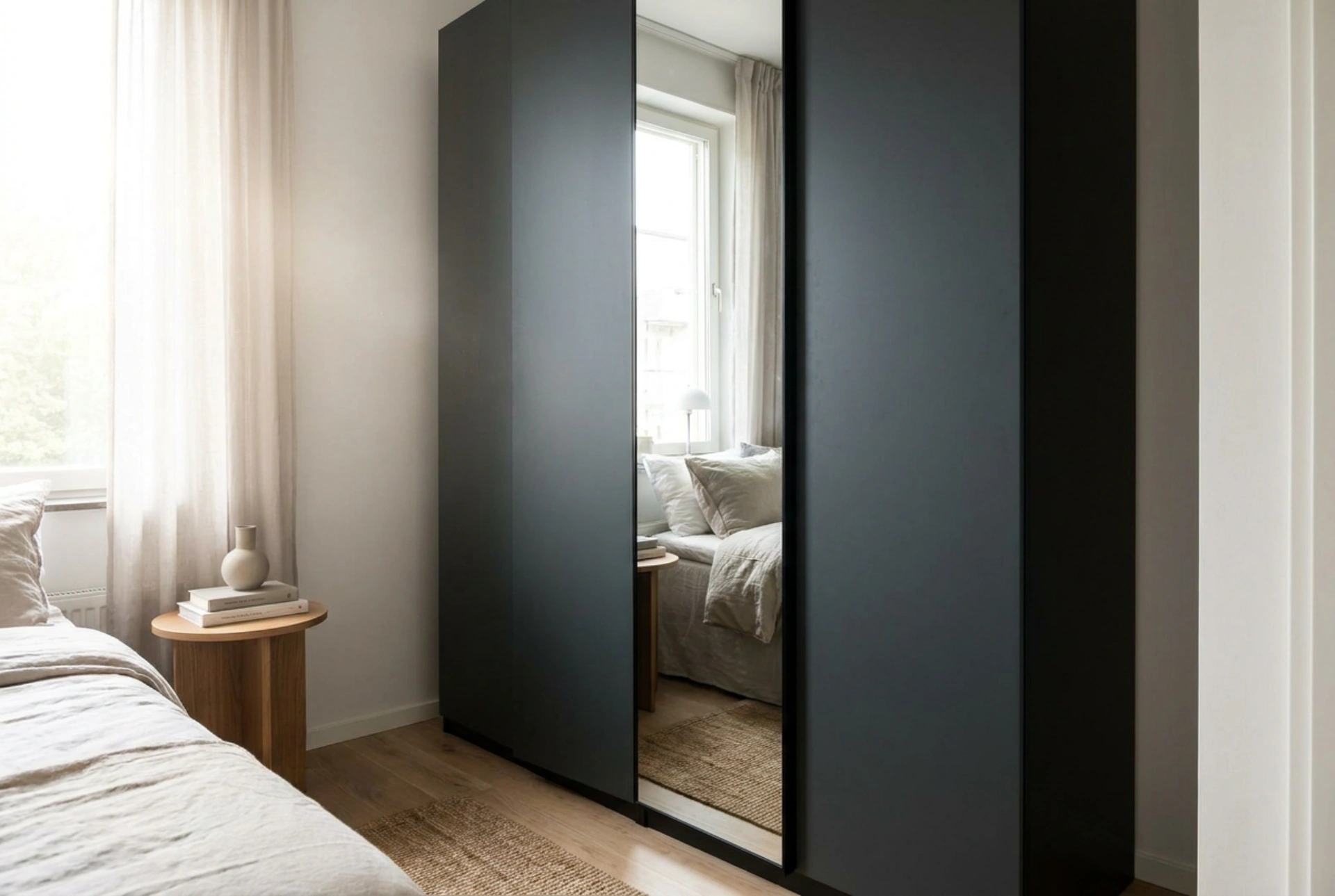
To understand why a dark, mirrored surface works in compact spaces, one must look at how light interacts with different materials. Dark, matte colours absorb a significant portion of the visible light spectrum. This absorption creates an illusion of recess; the surface appears to push back, creating a sense of infinite depth similar to a night sky. When paired with a highly polished mirror, which offers almost perfect specular reflection, the human eye is tricked into perceiving the room as continuing past the physical boundary of the wardrobe doors.
Instead of a solid, imposing black block that stops the eye, the mirror breaks up the mass. It reflects the floor, walls, and ceiling, effectively doubling the visual square footage. The contrast between the absorbing black frame and the highly reflective glass panel creates a framing effect that draws the eye inward, making the wardrobe feel like a window rather than a solid piece of furniture.
Light Alignment: Angles of Incidence and Reflection
The positioning of the wardrobe relative to the primary light source is critical for maximizing this spacious illusion. Placing a mirrored wardrobe directly opposite a window can lead to harsh, direct glare that causes visual discomfort and highlights dust particles on the glass surface. Instead, the wardrobe should be positioned perpendicular to the window.
By placing the wardrobe on an adjacent wall, natural daylight strikes the mirror at an angle of incidence that allows the reflected light to bounce deeper into the darker corners of the room. This grazing light also accentuates the texture of the wardrobe’s frame while preventing a direct, blinding reflection of the sun. The room benefits from increased ambient light without the discomfort of direct glare.
Surface Chemistry: Matte Contrast with Glass
The choice of finish for the non-mirrored parts of the wardrobe is just as important as the mirror itself. Avoid high-gloss black finishes for the frame and side panels. High-gloss surfaces reflect light in a scattered, chaotic manner, which can make a small room feel cluttered and busy. Instead, opt for a ultra-matte or satin black finish.
A matte surface provides diffuse reflection, scattering the light smoothly across its surface. This soft dispersion of light softens the hard edges of the wardrobe, making its large physical footprint feel less imposing. The stark contrast between the velvety, light-absorbing matte black frame and the sharp, crisp reflections of the mirror panel creates an elegant visual rhythm that feels deliberate and spacious.
Structural Integration: Maintaining the Illusion of Space
To ensure the black wardrobe does not overwhelm a small room, integrate it into the surrounding environment using these structural techniques:
- Align the Heights: Choose a floor-to-ceiling wardrobe or fill the gap above the wardrobe with a matching bulkhead. Eliminating the shadow gap between the top of the wardrobe and the ceiling prevents a visual break, making the ceiling appear higher.
- Maintain Floor Continuity: Keep the floor space immediately in front of the mirror clear. If the mirror reflects an open, tidy floor, the brain perceives that extra space as usable, enhancing the room's airy feel.
- Complementary Wall Undertones: Paint the surrounding walls in neutral shades that share the same undertone (cool or warm) as the black wardrobe frame. This reduces harsh visual boundaries, allowing the wardrobe to blend seamlessly into the walls.