

Preventing unwanted shine on garments during ironing requires understanding how heat, moisture, and pressure interact with different textile fibres. Using a high-pressure steam generator allows you to smooth out creases by relaxing molecular bonds with thermal moisture rather than crushing them with heavy physical force.
The Science Behind Fabric Shine
Unwanted shine, often referred to as "iron shine" or scorching, is a structural change on the fabric's surface. When you apply direct dry heat and physical pressure, two phenomena occur depending on the fibre type. For natural fibres like wool and cotton, intense pressure flattens the round cross-sections of the individual fibres. This flattening creates a smooth, mirror-like surface that reflects light uniformly, resulting in a shiny patch. For synthetic thermoplastic fibres such as polyester and nylon, the soleplate's heat can exceed the polymer's softening point. This causes the surface fibres to melt slightly and fuse together into a glassy layer, which permanently alters the drape and texture of the garment.
How Steam Generators Prevent Fiber Damage
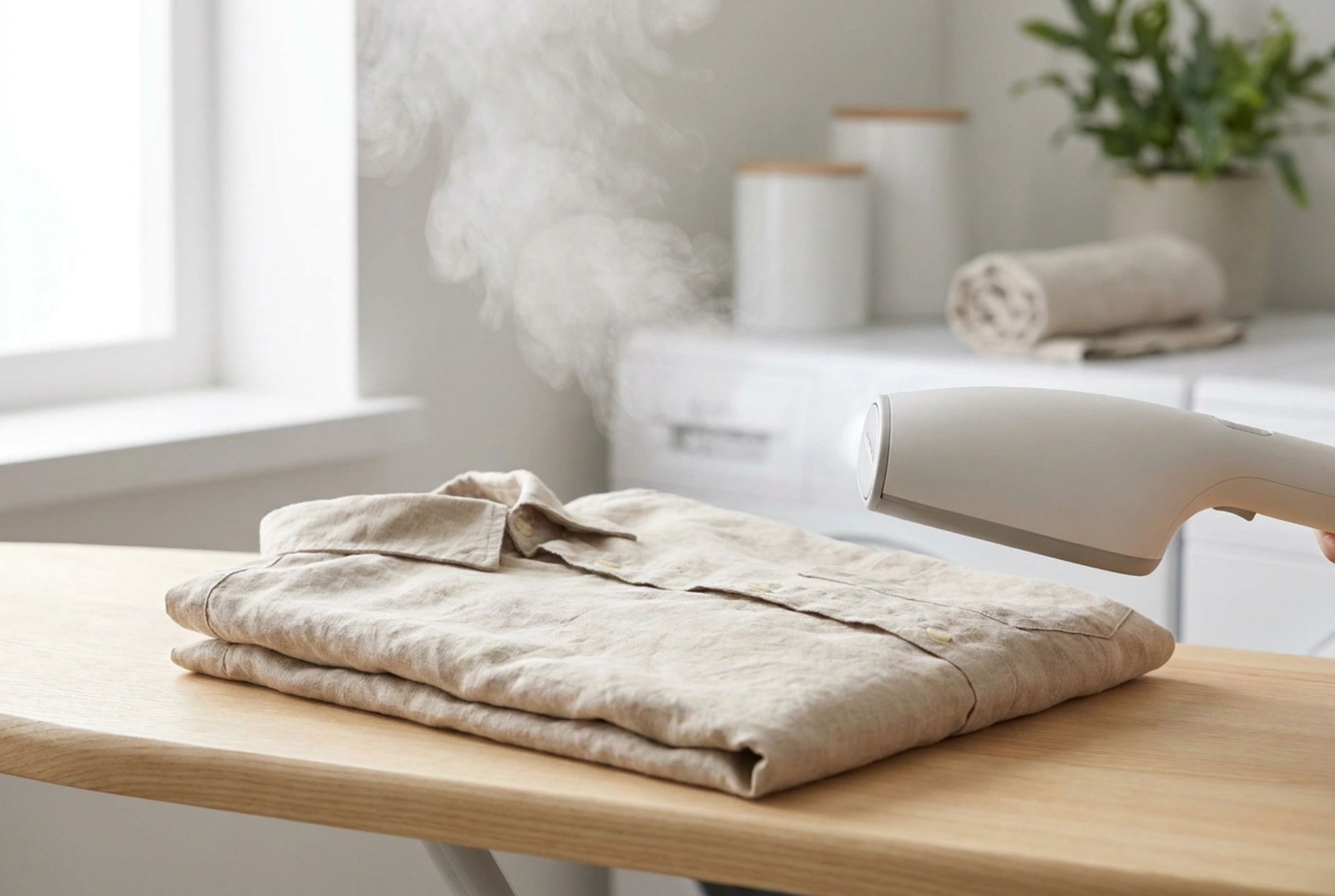
Unlike traditional irons that rely on physical weight and high soleplate temperatures, steam generators separate the heat transfer medium. They utilise a boiler unit to generate high-pressure steam, delivered through a hose to the handpiece. The key mechanism is the latent heat of vaporisation. When high-pressure steam penetrates the textile, it instantly transfers moisture and thermal energy into the core of the yarn. This moisture breaks the hydrogen bonds holding the polymer chains in their wrinkled state. Because the fibres become highly pliable under the steam's influence, you do not need to apply downward force with the soleplate. Wrinkles drop out naturally, preserving the original loft, texture, and three-dimensional structure of the weave.
Essential Techniques for Shine-Free Results
To achieve perfectly smooth garments without risk of shining, you must adapt your technique to leverage the steam rather than the weight of the iron.
- Iron Inside Out: Always turn garments made of dark cotton, wool, silk, and synthetics inside out. If minor compression occurs, it will be restricted to the interior, leaving the exterior matte.
- The Hovering Technique: For sensitive fabrics like wool or velvet, do not let the soleplate touch the fabric. Hold the iron one to two centimetres above the surface and release continuous, high-pressure steam. Let the steam relax the fibres, then smooth them gently with your hand.
- Use a Protective Pressing Cloth: When pressing pockets, lapels, or pleats from the outside, place a clean, white cotton cloth between the iron and the fabric. This barrier diffuses direct heat and distributes steam evenly, preventing friction.
- Manage Temperature and Steam: Match the soleplate temperature to the lowest thermal threshold of the fabric blend. Use high steam volume rather than high soleplate heat to relax stubborn creases.
Handling Different Fabric Families
Different materials react uniquely to heat and moisture, requiring specific operational parameters when using a steam generator.
Synthetic and Semi-Synthetic Fibres
Polyester and polyamide have low melting points. Set the soleplate temperature to the lowest setting and rely entirely on short bursts of steam. Keep the soleplate moving constantly to prevent localized heat build-up that leads to irreversible glazing.
Animal Fibres (Wool and Silk)
Wool fibres are covered in microscopic scales that flatten under dry pressure, leading to shiny spots. Use plenty of steam but minimal pressure. For silk, which is sensitive to water spotting and high heat, iron inside out on a dry board, utilizing dry steam with a protective cloth to avoid water droplets marking the delicate structure.
Linen and Dense Cottons
While linen and cotton withstand higher temperatures, heavy pressing on dark shades can still produce shine along seams. Ironing these items while damp, using high steam on the reverse side, ensures the fibres relax without glaze forming on the outer seams.