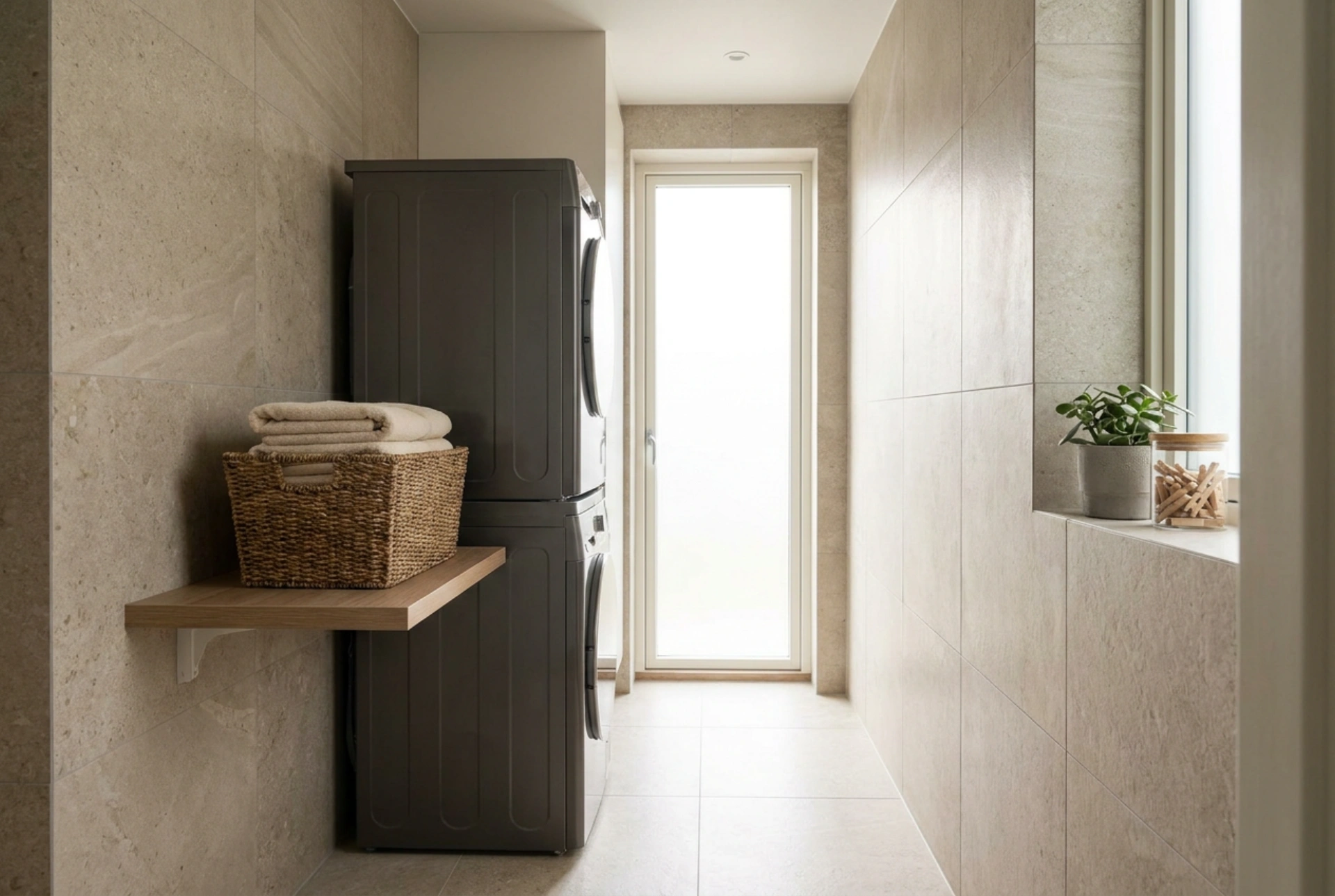


Optimising a narrow bathroom with a vertical slim washing machine and tumble dryer stack requires careful consideration of structural dynamics, thermodynamics, and mechanical vibration. Properly executing this space-saving layout ensures appliance longevity and prevents structural damage to tiled walls and flooring.
The Mechanical Dynamics of Vertical Appliance Stacking
When vertical space is substituted for horizontal floor area, the physical forces generated during operation change dramatically. A standard or slim washing machine can spin at speeds exceeding 1200 RPM, creating substantial kinetic energy and centrifugal force. Because slim appliances have a shallower depth (typically between 40 and 47 centimetres), their centre of gravity is more volatile than that of full-sized, 60-centimetre deep units.
Stacking a heat pump or condenser dryer directly on top of a washing machine requires a mechanical interface—commonly known as a stacking kit or intermediate frame. This component is not merely a spacer; it distributes the static load of the dryer evenly across the load-bearing frame of the washing machine below. Without this distribution, the concentrated weight of the upper appliance can warp the top panel of the washing machine, interfering with the internal suspension springs and dampening struts. Furthermore, high-quality stacking kits feature built-in vibration dampeners made of dense elastomers that absorb high-frequency micro-vibrations, preventing the two steel chassis from grinding against each other and shifting out of alignment.
Thermodynamics and Airflow in Confined Recesses
Narrow bathrooms often suffer from limited air exchange, which is exacerbated when high-energy thermodynamic processes occur within a tight alcove. Modern slim tumble dryers predominantly use heat pump technology, which relies on a closed-loop refrigerant cycle to extract moisture from fabrics. This process generates heat that must be dissipated into the surrounding atmosphere to maintain optimal condenser efficiency.
If a slim stack is enclosed too tightly between walls or within a bespoke cabinet, the ambient temperature in the recess will rise rapidly. When the surrounding air exceeds 30 degrees Celsius, the dryer’s heat exchanger cannot cool the refrigerant vapour effectively, leading to prolonged drying cycles and elevated electrical consumption. To prevent this thermodynamic bottleneck, a physical clearance of at least 5 centimetres must be maintained at the rear and sides of the stack. This gap facilitates natural convection, allowing cooler air to enter from the floor level and warmer, moisture-laden air to rise and disperse into the wider room.
Step-by-Step Levelling and Calibration Protocol
A successful installation relies entirely on eliminating rotational and kinetic imbalances before the first cycle. The order of operations must be strictly observed:
- Substrate Assessment: Ensure the bathroom floor is completely rigid. Ceramic or porcelain tiles over concrete provide an ideal, non-yielding base. Suspending appliances over flexible floorboards will amplify vibrations.
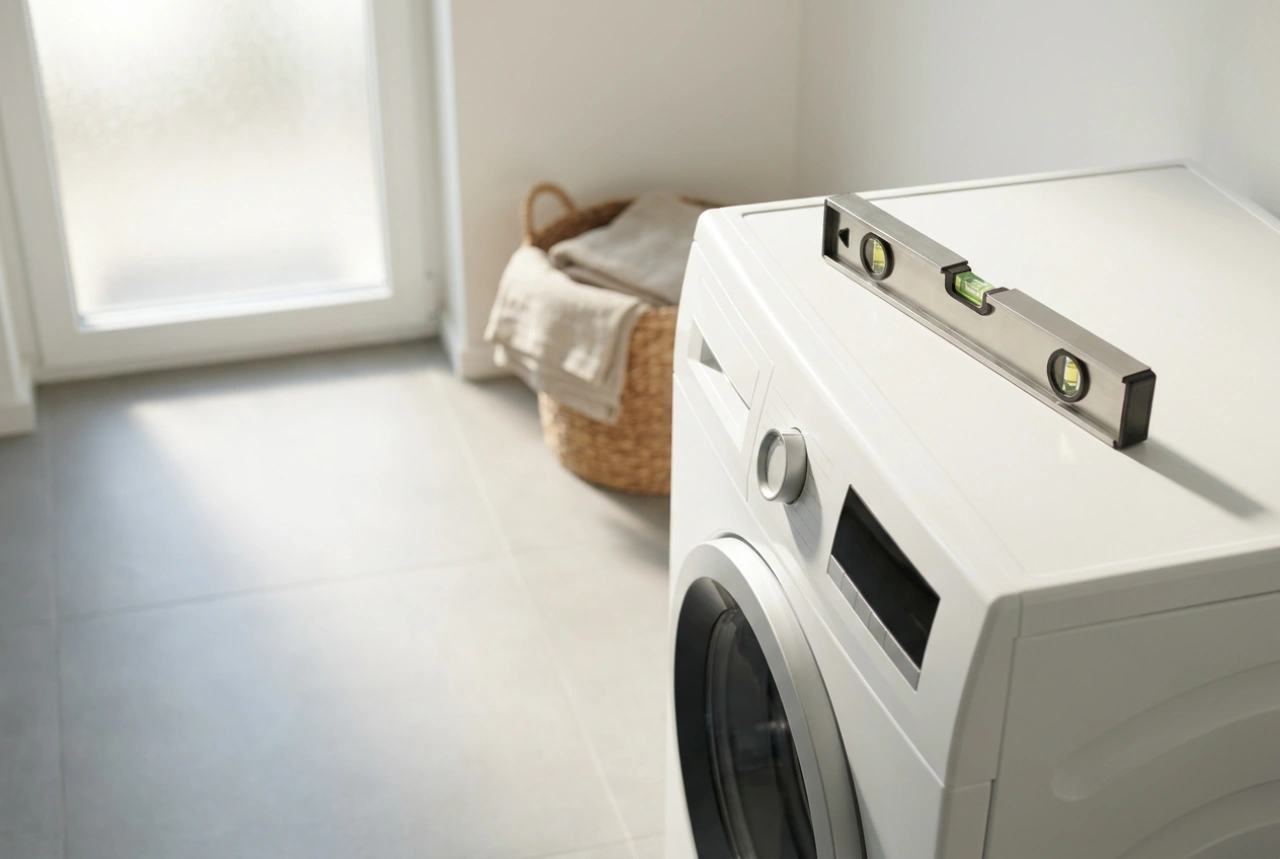
- Primary Levelling: Place the slim washing machine in its final position. Utilise a spirit level across both the longitudinal and lateral axes of the top cover. Adjust the threaded levelling feet individually, locking the locking nuts tightly against the chassis to prevent thread creep caused by vibration.
- Securing the Stacking Kit: Position the intermediate frame. If using a universal tensioning strap system, route the heavy-duty nylon webbing through the designated metal ratchets under the washing machine's base and over the top dryer. The strap must be tensioned to a specific torque to bind the two units into a single cohesive mass, shifting their combined centre of gravity lower and reducing sway.
- Dryer Placement: Lift the slim dryer onto the frame, ensuring its feet nestle securely into the vibration-absorbing cups of the stacking kit. Do not plug the appliances into the same double socket if their combined electrical draw exceeds the ring main's rated capacity.
Microclimate Control and Surface Protection
The narrow gap behind a stacked laundry setup is highly susceptible to condensation due to the temperature differential between the warm appliance backs and the colder exterior bathroom walls. When warm, humid air contacts these cold surfaces, the relative humidity reaches dew point, resulting in liquid water accumulation.
To mitigate the risk of micro-organic growth (mould) and tile grout degradation, apply a hydrophobic sealer to the grout lines behind the stack before installation. Ensure the bathroom’s mechanical extraction fan is rated for continuous operation or triggered by a humidistat. Keeping the exhaust ventilation rate above 15 litres per second during and immediately after a drying cycle ensures that moisture is extracted before it can settle in the stagnant air zones surrounding the slim stack.