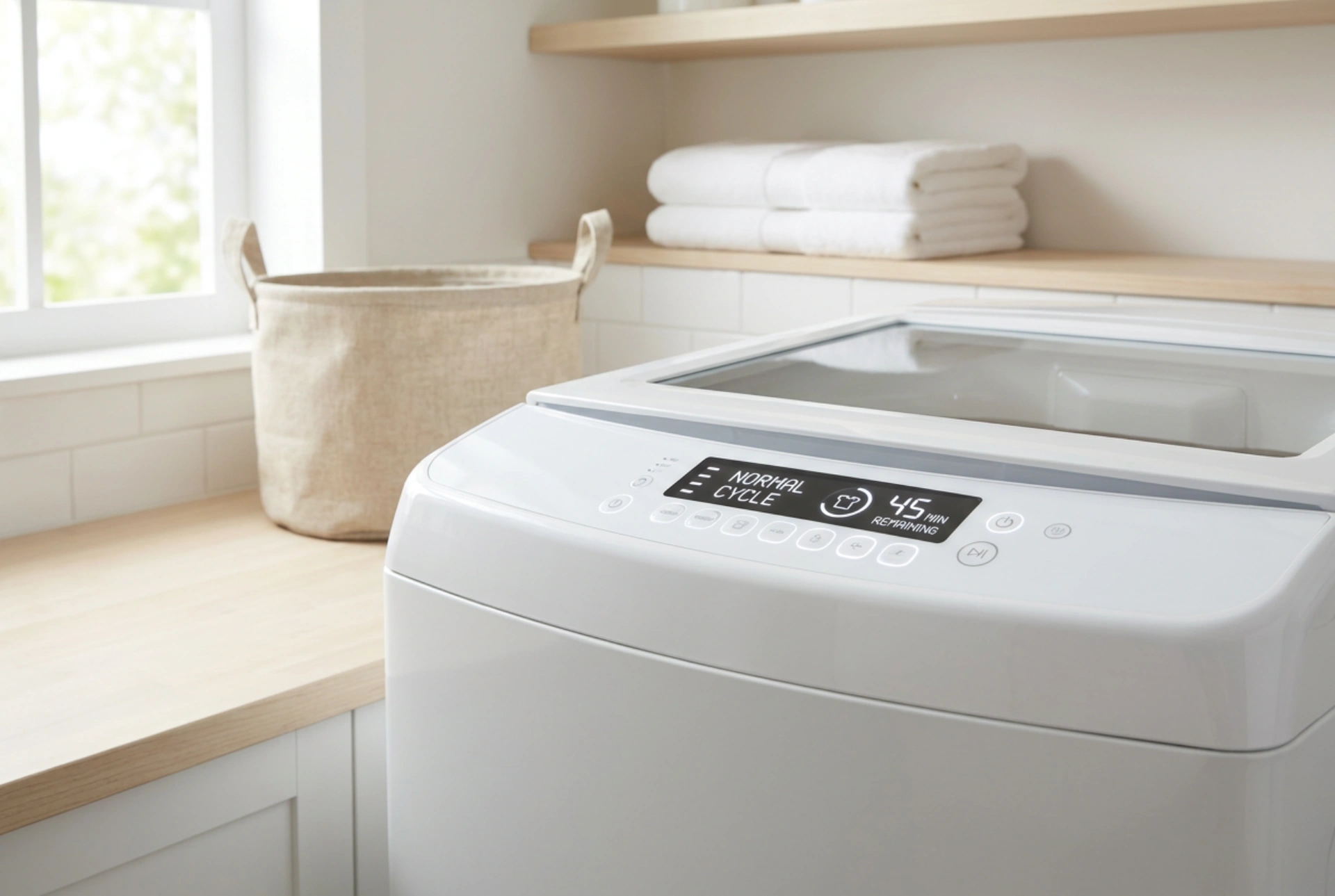


The energy label on a top-loading washing machine is more than just a simple letter grade; it is a detailed breakdown of the appliance's thermodynamic and mechanical efficiency. Understanding these technical metrics allows you to optimize your laundry routine, reduce resource consumption, and extend the lifespan of your fabrics by working with the physical laws of the machine.
The Energy Efficiency Index (EEI) and the Scale
The prominent A-to-G scale indicates the appliance's overall energy efficiency, calculated via the Energy Efficiency Index (EEI). This index compares the energy consumption of the washing machine during a standardized cycle—usually the Eco 40-60 program—against a reference machine of the same capacity. The lower the index, the more efficient the appliance.
For top-loading machines, achieving a high rating requires precise thermal management. Heating water accounts for approximately 80% to 90% of the energy consumed during a warm wash cycle. Top-loaders with advanced internal heating elements and precise electronic thermostats minimize heat loss during the cycle, ensuring that the water reaches and maintains the exact target temperature without wasting energy on prolonged heating phases.
Water Consumption and Drum Hydrodynamics
Unlike front-loaders, which tumble laundry through a shallow pool of water, top-loading machines historically required filling the entire drum to submerge the load. Modern high-efficiency top-loaders, however, utilize advanced hydrodynamics to mimic this efficiency. The energy label displays water consumption in litres per cycle, a crucial metric for evaluating the machine's mechanical action.
In efficient top-loaders, an impeller or a specialized low-profile agitator creates a toroidal (doughnut-shaped) flow pattern. This movement circulates the fabric through concentrated, recirculated water sprayed from the top. By reducing the overall volume of water, the machine requires significantly less thermal energy to heat the wash bath, while maintaining a high concentration of surfactants to chemically break down lipid and protein-based soils.
Spin-Drying Efficiency and Residual Moisture
The spin-drying efficiency class, rated from A to G, is determined by the percentage of residual moisture left in the fabric after the final spin cycle. This metric is directly linked to the subsequent energy required for drying, whether via an electric tumble dryer or ambient evaporation. Removing water mechanically through centrifugal force is exponentially more energy-efficient than removing it thermally through evaporation.
The physics behind this process relies on the spin speed (RPM) and the drum radius, which together generate the relative centrifugal force (RCF). A higher RCF forces water out of the microscopic pores of textile fibres. However, top-loaders face unique challenges with load balance due to their vertical axis. High-rated machines feature advanced dynamic balancing systems that redistribute wet laundry before ramping up to maximum RPM, preventing energy-wasting vibration and protecting the motor from mechanical stress.
Acoustic Emissions and Vibration Dampening
The noise rating on the energy label is split into a decibel (dB) value and an A-to-D class, specifically measured during the high-velocity spin phase. Noise in a top-loading machine is a direct result of mechanical kinetic energy converting into acoustic energy through friction, imbalance, and structural resonance.
To achieve a quiet, high-efficiency rating, manufacturers employ brushless direct-current (BLDC) motors and complex suspension systems. Standard motors with drive belts introduce friction and high-frequency whining, whereas direct-drive systems connect the motor directly to the drum shaft, eliminating mechanical transfer loss. Solid steel counterweights and hydraulic dampers absorb the lateral kinetic energy, ensuring that the appliance remains stable and quiet even at peak rotational speeds.
Optimising Machine Efficiency in Daily Use
- Load to Optimal Capacity: The energy label ratings are calculated based on the maximum rated capacity for specific cycles. Running half-loads under standard settings decreases efficiency; instead, utilize the dedicated eco programs that adjust water levels automatically using weight sensors.
- Manage Surfactant Dosage: Excess detergent creates a high volume of foam (oversudsing). This foam cushions the mechanical impact of the fabrics and triggers the machine's automated foam-detection sensors to run extra rinse cycles, wasting both water and electricity.
- Leverage Tap Water Temperatures: Whenever sanitisation is not required, wash at lower temperatures. Modern enzyme-based detergents are chemically engineered to active at 20°C to 30°C, rendering high-energy heating cycles unnecessary for standard soil levels.