

Removing stubborn stains in a bathroom requires a formula that targets two entirely different chemical problems: mineral scale from hard water and organic residue from soaps and body oils. An effective bathroom cleaner relies on targeted pH levels, emulsifying agents, and proper viscosity to break these bonds without damaging delicate surfaces like chrome, enamel, or natural stone.
The Chemistry of Scale Removal: Acidic Action
Hard water contains dissolved calcium and magnesium ions. When water evaporates on bathroom surfaces, these minerals crystallise into calcium carbonate, commonly known as limescale. Because calcium carbonate is highly alkaline, it cannot be dissolved by standard soapy water. It requires an acidic formulation to trigger a chemical reaction.
Effective bathroom cleaners utilise weak organic acids, such as citric acid, lactic acid, or sulfamic acid. These acids donate hydrogen ions to the carbonate, converting it into soluble calcium salts, water, and carbon dioxide gas. While strong mineral acids like hydrochloric acid dissolve scale rapidly, they are highly corrosive to chrome plating, brass, and the cement-based grout between tiles. Organic acids offer a controlled, self-limiting reaction rate that dissolves the mineral matrix safely without etching metal fixtures or stripping away protective sealant layers.
Dissolving Soap Scum: Surfactants and Emulsification
Soap scum is not just dried soap; it is a chemical compound called calcium stearate, formed when the fatty acids in traditional soaps react with the calcium ions in hard water. This insoluble, sticky substance traps shed skin cells, sebum, and dust, creating a water-resistant barrier on tiles and acrylic tubs.
To break this barrier, a high-quality cleaner must contain a balanced blend of non-ionic and amphoteric surfactants. Surfactants consist of molecules with dual affinity: a hydrophilic (water-loving) head and a lipophilic (fat-loving) tail. The lipophilic tails embed themselves into the oily grease and calcium stearate, while the hydrophilic heads remain oriented toward the water. This structure forms micro-micelles, encapsulating the greasy dirt and lifting it from the surface so it can be easily rinsed away. Non-ionic surfactants are particularly effective because they do not react with hard water minerals, maintaining their cleaning power even in highly calcified environments.
Viscosity and Contact Time: Why Spray Dynamics Matter
In bathroom cleaning, gravity is a constant challenge. Liquid cleaners sprayed onto vertical surfaces like shower glass, tiles, or toilet bowls tend to run off immediately, leaving insufficient time for the chemical reactions to take place. Therefore, an effective cleaner must have controlled viscosity.
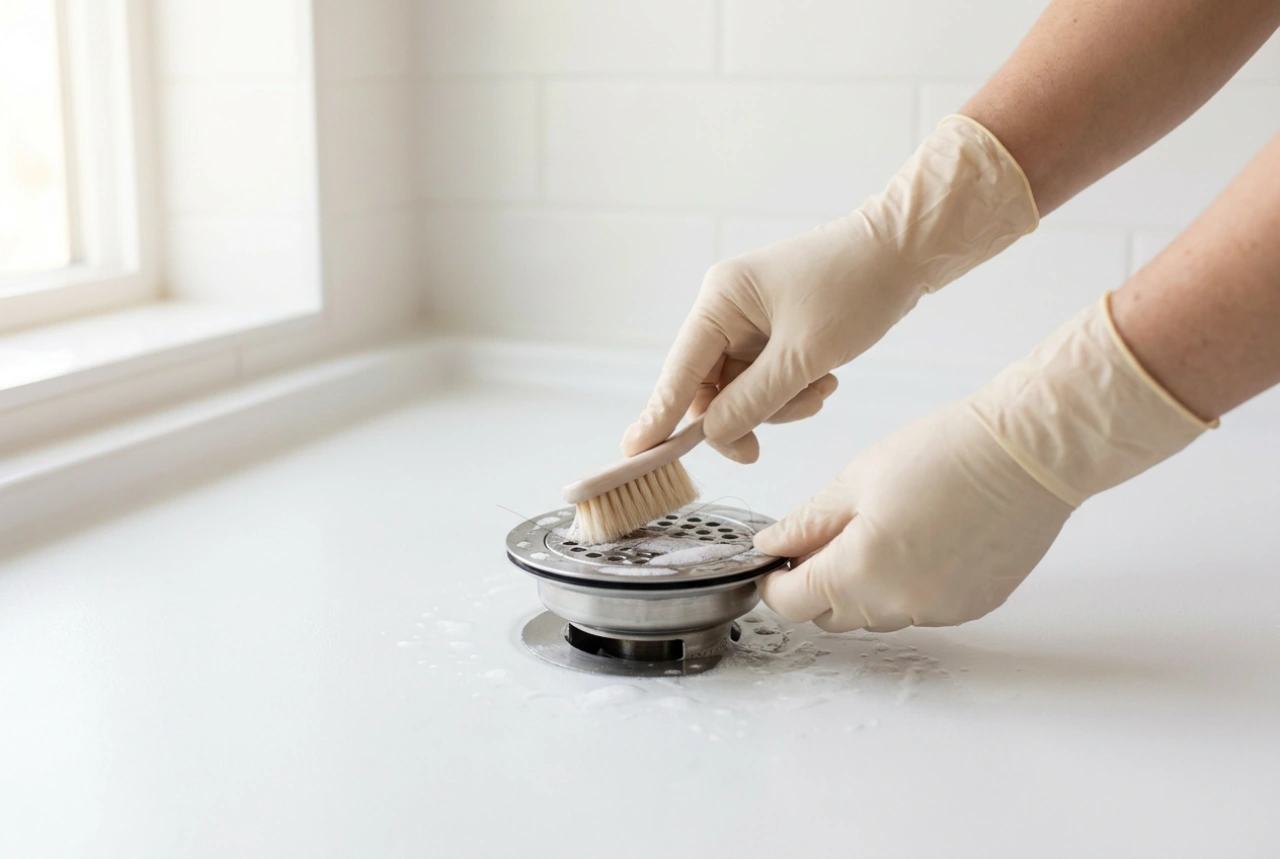
Many advanced formulations use specific polymer thickeners that exhibit shear-thinning properties. When forced through a spray nozzle under pressure, the liquid becomes thin and disperses easily as a fine mist or foam. Once it lands on the vertical surface, its viscosity increases instantly, allowing it to cling to the grime. This prolonged contact time—often referred to as dwell time—is critical. It allows the acids to dissolve the mineral crystalline structure and the surfactants to penetrate the greasy layers without requiring excessive mechanical scrubbing, which could scratch sensitive acrylic or glass surfaces.
Chelating Agents and Surface Protection
To prevent minerals from redepositing during the cleaning process, effective formulas incorporate chelating or sequestering agents. Molecules like tetrasodium glutamate diacetate or citric acid salts bind tightly to free calcium and magnesium ions in the rinse water. By wrapping around these metal ions, chelators prevent them from reacting with dissolved soils or forming new scale deposits as the surface dries, ensuring a streak-free, shiny finish on glass and polished chrome.
Application Strategy for Maximum Efficiency
- Apply and Dwell: Spray the cleaner evenly and allow it to sit for 3 to 5 minutes to let the organic acids break down the mineral bonds.
- Temperature Control: Use lukewarm water for rinsing. Hot water can cause acidic vapours to volatilise too quickly, while cold water reduces the emulsification efficiency of the surfactants.
- Avoid Mixing: Never mix acidic bathroom cleaners with chlorine-based bleach. This reaction immediately releases toxic chlorine gas, which is highly hazardous to respiration.