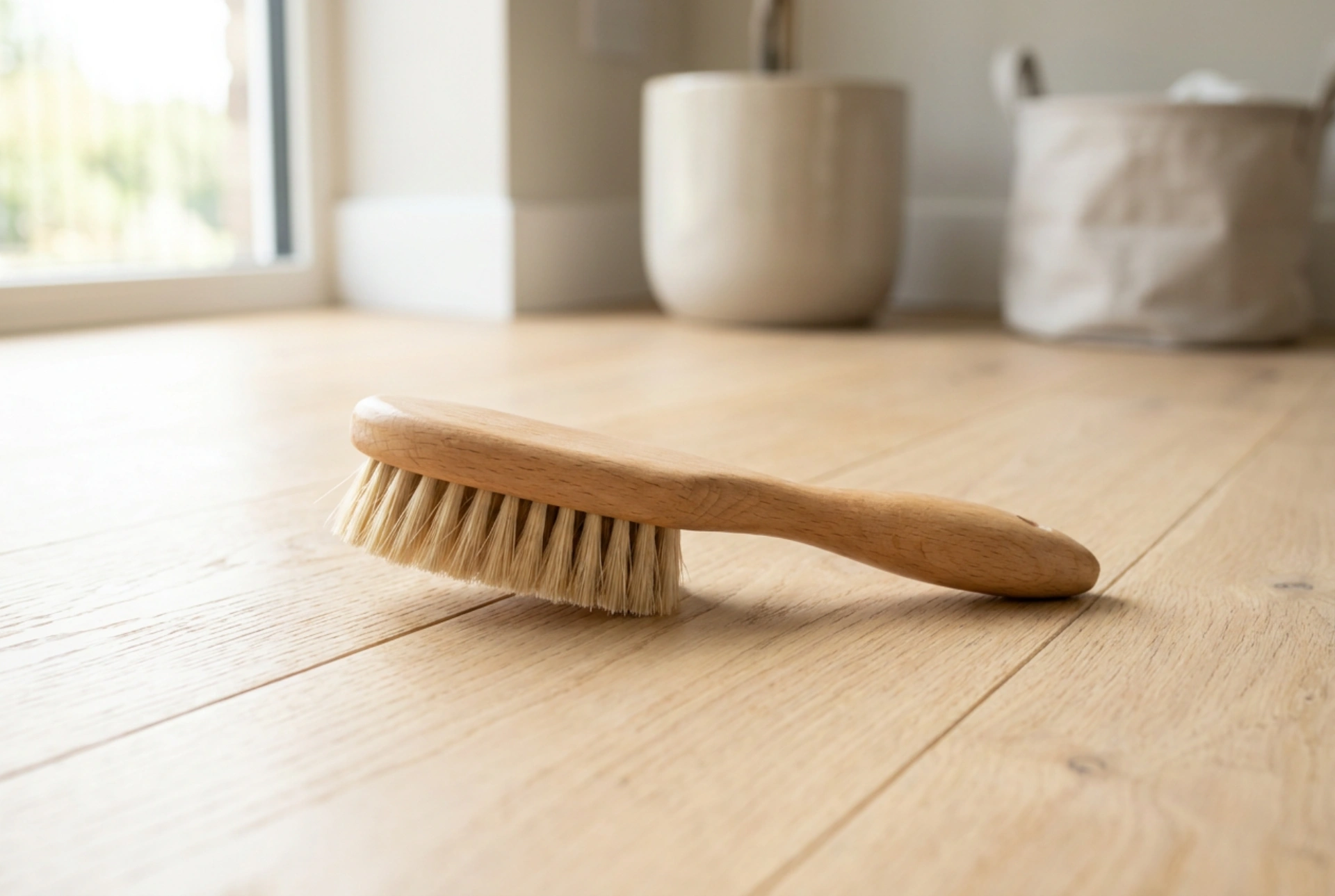


Scrubbing floors with a brush effectively removes deep dirt, but selecting the wrong bristle hardness or improper chemical lubrication can permanently ruin wood, laminate, or natural stone. Understanding the physical interaction between fibre density, pressure distribution, and surface hardness is key to achieving a spotless clean without leaving micro-scratches.
The Physics of Scratching: Hardness and Friction
Every flooring material has a specific surface hardness, often evaluated using the Mohs scale for minerals or the Janka scale for timber. When a brush bristle rubs against a floor, scratching occurs if the abrasive particles trapped under the bristle—or the bristle material itself—possesses a higher hardness rating than the floor's protective seal. For example, polyurethane finishes on wooden floors or the wear layer of high-quality laminate are designed to withstand foot traffic, but they are highly susceptible to point-loading friction.
When you apply downward force on a brush, that pressure is transferred entirely to the microscopic contact points of the bristles. Stiff, thick synthetic bristles concentrate this force onto tiny areas, easily slicing through thin wax coatings or protective polymers. Conversely, softer, more densely packed bristles distribute the downward pressure across a much larger surface area, dramatically reducing the shear stress applied to any single point on the floor.
Bristle Materials: Natural Fibres vs. Synthetics
Choosing the correct brush material is the most critical step in preserving your floor's finish. Bristles are broadly categorised into natural and synthetic types, each behaving differently under pressure:
- Horsehair: Derived from the mane or tail, these fibres are exceptionally soft and resilient. They possess natural microscopic scales that trap dust and fine debris without scratching delicate varnishes or oiled wooden surfaces. Horsehair is the premier choice for dry sweeping and light damp scrubbing on high-end wood.
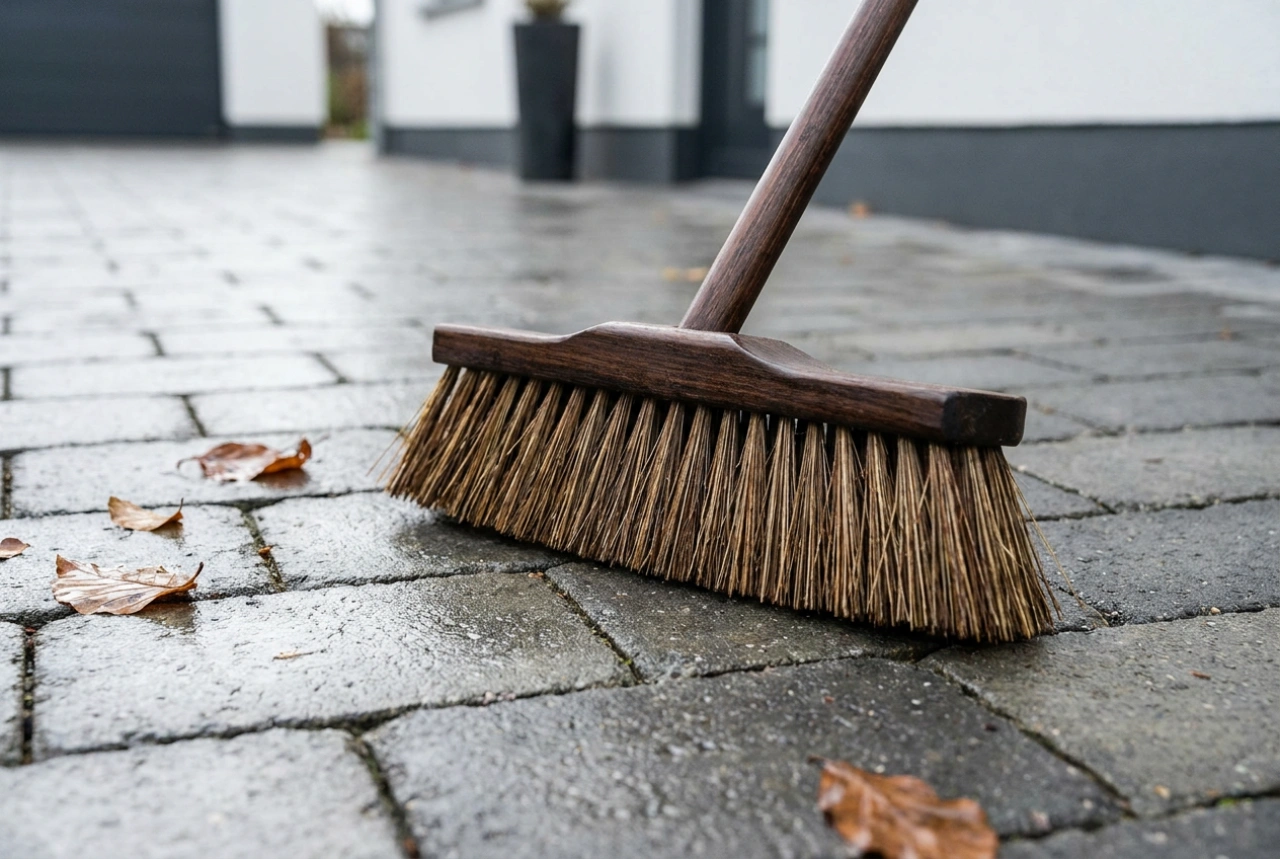
- Tampico (Agave Fibres): This natural vegetable fibre is relatively stiff but softens significantly when wet. It holds water exceptionally well, making it ideal for wet scrubbing tiles and resilient vinyl flooring without the risk of gouging.
- Flagged Synthetic Bristles: If using synthetic brushes (typically made of polypropylene or nylon), ensure they are 'flagged'. This means the ends of the bristles are split or frayed. Flagged tips create a highly cushioned contact zone, making them safe for sensitive surfaces. Unflagged, stiff plastic bristles should be strictly reserved for rough concrete or outdoor stone.
The Role of Chemistry: Reducing Surface Tension
Never scrub a delicate floor dry. Dry friction generates intense localized heat and increases the grip between the bristle and the surface coating, tearing away microscopic fragments of the finish. Water acts as a primary lubricant, but its high surface tension can cause it to bead rather than form a continuous protective film.
To solve this, a mild surfactant (such as a neutral-pH detergent) must be introduced. Surfactants lower the surface tension of water, allowing it to wet the surface evenly and form a microscopic hydro-film between the bristles and the floor. This fluid barrier suspends loose grit and dirt particles, preventing them from being dragged across the floor as abrasive agents under the pressure of the brush. Additionally, avoid acidic or highly alkaline solutions on natural stone or wood; these chemicals chemically degrade the protective sealants, making the material softer and far more vulnerable to physical scratching.
Correct Technique: Direction, Pressure, and Motion
The physical motion of scrubbing dictates how light reflects off any minor wear that does occur. Circular scrubbing motions should be avoided at all costs. Light reflecting off circular micro-scratches is visible from every angle, creating a dull, hazy appearance. Instead, follow these physical rules:
Scrub with the Grain
For wood, laminate, and brushed stone, always scrub parallel to the natural grain or texture of the material. Any microscopic abrasions that do occur will blend seamlessly into the natural pattern of the floor, remaining virtually invisible to the naked eye.
Let the Tool Work
Do not lean your body weight into the brush. If a stain requires heavy pressure to remove, your chemical solution or bristle type is incorrect. Increase the dwell time of the soapy water to loosen the bond of the dirt, or switch to a denser, softer brush rather than applying destructive mechanical force.