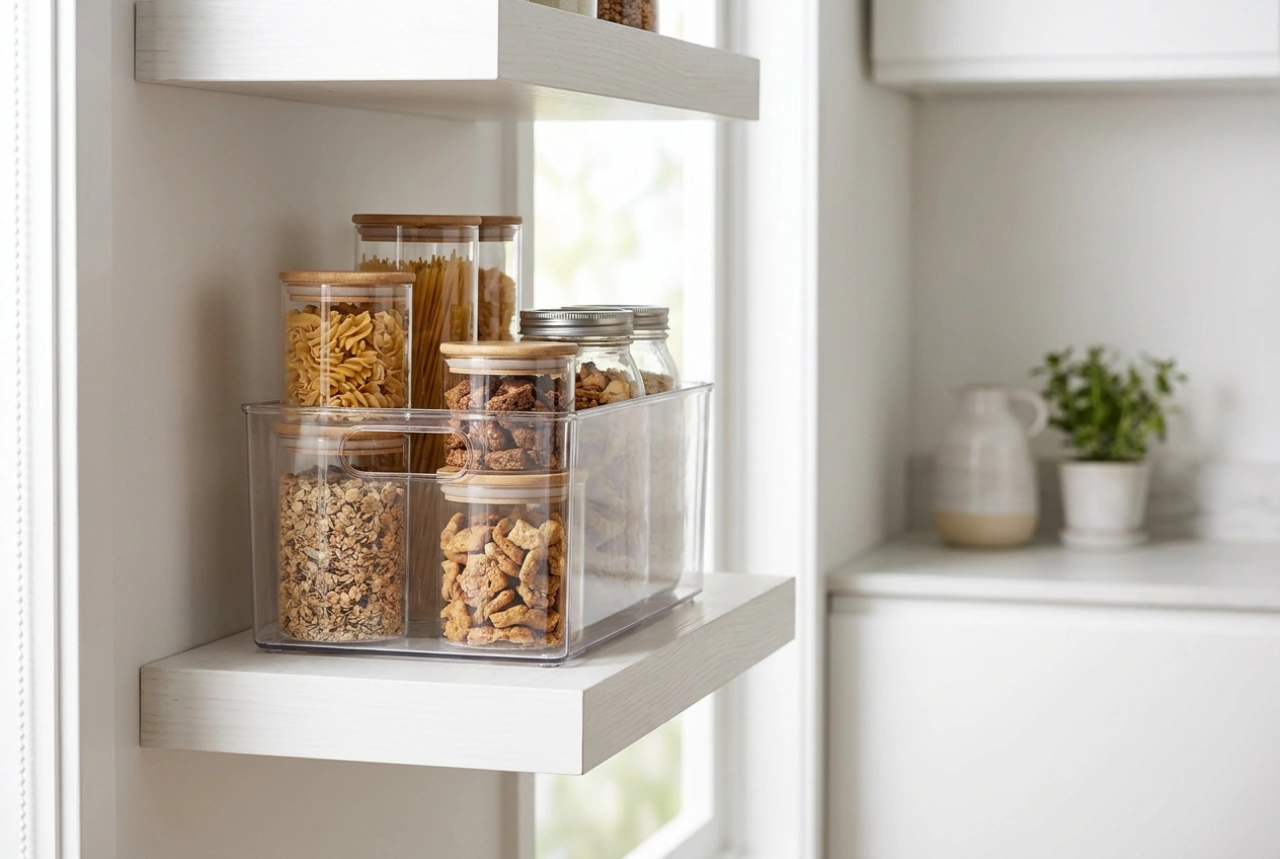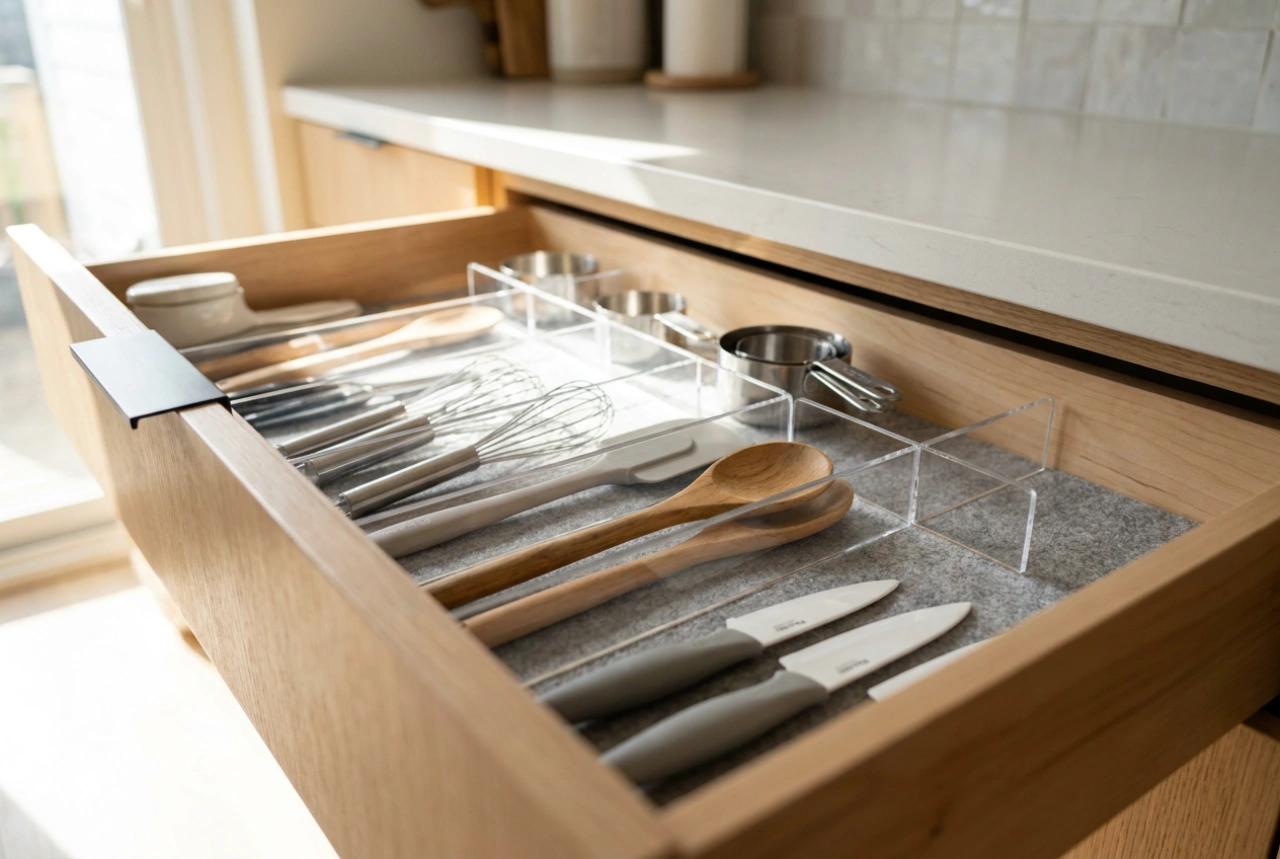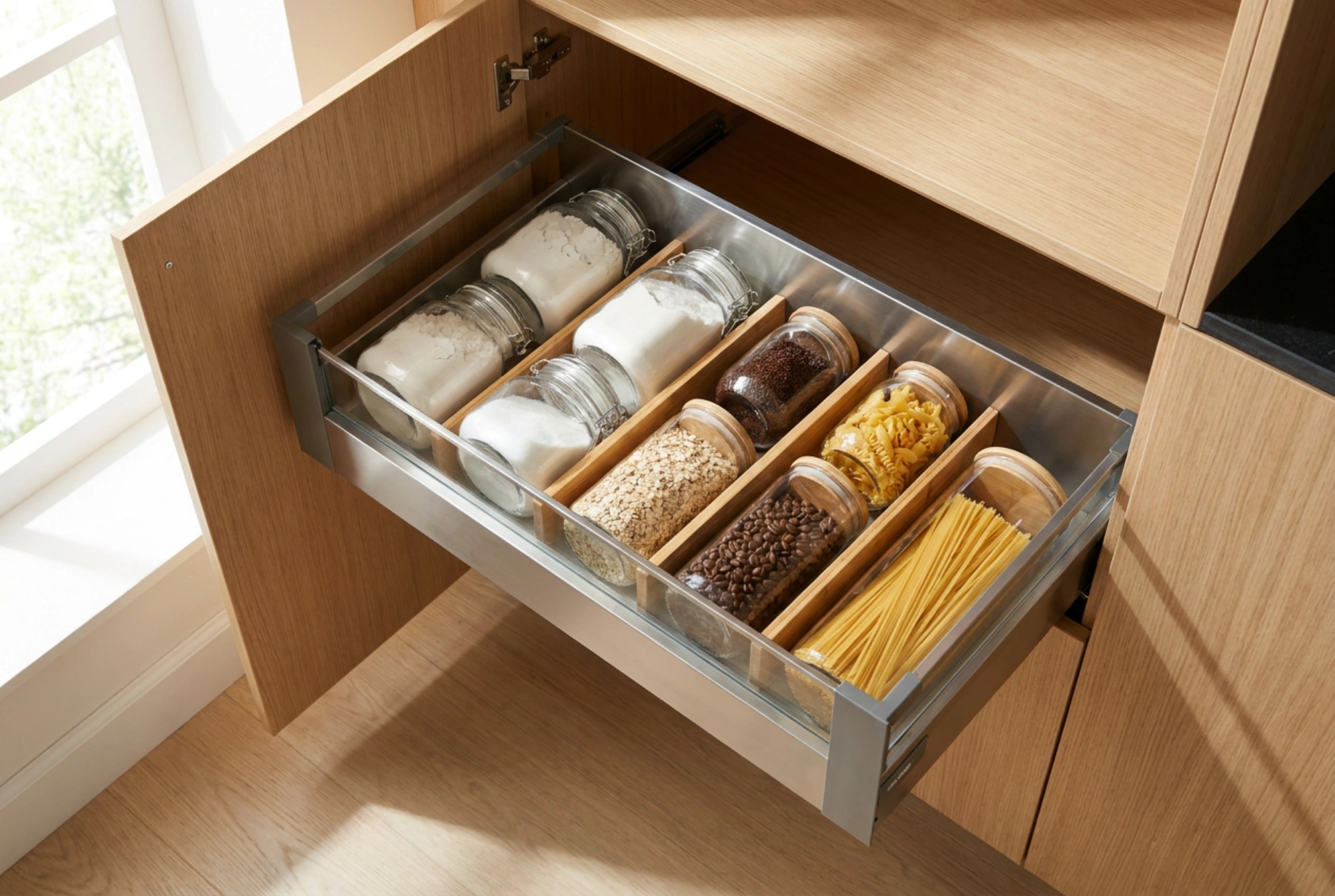


Retrofitting deep kitchen cabinets with pull-out organisers transforms inaccessible, dark storage spaces into highly efficient, ergonomic pantry zones. By leveraging linear motion mechanics, these systems eliminate the physical strain of bending and reaching while preventing forgotten, expired goods from accumulating in hidden corners.
The Mechanics of Linear Motion in Storage
Standard fixed shelves force users to bend at awkward angles, exerting rotational force on the lumbar spine. Pull-out organisers solve this by utilising telescopic drawer runners, which operate on ball-bearing carriages. These runners translate rotational force into smooth linear movement. When selecting a system, the key specification is the extension type. Full-extension runners allow the entire drawer to emerge past the cabinet face, granting 100% visibility and vertical access to the rear contents. This movement relies on high-tensile steel balls riding along precision-ground cold-rolled steel tracks. Understanding this mechanism is vital: cheap plastic rollers on single tracks suffer from high friction coefficients and deflection under load, whereas dual steel ball-bearing tracks distribute weight evenly and minimise physical resistance, allowing even heavy glass jars to glide outward with minimal effort.
Load Dynamics and Weight Distribution
To maintain system integrity, one must calculate the difference between static load capacity and dynamic load capacity. Static capacity is the weight the runner can support when stationary, while dynamic capacity accounts for the forces applied during movement. Glass jars filled with dry grains, flour, and canned goods add significant weight rapidly. When stocking a pull-out organiser, apply the principle of center of gravity: place the heaviest items (like canned foods and oil bottles) at the rear and center of the drawer. This minimises rotational torque on the runners during extraction. If heavy items are placed at the front, the leverage increases as the drawer extends, placing undue stress on the mounting screws and causing the front of the shelf to sag. Spreading the load uniformly prevents lateral twisting of the tracks, preserving the alignment of the ball bearings over years of use.
Measuring and Overcoming Structural Obstructions
Successful integration of pull-out units requires precise geometric alignment. The primary obstacle is the cabinet door hinge. Standard cup hinges protrude into the clear opening width of the cabinet carcass. To bypass this, measure the "clear opening width"—the distance between the face of the hinge arm when the door is open at 90 degrees and the opposite cabinet wall. If the runner system does not clear the hinge, spacer blocks must be installed between the runner and the inner cabinet wall. This ensures the sliding tray clears the door and face frame without scraping the wood or damaging the hinge mechanism. Additionally, ensure the cabinet base is perfectly level; even a minor tilt of a few millimetres can cause the drawer to roll open on its own or slide shut prematurely, disrupting the balance of stored items.
Hydraulic Dampening and Glass Protection
When multiple glass jars are stored together, rapid movement can cause them to collide, leading to cracks or chipping. Modern pull-out systems mitigate this risk through integrated hydraulic dampening, commonly known as soft-close technology. This mechanism relies on fluid dynamics: as the drawer approaches its closed position, a small piston compresses a silicone-based fluid. The resistance of the fluid absorbs the kinetic energy of the drawer, deceleration occurs smoothly, and the drawer is gently pulled into place. This controlled deceleration prevents the inertia of the glass jars from shifting them forward, keeping your pantry staples structurally intact and preventing loud, disruptive clattering.
Material Selection and Preventive Care
Kitchens are environments of high humidity and airborne particulate matter. Standard steel runners are prone to oxidation when exposed to moisture from cooking. Opt for zinc-plated or stainless steel hardware to prevent corrosion. Additionally, particulate matter such as flour, sugar, and dust can migrate into the ball-bearing tracks, mixing with factory grease to form an abrasive paste that grinds down the metal. To prevent this, clean the tracks bi-annually using a dry microfibre cloth to remove loose debris. If lubrication is needed, avoid heavy petroleum jellies or wet oils, which attract dust. Instead, use dry PTFE spray, which leaves a dry, slick barrier that repels contaminants while maintaining low-friction sliding action.