

Excess foam traps moisture and chemical residue deep within car upholstery fibers, leading to unpleasant musty smells, fabric stiffening, and rapid re-soiling. Mastering low-foam cleaning techniques ensures deep soil extraction while preserving the integrity of the underlying polyurethane foam cushions.
The Chemistry of Surfactants: Why Foam is Not Your Friend
Many believe that rich lather equates to superior cleaning power, but in material science, the opposite is often true. Surfactant molecules contain a hydrophilic (water-loving) head and a hydrophobic (water-fearing) tail. When mixed with water, these molecules align at the boundary between water and air, lowering surface tension to emulsify oils and lift dirt. When you agitate this mixture vigorously, air becomes trapped, creating foam.
While foam holds dirt on the surface momentarily, excessive suds create a structural barrier. The tiny air pockets prevent the liquid detergent from penetrating deeply into the woven fibers where dense dirt resides. Furthermore, foam is highly stable and difficult to extract from porous materials. When foam dries inside a car seat, it leaves behind a sticky surfactant film that acts like a magnet for new dust and body oils, causing the fabric to dirty much faster than before.
Selecting and Preparing Your Solution
To clean upholstery efficiently without generating a soapy mountain, you must control the concentration and type of your cleaning solution. Opt for low-foaming, non-ionic surfactant formulas rather than highly anionic dish soaps or standard household laundry detergents. Non-ionic surfactants do not carry an electrical charge in water, making them highly effective at cutting grease while remaining low-sudsing.
- Temperature Control: Prepare your solution with warm water (approximately 40°C). Warmth increases the kinetic energy of the molecules, allowing them to break down lipid-based stains with minimal physical agitation.
- Precise Dilution: Always err on the side of under-concentrating. A solution containing just 1% to 2% active surfactant is generally sufficient for deep fiber penetration.
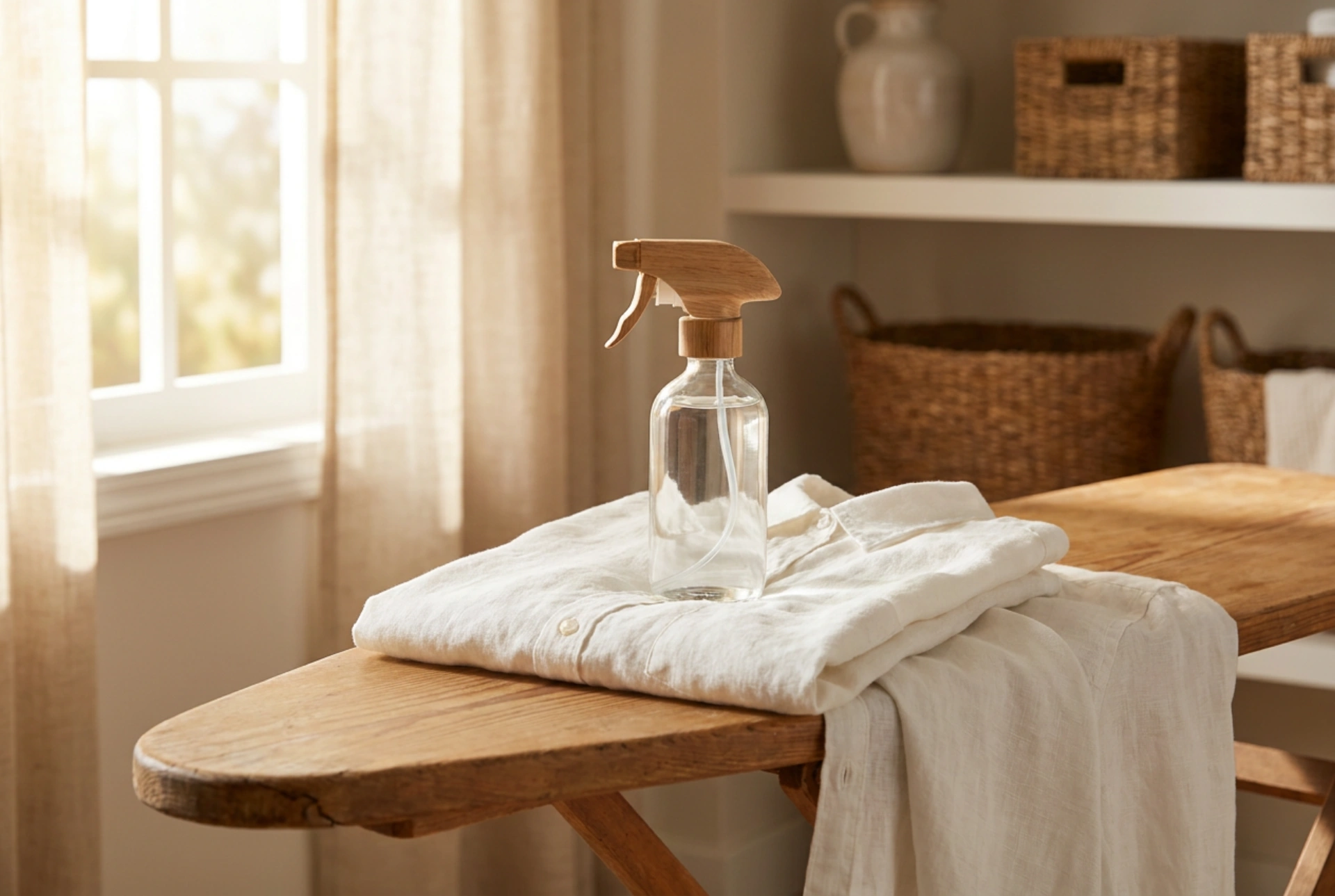
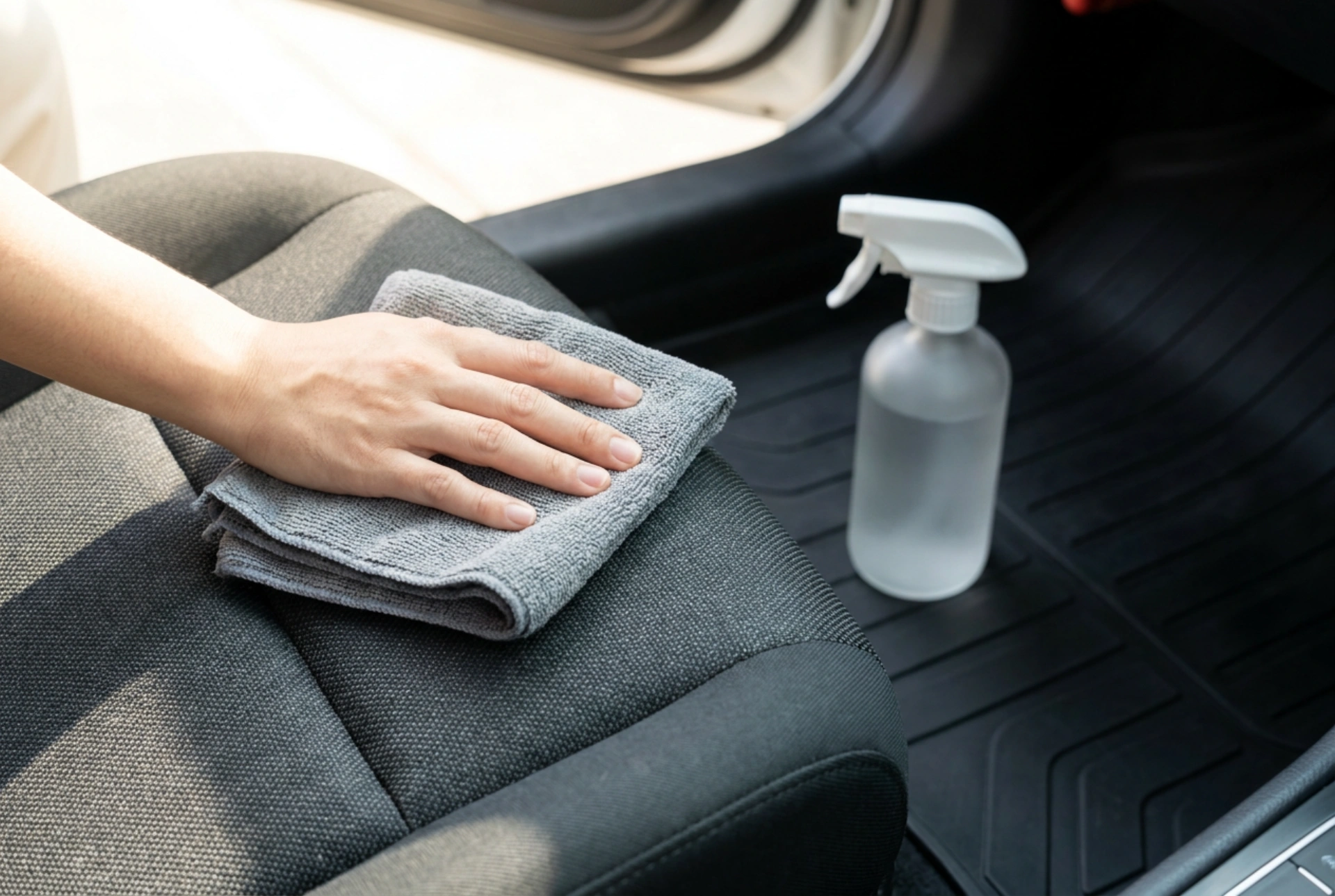
- Application Method: Never pour liquid directly onto the seat. Use a professional-grade fine-mist spray bottle to atomise the liquid. This limits the volume of water entering the seat cushion, preventing deep saturation.
The Correct Movements: Dab, Don't Scrub
The mechanical action used during cleaning directly dictates how much foam is produced. Rough, circular scrubbing whips air into the wet fibers, instantly generating a thick lather that is nearly impossible to remove without wet-vacuum extraction.
Step 1: Dry Extraction
Before any liquid touches the fabric, perform a thorough dry extraction using a vacuum cleaner with a brush attachment. Removing loose dust, sand, and pet hair prevents these particles from acting as physical stabilisers for foam during the wet phase.
Step 2: Controlled Mist and Transfer
Instead of soaking the upholstery, spray your low-foam solution directly onto a clean, high-GSM (grams per square metre) microfiber cloth. The cloth should be damp, not dripping. This transfer method allows the capillary action of the microfiber to deliver the cleaning solution precisely to the upper layer of the fabric.
Step 3: Linear Agitation
Press the damp cloth onto the stained area and use gentle, linear, single-direction strokes. Moving in straight lines lifts the dirt from the weave without whipping air into the surfactant. For stubborn spots, use a soft-bristled horsehair brush, pressing gently and moving in straight lines, followed immediately by blotting with a dry microfiber cloth.
Neutralising and Rinsing Soap Residue
If you accidentally apply too much detergent and foam begins to form, you must break the surface tension of the bubbles immediately. An effective chemical countermeasure is a highly diluted acidic rinse. A solution of one part distilled white vinegar (acetic acid) to four parts warm water will shift the pH, neutralising the alkaline surfactant molecules and causing the foam bubbles to collapse.
To rinse, lightly mist the area with clean, distilled water and press a dry, clean white microfiber cloth firmly against the fabric. The capillary pressure will draw both the remaining water and the dissolved soil out of the upholstery, leaving the fibers soft, clean, and free from sticky chemical residues.