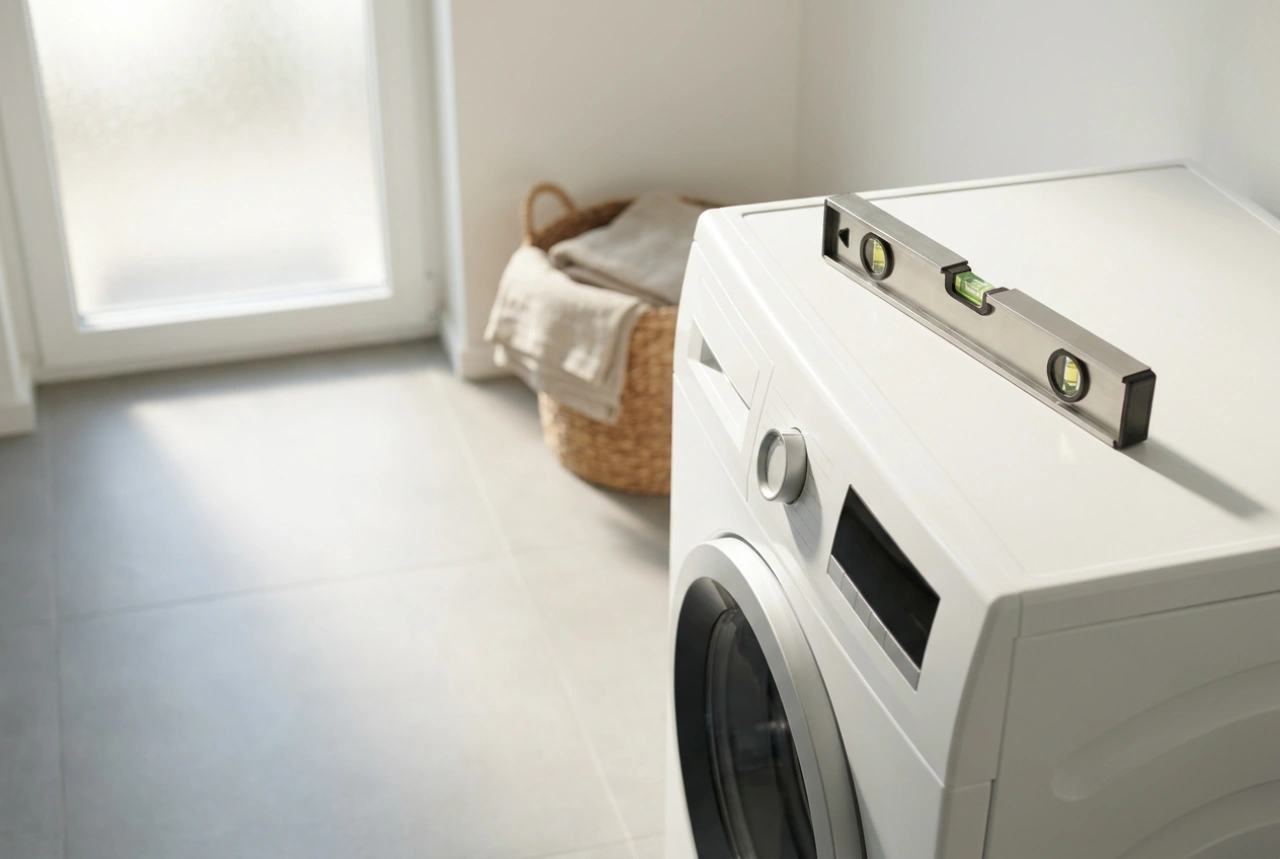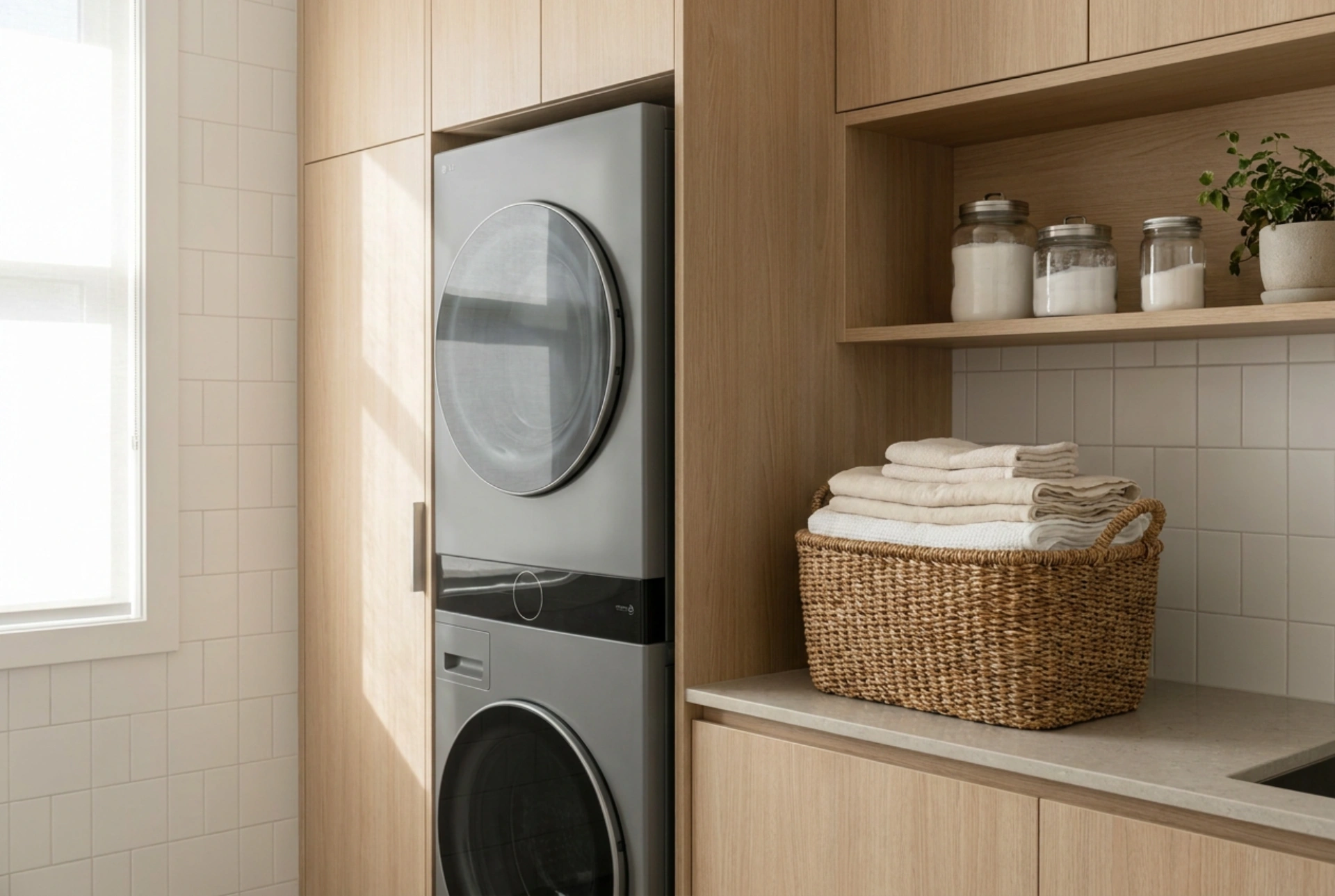


Streamlining your laundry routine goes far beyond choosing the right cycle; it requires a precise layout that minimises physical strain and optimises the flow of textiles. Designing an ergonomic utility space involves applying principles of biomechanics, material science, and spatial physics to your washer and dryer arrangement.
Vertical vs. Horizontal: Biomechanical Alignment
The choice between a stacked configuration and a side-by-side setup dictates the physical forces acting on your body during laundry tasks. When appliances are stacked, the dryer sits atop the washing machine. While this configuration is highly space-efficient, it introduces a vertical lifting component. Lifting wet, heavy fabrics upward against gravity requires significant engagement of the shoulder girdle and upper back muscles. Conversely, a side-by-side setup allows for a horizontal transfer of weight, which is biomechanically less taxing, provided the appliances are positioned at the correct height.
To understand the physical strain, consider the weight of wet textiles. Natural fibres like cotton and linen can absorb up to 100% of their weight in water. Even after a high-efficiency spin cycle, a standard load of laundry can weigh upwards of eight kilograms. Repeatedly lifting this wet mass from a low-level washer to a high-level dryer creates repetitive torque on the lumbar spine. If space demands a stacked setup, place the appliance used most frequently—the washing machine—at the lower level to minimise the high-lift frequency of dry, lighter garments later on.
The Wet-to-Dry Transit: Managing Gravity and Weight
The transition of laundry from the washing drum to the dryer should follow the path of least resistance. Biomechanical studies show that a left-to-right workflow is most intuitive and physically efficient for the majority of individuals, mimicking natural kinetic sweeps. Ideally, the washing machine should be positioned to the left of the dryer.
- Door Swing Coordination: Ensure that the washing machine door opens to the left and the dryer door opens to the right. This creates an unobstructed central corridor between the two drums, allowing you to slide wet laundry directly across without navigating around open door barriers.
- Slide and Pivot Technique: Instead of lifting wet garments individually, use a pivoting motion of the feet rather than twisting the lower spine. Twisting while holding a heavy, damp load is a primary cause of minor soft-tissue strains in domestic environments.
Elevating the Apparatus: The Science of Plinths
Bending down to reach the back of a front-loading drum forces the spine into deep flexion. To mitigate this repetitive strain, elevating appliances on sturdy, vibration-damping plinths is highly recommended. The ideal ergonomic zone for loading and unloading is situated between hip and chest height.
Raising both the washer and dryer by 30 to 40 centimetres brings the drum openings to a height where you can reach the back of the cylinder with a neutral, straight spine. However, the plinths must be engineered to handle dynamic loads. A washing machine during its spin cycle generates substantial kinetic energy and micro-vibrations. The supporting platform must be constructed from dense, heavy-duty materials with integrated elastomeric dampening pads to prevent acoustic resonance and stop the machines from shifting during high-speed rotations.
Spatial Dynamics and Workflow Efficiency
An ergonomic laundry setup requires sufficient clearance zones to allow the body to move naturally. A minimum clearance of 110 centimetres in front of the appliances is essential. This space accommodates the full swing of the appliance doors while leaving room for the user to squat or bend comfortably without striking walls or opposite cabinets.
To further streamline the workflow, integrate a mobile laundry trolley or basket on wheels. By choosing a basket that aligns perfectly with the height of the drum opening, you create a continuous, level plane. Instead of bending down to retrieve clean, dry clothes, you can pull them directly into the basket at waist level, protecting your musculoskeletal system from unnecessary repetitive strain.