

Removing adhesive residues from glass panels and window frames requires understanding the chemical properties of the glue and the physical limits of the underlying materials. Applying improper mechanical force or using aggressive chemicals can permanently scratch glass or degrade PVC and wooden frames.
The Chemistry of Adhesives: Why Water is Not Enough
Most modern stickers utilize pressure-sensitive adhesives (PSAs), which are typically formulated from acrylic polymers or synthetic rubbers. These compounds are designed to flow into the microscopic pores of the glass to create a strong mechanical bond. Because these adhesives are hydrophobic (water-repelling), standard water-based cleaning agents cannot easily penetrate or dissolve them.
To break this bond, you must match the chemical nature of the adhesive with a compatible solvent. Non-polar substances, such as lipid-based vegetable oils or specialized technical oils, work by inserting themselves between the adhesive molecules, reducing their cohesion. Polar solvents like isopropyl alcohol are highly effective at breaking down acrylic polymers without damaging the inorganic structure of the glass.
Thermal Softening: Utilizing the Glass Transition Temperature
Before applying any solvent, reducing the physical viscosity of the glue makes removal significantly easier. Adhesives undergo a transition phase when heated, shifting from a hard, glassy state to a soft, pliable rubbery state. Introducing moderate heat using a standard hair dryer is the safest physical method to achieve this.
Direct the warm air stream at the sticker for 30 to 60 seconds from a distance of approximately 15 centimetres. This localized heating weakens the intermolecular forces within the polymer chain, allowing the sticker to be peeled away cleanly in one piece. However, caution is critical: applying excessive heat to modern double-glazed units can cause thermal shock, leading to glass breakage. Keep the heat source moving and avoid concentrated high temperatures, especially during colder weather.
Choosing the Right Solvent for Glass and Frames
The choice of solvent must be guided by the material of both the window pane and the frame, as chemicals that are safe for glass can easily dissolve or discolour plastic and wooden surrounds.
- Isopropyl Alcohol (70%–90%): Excellent for glass and highly stable on PVC frames. It dissolves acrylic residues quickly and evaporates without leaving a film.
- Vegetable or Mineral Oils: Highly effective for paper stickers. The oil penetrates the paper fibres and dissolves the hydrophobic adhesive underneath. Safe for all frame types, though it requires thorough degreasing afterward with standard dishwashing liquid.
- Avoid Acetone and Harsh Solvents: While acetone easily dissolves stubborn adhesives on glass, it will permanently melt and disfigure PVC frames and strip protective varnishes from wooden surfaces.
Safe Mechanical Removal: The Physics of Scratch Prevention
Glass is highly resistant to chemical attack but vulnerable to mechanical scratching from materials of equal or greater hardness. On the Mohs hardness scale, glass sits around 5.5 to 6. This means hardened steel blades, which can have a higher hardness rating, can easily scratch glass if used incorrectly.
To safely scrape adhesive residue from glass, use a specialized glass scraper with a fresh, undamaged razor blade. Ensure the blade is held at a shallow angle of 15 to 30 degrees relative to the glass surface. Keep the surface lubricated with soapy water or solvent; dry scraping increases friction and the risk of scratching. For window frames, never use metal blades. Instead, opt for rigid plastic scrapers, old plastic cards, or wooden spatulas, which are softer than the PVC or wood coating and cannot cause structural scratches.
Step-by-Step Removal Method
Follow this systematic procedure to ensure clean results without damage:
- Step 1: Soften. Apply gentle heat with a hair dryer to peel off the top plastic or paper carrier layer of the sticker.
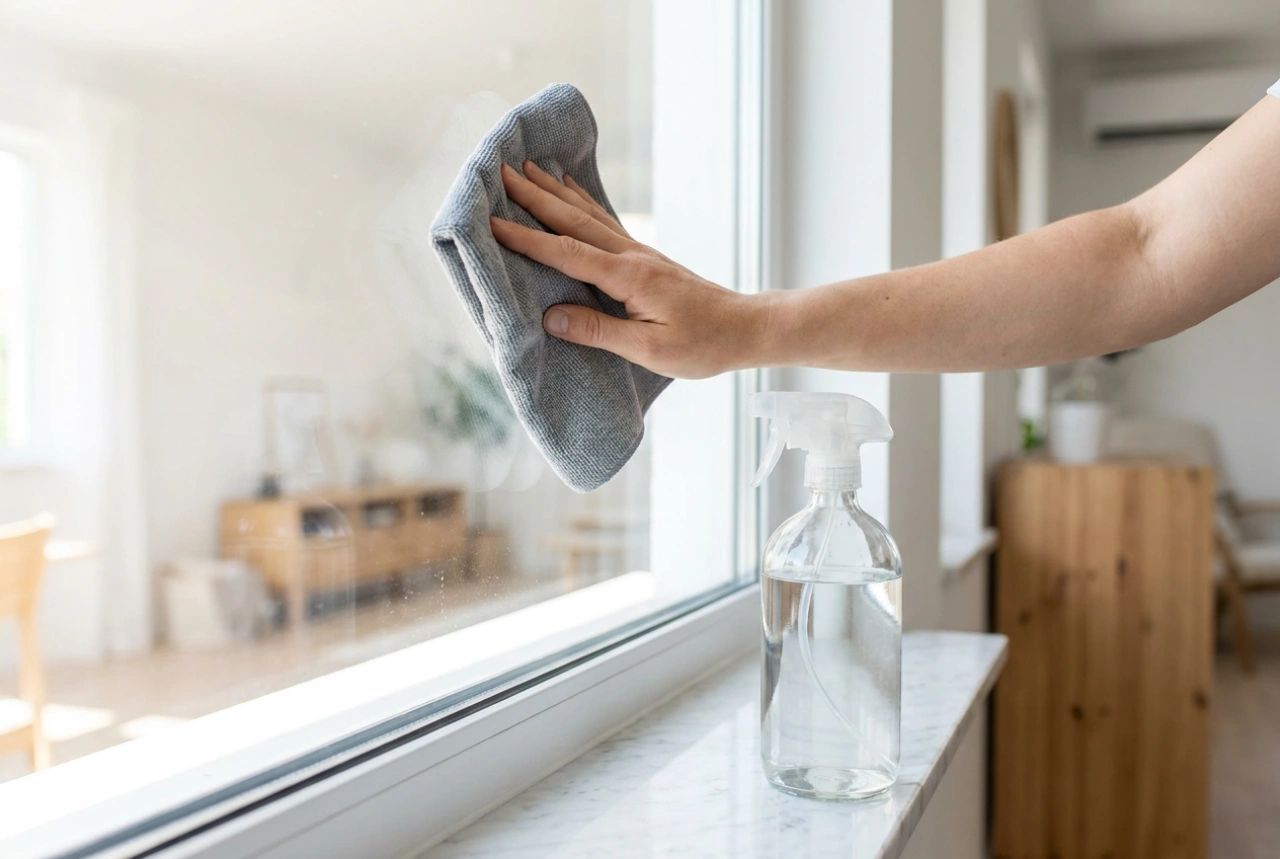
- Step 2: Apply Solvent. Saturate a soft microfiber cloth with isopropyl alcohol or oil and press it against the remaining adhesive residue for two to three minutes to allow the chemical to penetrate.
- Step 3: Scrape Safely. Lubricate the area with soapy water. Hold a plastic or glass-safe scraper at a flat angle and gently push the softened glue into small clumps.
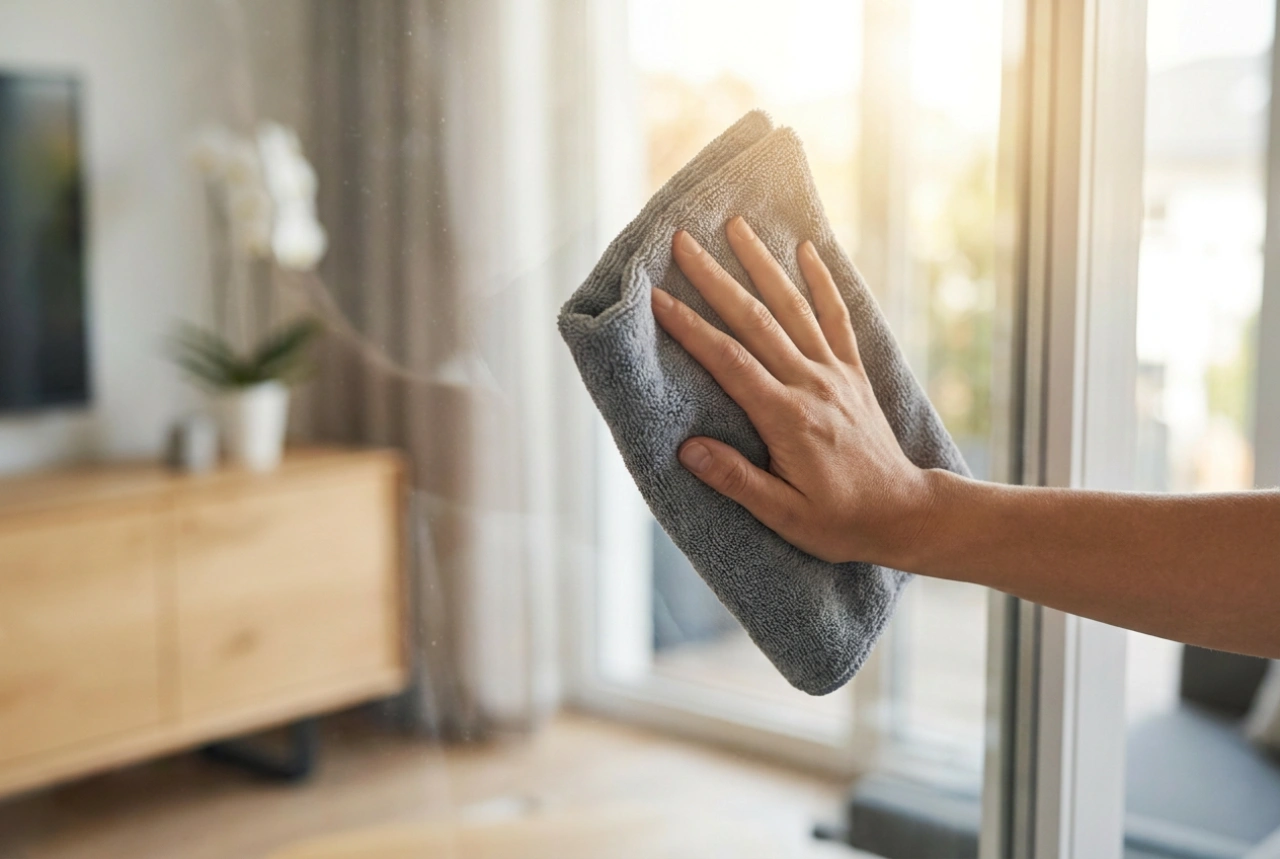
- Step 4: Wipe and Degrease. Use a clean microfiber cloth to lift the dissolved residue. Clean the entire area with a mild soapy solution to remove any remaining solvent or oil traces.