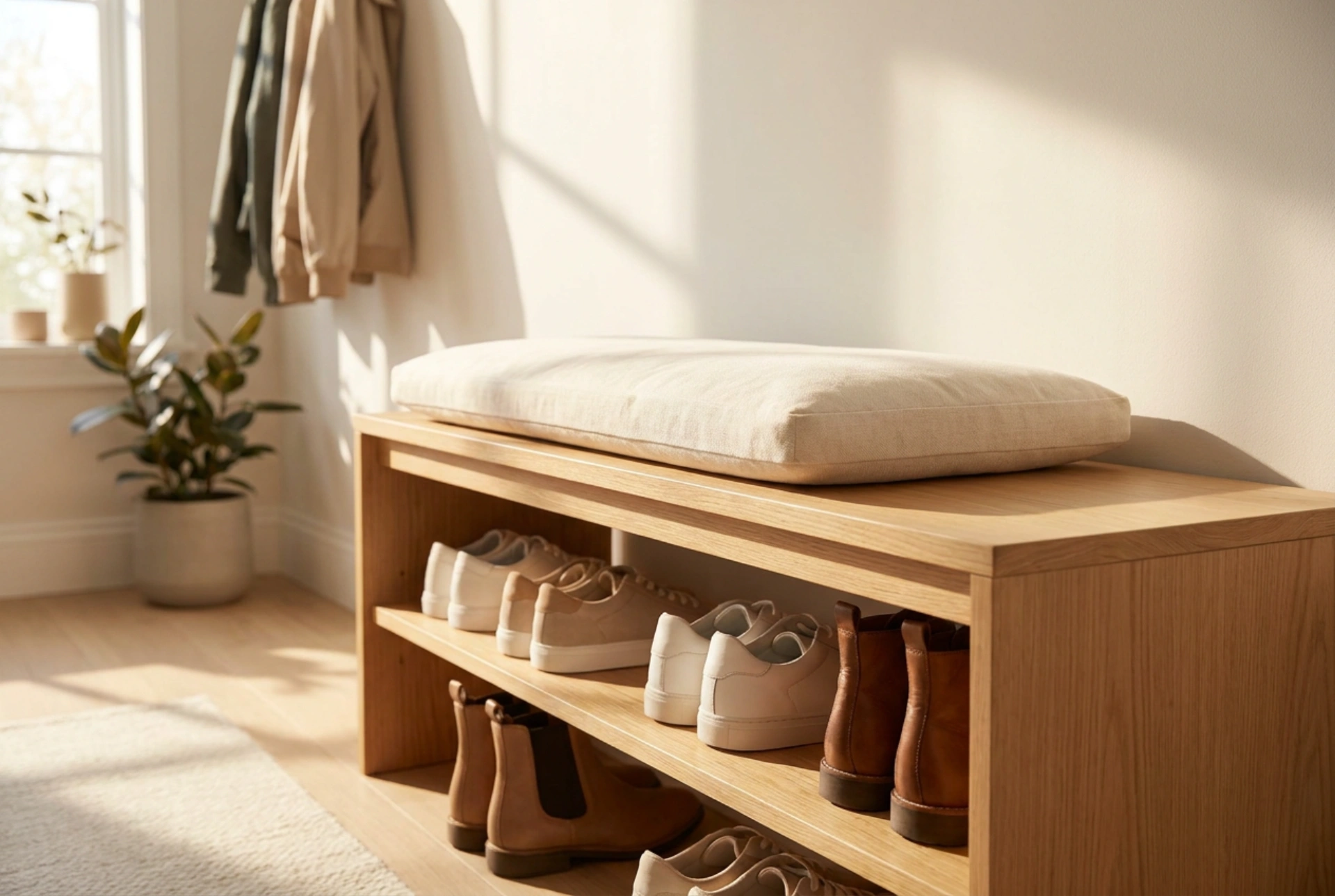


The entryway serves as the primary environmental buffer zone of the home, bearing the brunt of outdoor debris, moisture, and heavy foot traffic. Integrating a dedicated shoe rack bench into this transition space physically restructures the area, optimising ergonomics while directly protecting footwear from premature material degradation.
The Physics of Airflow: Why Footwear Demands Ventilation
Storing footwear in closed cupboards immediately after wearing creates a microclimate characterised by high relative humidity and stagnant air. When feet sweat, leather and synthetic textiles absorb moisture. If this moisture cannot evaporate efficiently, it triggers the breakdown of natural glues, accelerates the rotting of cotton stitching, and fosters an ideal environment for mould spores and bacterial growth.
An open-shelved shoe rack bench utilises passive air convection. As warm indoor air moves across the open shelves, it facilitates latent heat transfer, drawing moisture away from the shoe materials. Slatted wooden shelves or mesh metal grates are particularly effective. They minimise the contact surface area between the sole and the shelf, allowing air to circulate around the entire shoe, including the tread. For optimal evaporation, shoes should be spaced at least three to five centimetres apart, preventing localised humidity pockets.
Material Science: Selecting Wood versus Metal Components
The choice of material for an entryway bench dictates its structural integrity under variable load pressures and its resistance to chemical wear. When an adult sits down, the bench experiences localised compressive stress. This requires materials with high tensile strength and minimal deflection under weight.
- Solid Hardwoods: Species such as oak or beech offer superior density and structural stability. However, wood is hygroscopic, meaning it absorbs moisture from wet shoes. To prevent warping, splitting, or water staining, hardwood benches must be treated with hydrophobic penetrating oils or polyurethane-based varnishes. These coatings seal the pores of the timber without compromising its structural elasticity.
- Powder-Coated Metals: Carbon steel or aluminium frames offer exceptional weight-to-volume ratios, allowing for sleeker profiles. Powder-coating is a critical process where dry plastic powder is electrostatically applied and cured under heat. This creates a dense, non-porous skin that shields the underlying metal from oxygen and electrolyte-rich moisture, such as road salt and rainwater, preventing oxidative corrosion (rust).
Ergonomics of the Transition Zone
Putting on and removing footwear requires complex joint articulation, particularly involving the lumbar spine, hips, and knees. Performing this task while standing forces the body onto a single point of stability, increasing the risk of slips and putting uneven, high-impact stress on shoe heels and counters. Over time, stomping into shoes without unlacing breaks down the internal heel stiffeners.
An optimal entryway bench should stand between 45 and 48 centimetres high. This elevation allows the knees and hips to rest at a stable 90-degree angle, reducing spinal flexion and relieving muscle tension. From a seated position, pressure is applied evenly, allowing laces to be tied securely and shoehorns to be used at the correct angle. This physical habit directly extends the lifespan of structured footwear by preventing the collapse of the heel counter.
Maintenance Protocols for Hallway Benches
Maintaining a clean entryway requires systematic management of incoming dirt, salt, and water. A multi-step cleaning protocol prevents abrasive grit from damaging both the bench and the surrounding flooring.
Firstly, establish a physical barrier by positioning a high-density coir or synthetic scraper mat directly outside and inside the door to capture coarse particles. Underneath the shoe bench shelves, place a shallow, rimmed drip tray made of polypropylene. This tray catches melting snow, rainwater, and highly corrosive de-icing salts, preventing chemical etching on hardwood or tile grout lines. Clean the bench structure weekly by wiping metal surfaces with a microfibre cloth dampened with a mild, pH-neutral surfactant solution. For oiled wooden benches, apply a thin layer of maintenance wax every six months to restore the hydrophobic barrier and protect the grain from atmospheric changes.