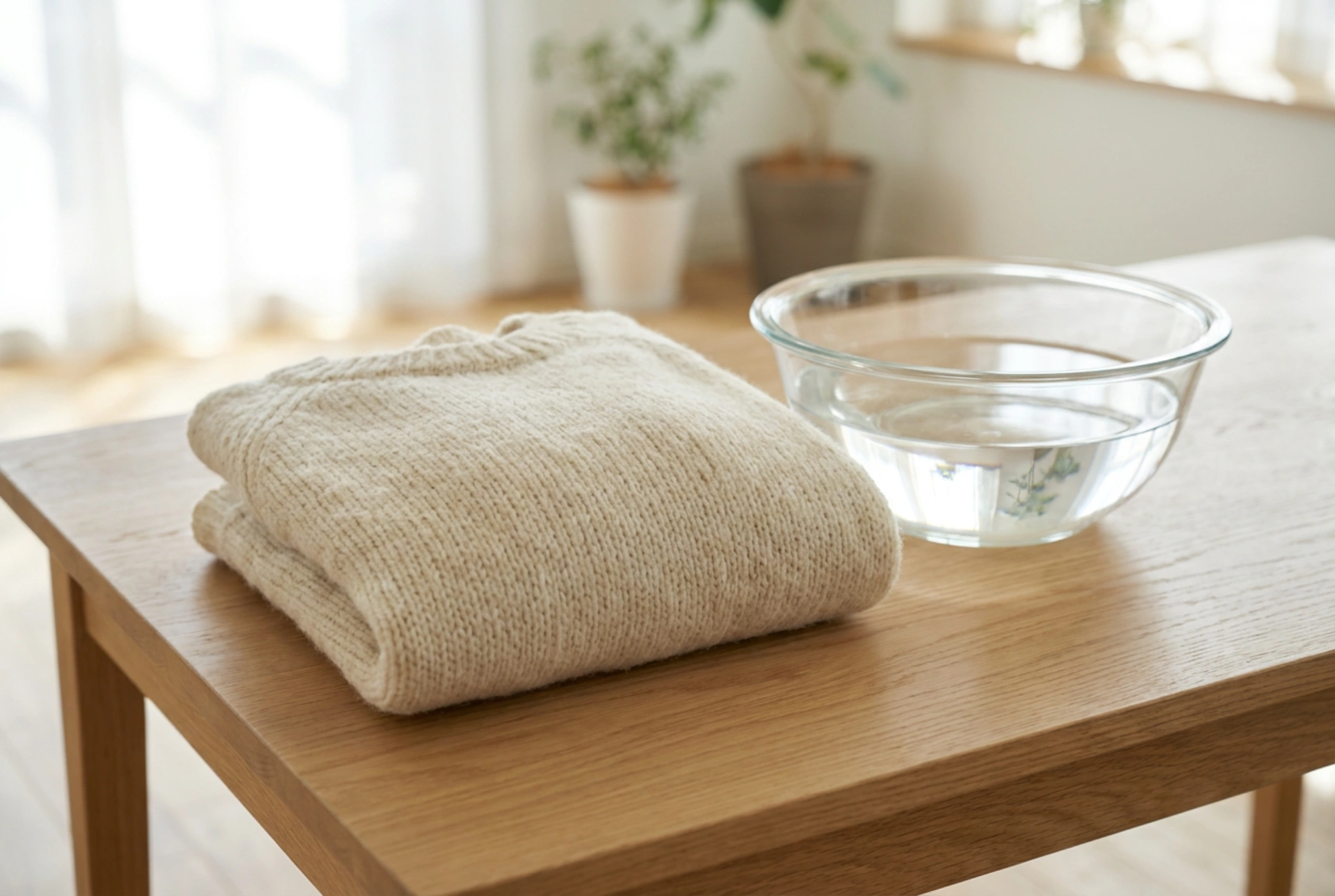


Machine washing wool requires an understanding of protein fibre structure to prevent irreversible shrinkage and felting. By controlling temperature, mechanical action, and chemical exposure, you can safely clean delicate knitwear at home without losing its original shape and softness.
The Science of Felting: Why Wool Shrinks
To wash wool successfully, it helps to understand its microscopic structure. Wool fibres are composed of keratin, a natural protein, and are covered in tiny, overlapping scales called cuticles. In their natural state, these scales lie flat. However, when wool is exposed to the combination of moisture, heat, and physical friction, these scales lift and open up. As the fibres rub against each other during a wash cycle, the open scales interlock like Velcro. This physical locking mechanism is what we call felting, and once it occurs, it is chemically and structurally impossible to reverse.
Moisture lubricates the fibres, making them highly pliable, while heat opens the cuticle scales. Combined with the tumbling motion of a washing machine, the fibres migrate and tangle tightly. Therefore, preventing felting is not about avoiding water, but about strictly controlling temperature and limiting mechanical agitation.
The Chemistry of Wool Care: Detergents and pH
Standard household laundry detergents are formulated to remove organic stains using alkaline agents and specific enzymes, particularly proteases. While highly effective for cotton and synthetics, these enzymes are designed to break down proteins. Because wool is a protein fibre, enzyme-rich detergents will chemically digest the keratin structure over time, weakening the yarn and causing premature wear, holes, and thinning.
Additionally, alkaline environments with a high pH cause wool fibres to swell and the cuticle scales to lift, increasing the risk of felting. To protect the integrity of the fabric, always use a specialized, pH-neutral detergent formulated specifically for wool and silk. These formulas do not contain proteases or optical brighteners and are designed to preserve the natural protective oils, such as lanolin, inherent in the wool fibres, keeping them soft and elastic.
Washing Machine Parameters: Temperature and Motion
Modern washing machines often feature dedicated wool cycles that are engineered to mimic the gentle rocking motion of hand washing. To ensure safety, select a cycle that keeps the drum movement to a minimum, using a cradling action rather than continuous rotation. Avoid standard delicate cycles if a specific wool setting is not available, as they may still involve too much mechanical friction.
- Temperature Stability: Wash wool at 30 degrees Celsius or completely cold. Crucially, the temperature must remain consistent throughout the wash and rinse phases. Sudden thermal shock, such as switching from a warm wash to a cold rinse, causes the swollen fibres to contract violently, leading to instant felting.
- Spin Speed Control: Set the spin speed to a maximum of 600 RPM. A slow spin is essential to extract excess water without forcing the wet, vulnerable fibres to compress tightly against the drum wall, which can warp the garment shape. Never use the tumble dryer, as the combination of heat and tumbling is guaranteed to shrink wool.
Drying and Reshaping: The Flat Lay Technique
The care of wool does not end when the washing machine cycle finishes. Wet wool is highly elastic and susceptible to stretching under its own weight. Hanging a wet wool jumper on a hanger or clothesline will pull the shoulder seams out of shape and elongate the body and sleeves permanently.
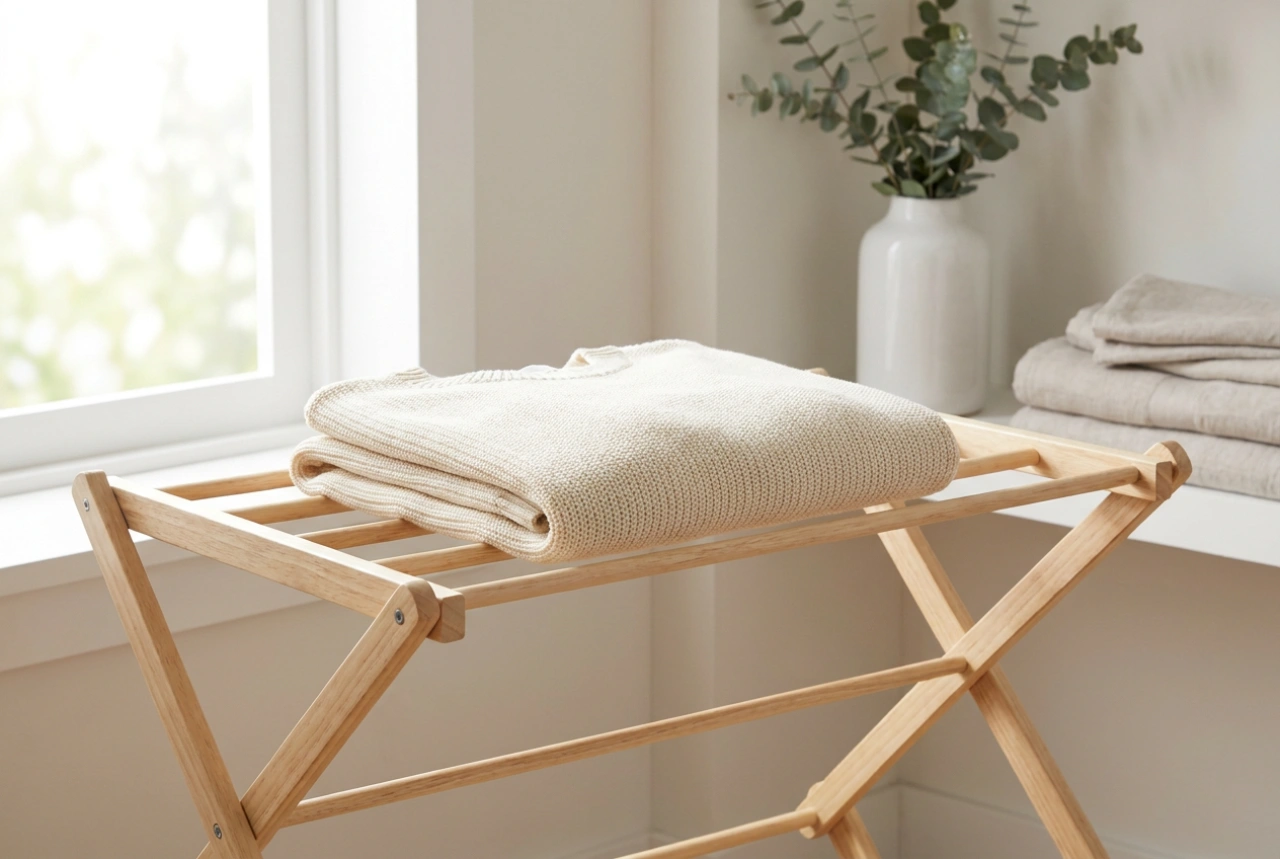
Instead, use the physical absorption method to remove excess moisture. Lay the washed garment flat on a clean, dry towel, then roll the towel and garment together like a sleeping bag, pressing down gently to absorb the bulk of the water. Unroll the towel and transfer the damp garment to a dry, flat surface, preferably a mesh drying rack that allows air to circulate from underneath. Gently pat and block the garment back into its original dimensions, smoothing out any creases with your hands, and let it dry naturally away from direct sunlight or heat sources.