

Selecting the right ironing board for a high-pressure steam generator requires understanding thermodynamic transfer and moisture management to prevent pooling, damp fabrics, and structural degradation. Standard boards fail under the high volume of pressurized vapor, making specialized structural and material design essential for efficient pressing.
The Physics of Steam Volume and Condensation
Steam generator stations produce significantly more moisture and pressure than conventional steam irons, often generating continuous output exceeding 120 grams of vapor per minute. When this hot, pressurized gas hits a cool surface, it undergoes a phase change, reverting from vapor to liquid water. If the ironing board cannot dissipate this moisture rapidly, the condensed water pools beneath the fabric cover.
This accumulation of liquid water leads to several complications. It oversaturates the cover, causing water spots and dampness on the garments, which prevents creases from setting correctly. Furthermore, standing water accelerates the oxidation of metal frame components. To prevent this, the board surface must be highly permeable, allowing the vapor to pass completely through the structure rather than trapping it against the fabric.
Material Science of the Ironing Surface
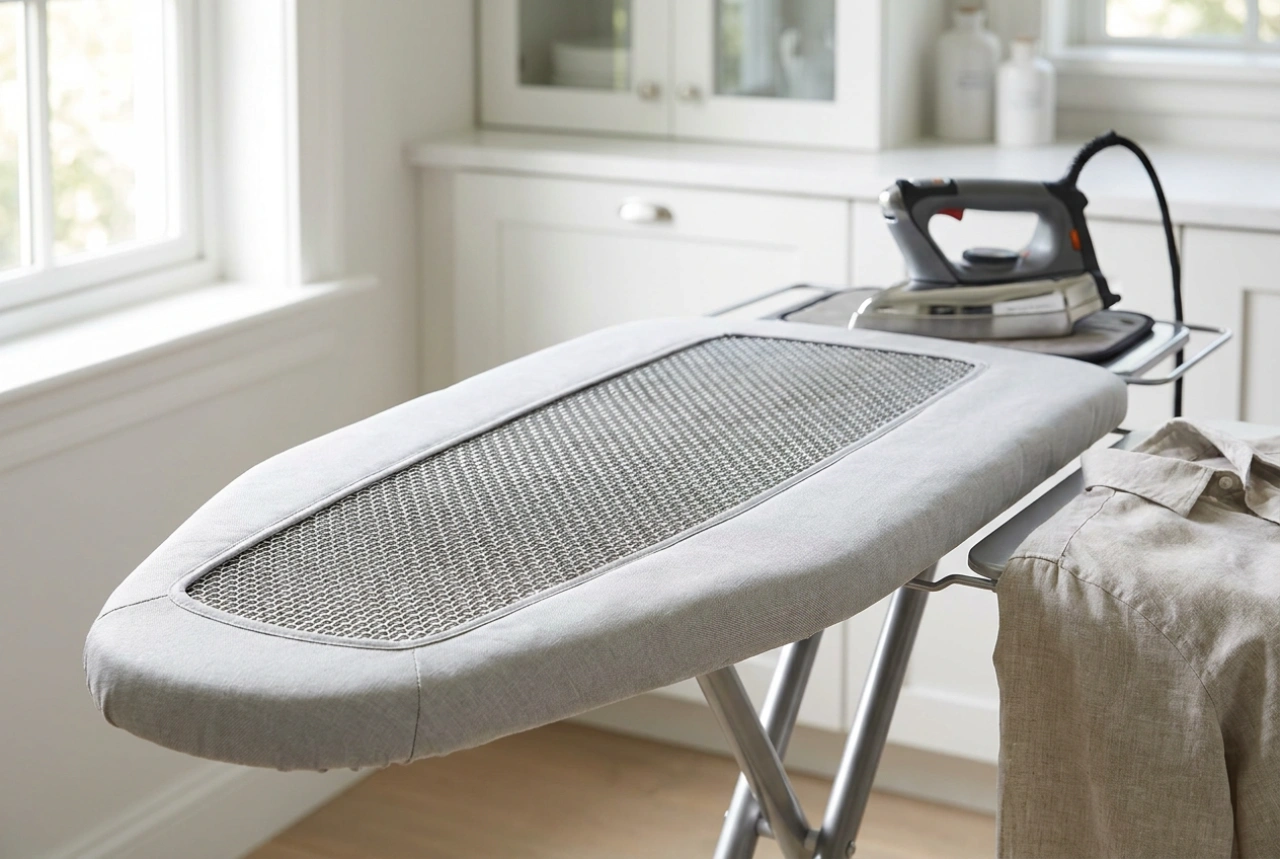
A technically sound ironing surface for steam generators relies on a multi-layer system designed to manage heat and moisture flow. The foundation must be an expanded metal mesh, typically constructed from powder-coated steel or anodized aluminium. This mesh design provides structural rigidity while maximizing open surface area, allowing vapor to escape downward.
- The Base Mesh: High-density perforation prevents the sagging of upper layers while facilitating maximum airflow.
- The Underlayment: Thick polyester felt is superior to polyurethane foam. Felt acts as a thermal buffer and absorbs minor moisture without disintegrating. Foam degrades quickly under continuous exposure to high-temperature steam, losing its elasticity.
- The Cover Material: The outer cover should be made of 100% breathable cotton or a specialized synthetic weave. Some advanced covers utilize integrated metal particles to reflect heat back through the garment, speeding up the drying process and reducing energy expenditure.
Managing Heavy Loads: Frame and Base Physics
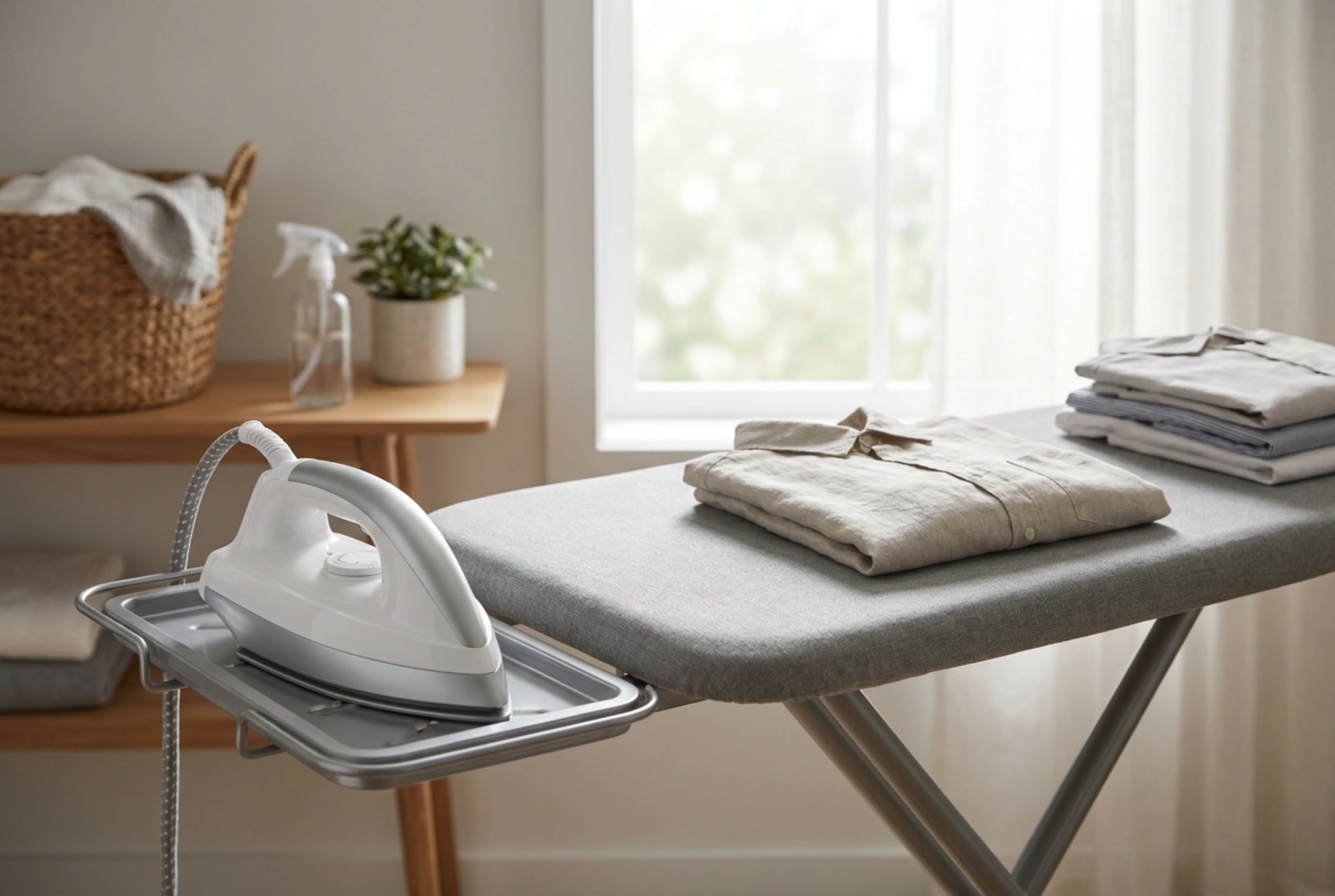
A steam generator filled with water weighs significantly more than a standard iron, typically ranging between 4 and 6 kilograms. Placing this weight on a standard iron rest can cause mechanical failure or tip the board. Therefore, the board must feature a reinforced, integrated landing platform designed to handle both the weight and the footprint of the station.
Stability is governed by gravity and structural geometry. A wide leg base with a low center of gravity prevents tipping when lateral force is applied during ironing. Look for legs constructed from heavy-gauge tubular steel. Additionally, non-slip rubber feet are crucial; they increase the coefficient of friction against the floor, absorbing the kinetic energy generated by the back-and-forth movement of the iron and preventing micro-shifts that fatigue the frame joints over time.
Active Ironing Systems: Suction and Inflation
For high-frequency use, active ironing boards employ mechanical airflow to manipulate the physical behavior of steam and fabric. These boards integrate electric fans that operate in two distinct modes: suction and inflation.
The suction function pulls steam down through the garment and the board's layers, venting it away. This mechanical pull holds the fabric firmly against the board, preventing slippage and allowing for sharp, precise creases. It also removes residual moisture instantly, ensuring the garment is dry and ready to wear immediately. Conversely, the inflation function forces air upward through the cover, creating an air cushion. This cushion minimizes friction and heat concentration, allowing delicate fabrics like silk to be ironed without risk of shiny marks or seam impressions showing through.
Optimal Pressing Techniques and Order of Operations
To achieve professional results and preserve the life of your equipment, follow a systematic approach based on thermodynamics. Always preheat the ironing board by running a dry iron or a light burst of steam over the surface before laying down garments; this warms up the padding and reduces the initial temperature differential that causes rapid condensation.
When pressing, utilize the