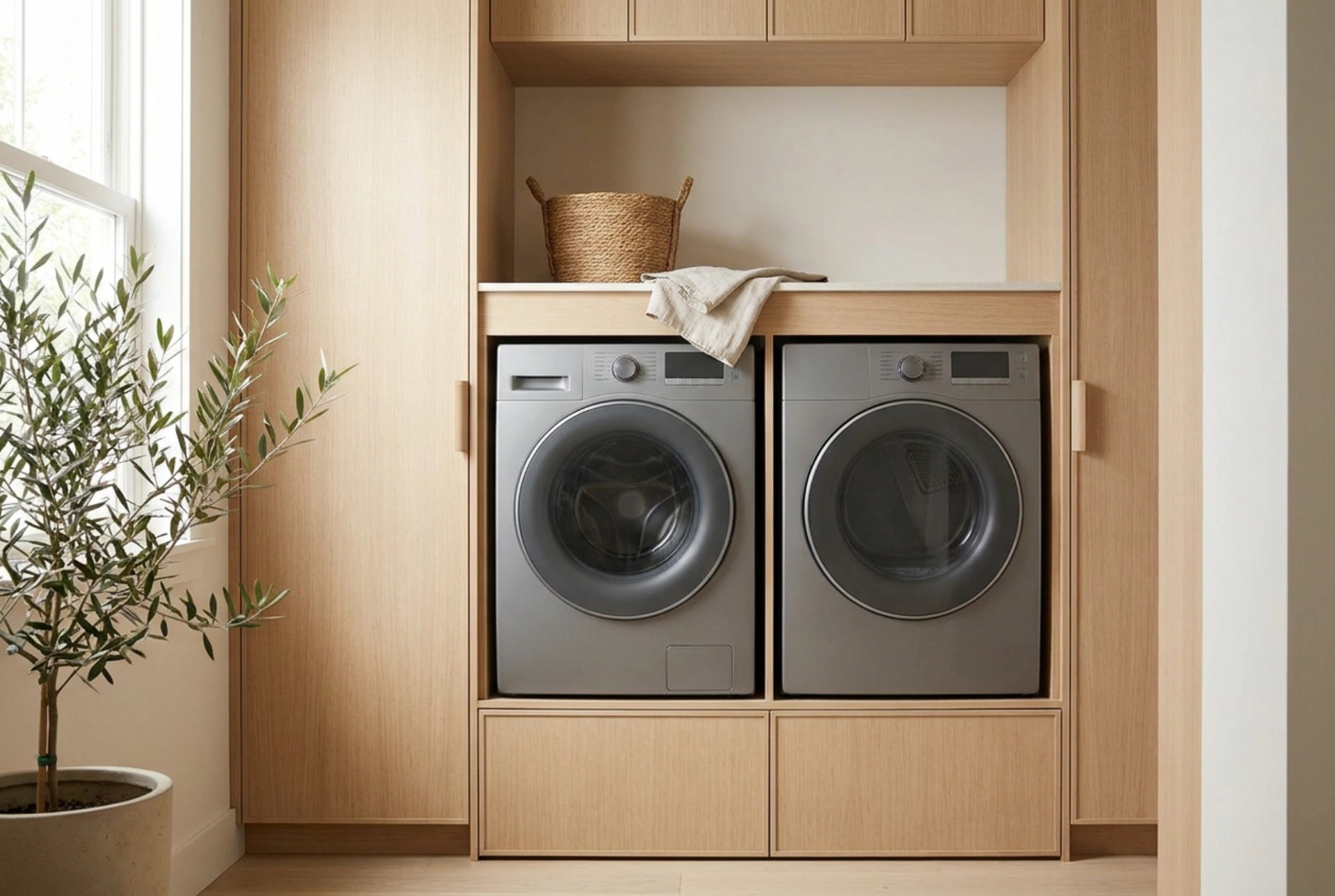


Integrating a washer-dryer into custom kitchen or utility cabinetry creates a seamless aesthetic, but enclosed spaces present a significant physical challenge: heat dissipation. Without adequate thermal planning, the cumulative ambient heat generated during drying cycles can trigger safety shut-offs, degrade cabinet materials, and shorten the appliance's lifespan.
The Thermodynamics of Washer-Dryer Enclosures
During the drying phase, a washer-dryer converts electrical energy into heat to evaporate water from damp fabrics. In modern condenser and heat-pump appliances, this moisture is cooled and liquefied. However, the heat extracted from the laundry does not disappear; it is radiated into the surrounding environment. In a standard open-room installation, this heat dissipates easily into the ambient air. Within a sealed cabinet, the air volume is highly restricted.
As the air temperature inside the enclosure rises, the temperature differential between the appliance's internal cooling system and the surrounding air decreases. For condenser units, which rely on cooler ambient air to condense internal steam, high cabinet temperatures significantly reduce condensation efficiency. This leads to prolonged drying cycles, increased energy consumption, and high thermal stress on internal electronic components, such as the control board and thermal fuses.
Essential Ventilation Gaps and Airflow Paths
To maintain efficient thermodynamic transfer, cabinet design must facilitate a continuous convection current. Cool air must enter the cabinet base, absorb heat from the appliance casing, and escape from the top of the enclosure. Achieving this requires precise dimensional planning:
- Side and Top Clearance: Maintain a minimum gap of 20 mm on either side of the appliance and 30 mm above it to prevent direct heat transfer to the cabinet walls.
- Rear Depth: Leave at least 50 to 70 mm of space behind the unit. This area acts as the primary thermal chimney where warm air rises.
- Plinth and Countertop Grilles: Install a ventilation grille with a minimum free area of 200 cm² in the kickboard or plinth beneath the machine. A corresponding outlet grille must be integrated into the countertop or the upper section of the cabinet housing to allow the rising warm air to escape.
Without these dedicated intake and exhaust pathways, the appliance will simply recirculate its own hot exhaust air, leading to thermal stagnation and eventual system shut-down.
Cabinet Material Stability and Thermal Protection
The combination of elevated temperatures and residual humidity can be highly destructive to cabinetry. Standard particle board and low-grade laminates are prone to delamination when subjected to repeated heating and cooling cycles. The adhesive holding the edge banding can soften, causing it to peel away over time.
To mitigate these structural risks, select moisture-resistant medium-density fibreboard (MR-MDF) or high-pressure laminates (HPL) for the cabinetry construction. Additionally, applying a self-adhesive, heat-reflective aluminium shield to the inner side-panels of the cabinet provides a barrier that reflects radiant heat away from the wood fibers. This simple thermodynamic barrier preserves the structural integrity of the cabinetry and prevents moisture absorption from localized condensation.
Operational Strategies to Minimize Heat Load
Technique and maintenance play a vital role in preventing thermal build-up. Managing the appliance properly ensures that even a well-ventilated enclosure is not pushed to its thermal limits:
- Load Calibration: Never overload the machine. A larger wet mass requires a significantly longer heating cycle, extending the duration of high thermal emission inside the cabinet.
- Post-Cycle Ventilation: Keep the cabinet door open for 15 to 20 minutes after a drying cycle finishes. This allows the remaining hot, humid air trapped in the drum and cabinet cavity to escape rapidly.
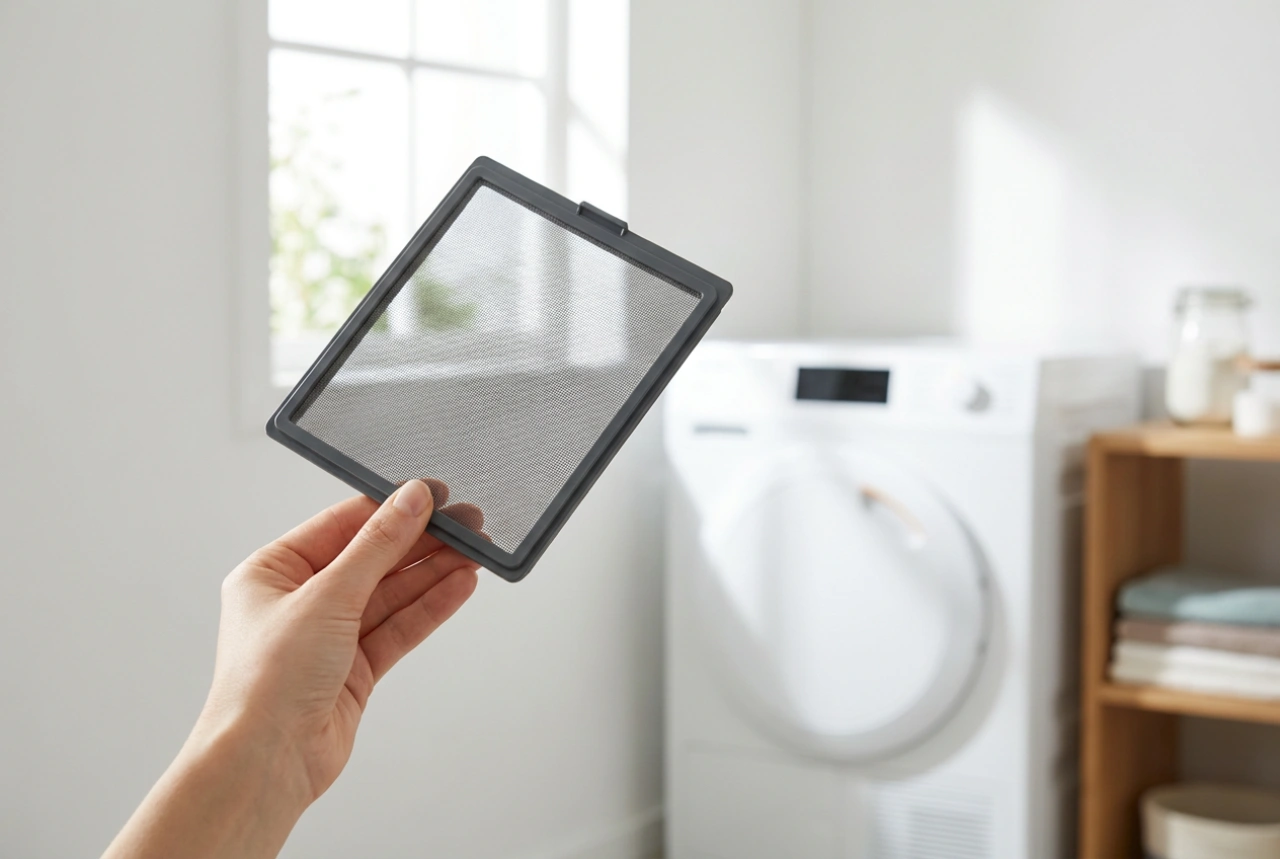
- Condenser Maintenance: Clean the fluff filters and, if applicable, the condenser unit regularly. A clogged filter restricts internal airflow, forcing the heating element to run longer and hotter to dry the same amount of clothing.