

Designing a custom corner wardrobe requires solving the classic spatial puzzle of the "dead corner," where depth meets restricted physical access. By applying geometric principles, selecting the right door hinge kinematics, and implementing modern mechanical fittings, you can transform this awkward recess into highly functional, easily accessible storage.
Understanding Corner Geometry: L-Shape versus Diagonal Layouts
The first critical decision in corner wardrobe design is choosing between an L-shaped configuration (two units meeting at a 90-degree angle) and a diagonal or pentagonal layout. Each approach alters the physical footprint and internal accessibility in distinct ways:
- L-Shaped Wardrobes: This layout preserves the room's right-angled lines, making it visually unobtrusive. However, it creates a deep "blind" zone where the two carcases meet. To access this area, you must reach around a corner, which is ergonomically challenging if not managed with specialised internal hardware.
- Diagonal Wardrobes: By cutting across the corner at a 45-degree angle, this design offers a single, wide door opening and a highly spacious interior cabin. While it provides excellent visibility, it occupies more floor area and can make the room feel smaller. The depth of a diagonal corner can also lead to wasted space at the very back if shelves are not systematically organised.
Mechanical Solutions for the Blind Corner
To make the deep recesses of an L-shaped corner usable, you must rely on mechanical systems that bring the contents to you, rather than forcing you to reach into the dark. Leveraged pull-outs and rotary systems utilise basic mechanical principles to optimise access:
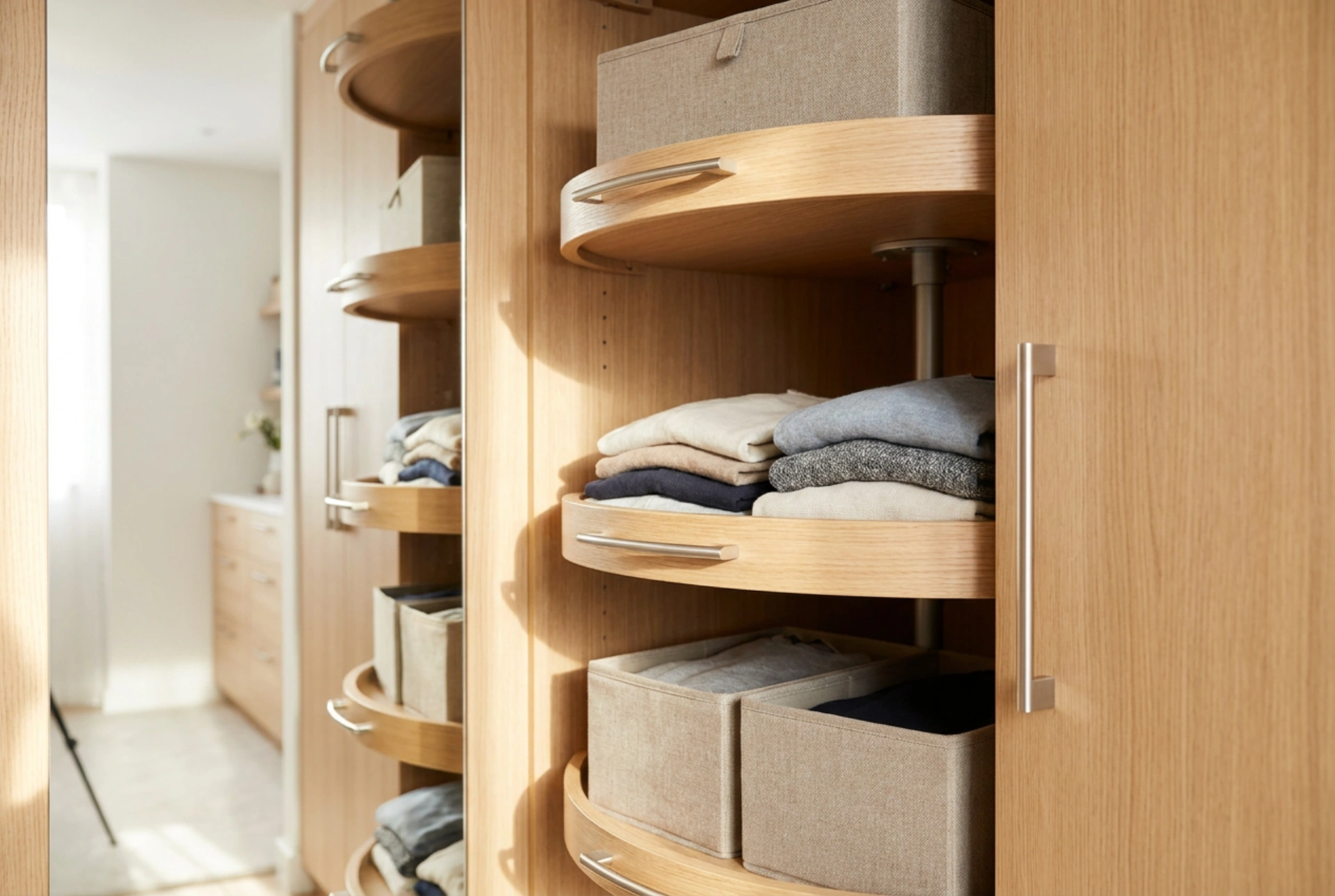
Rotary Carousel Shelves
Circular or semi-circular shelves rotating on a central metal axis are ideal for folded clothes or shoes. By spinning the shelf, items stored at the back rotate directly to the front. Ensure the central rod is rated for heavy-duty loads, as off-centre weight distribution can cause cheaper bearings to wear prematurely, leading to friction and misalignment.
Articulated Pull-Out Trays and Swing-Out Shelving
These specialised tray systems are highly effective in deep wardrobes. Utilising a system of tracks and levers, pulling the cabinet door causes the front trays to swing completely out of the wardrobe, while the rear trays slide forward into the accessible zone. Opt for systems with high load capacities (at least 20 kg per tray) and integrated soft-close dampers to absorb kinetic energy and prevent items from shifting during operation.
Hinge Kinematics and Door Configurations
Even the most advanced internal storage is useless if the wardrobe doors restrict your physical entry point. The selection of door hinges and track systems directly dictates the ease of access:
- 170-Degree Wide-Angle Hinges: Standard cabinet doors open to approximately 95 or 110 degrees, which partially blocks the corner opening. Specifying 170-degree hinges allows the doors to swing almost completely flat against the adjacent cabinet fronts, maximising the physical clearance for your arms and shoulders.
- Bi-Fold (Folding) Doors: This configuration uses a top-running track and hinged panels that fold together as they slide to one side. It provides a completely unobstructed view of both sides of an L-shaped corner simultaneously, eliminating the physical barrier created by traditional swinging doors.
Ergonomic Zoning and Interior Layout
To design an efficient interior, segment the wardrobe into zones based on frequency of use and physical strain. Human ergonomics dictate that items used daily should reside within the "comfort zone" (between knee and eye height):
Use the hardest-to-reach, deepest part of the corner for seasonal storage (such as winter coats or bedding) or items accessed only a few times a year. In contrast, install pull-out hanging rails on the shallower side sections for daily wear. To eliminate shadows cast by the deep corner structure, integrate vertical low-voltage LED strip lights recessed into the side panels. This provides even illumination across all shelving levels without generating heat that could damage delicate fabrics.