

Dividing garments systematically between a tall wardrobe and a low chest of drawers prevents storage redundancies, accelerates daily routines, and maintains fabric integrity. Understanding the structural properties of different textile fibers dictates whether they should hang or remain folded.
The Physics of Fabric: Hanging vs. Folding
To avoid duplicating storage spaces, you must categorise clothing based on material physics. Textiles behave differently under tension. Knitted fabrics, such as wool sweaters, cotton jersey t-shirts, and activewear, are constructed from continuous interlocking loops of yarn. When suspended on a hanger, gravity pulls these loops downward, stretching the fabric vertically, causing shoulder bumps and permanently distorting the garment's shape. Consequently, all knitted items belong exclusively in a chest of drawers.
Woven fabrics, on the other hand, feature intersecting warp and weft threads that provide structural stability. Materials like linen, dense cotton, tailored wool, and silk resist vertical stretching but are highly prone to creasing. Hanging these garments allows the natural weight of the fabric to pull minor wrinkles out over time, preserving their drape and finish. Therefore, woven garments are natural candidates for the wardrobe.
Defining the Division: Allocating Your Furniture
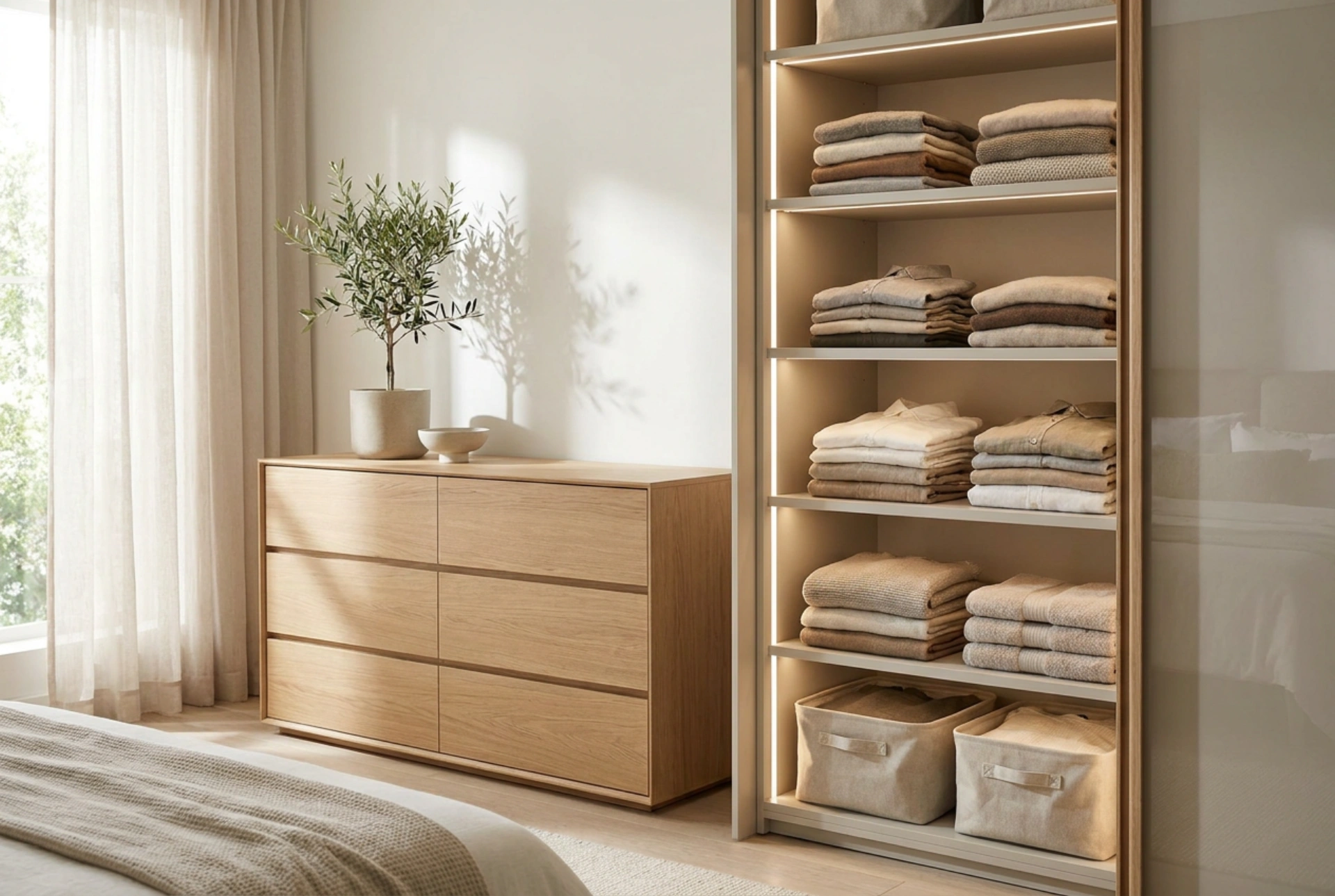
Establishing clear, non-overlapping roles for your wardrobe and chest of drawers eliminates the confusion of having identical clothing types scattered across different areas. This division should be absolute:
- The Wardrobe (Vertical Suspension): Dedicated to structured, woven, and long items. This includes suits, dresses, blazers, button-down shirts, trench coats, and delicate trousers. Ensure you use hangers that match the garment's shoulder width to distribute the load evenly and prevent fabric stress.
- The Chest of Drawers (Horizontal Compression): Dedicated to flexible, elastic, and high-density items. This category covers knitwear, t-shirts, sweatshirts, denim, undergarments, and socks. These items suffer no structural damage from light compression and are easy to access when stored horizontally.
The Non-Duplication Rule: Streamlining Category Allocation
Duplication occurs when a single clothing category—such as t-shirts or trousers—is split between the wardrobe and the chest of drawers. This creates cognitive friction during dressing and leads to forgotten garments. To enforce a strict zero-duplication system, assign each garment sub-category to one specific storage zone based on its material properties and utility.
For example, while heavy denim jeans are woven, their high density and resistance to wrinkling mean they can be folded and stored in drawers, freeing up valuable hanging space for delicate linen trousers. Similarly, polo shirts must have a single home: if they are knitted pique cotton, they belong in a drawer; if they are woven linen-blend, they belong on a hanger. Never split the same category across both pieces of furniture.
Advanced Drawer Organisation: The File-Folding Technique
Traditional horizontal stacking inside drawers is highly inefficient. Stacking shirts or trousers on top of each other creates downward pressure, compressing the bottom layers, limiting airflow, and making items invisible. This often leads to unnecessary duplication as you purchase more clothes, assuming you have nothing to wear.
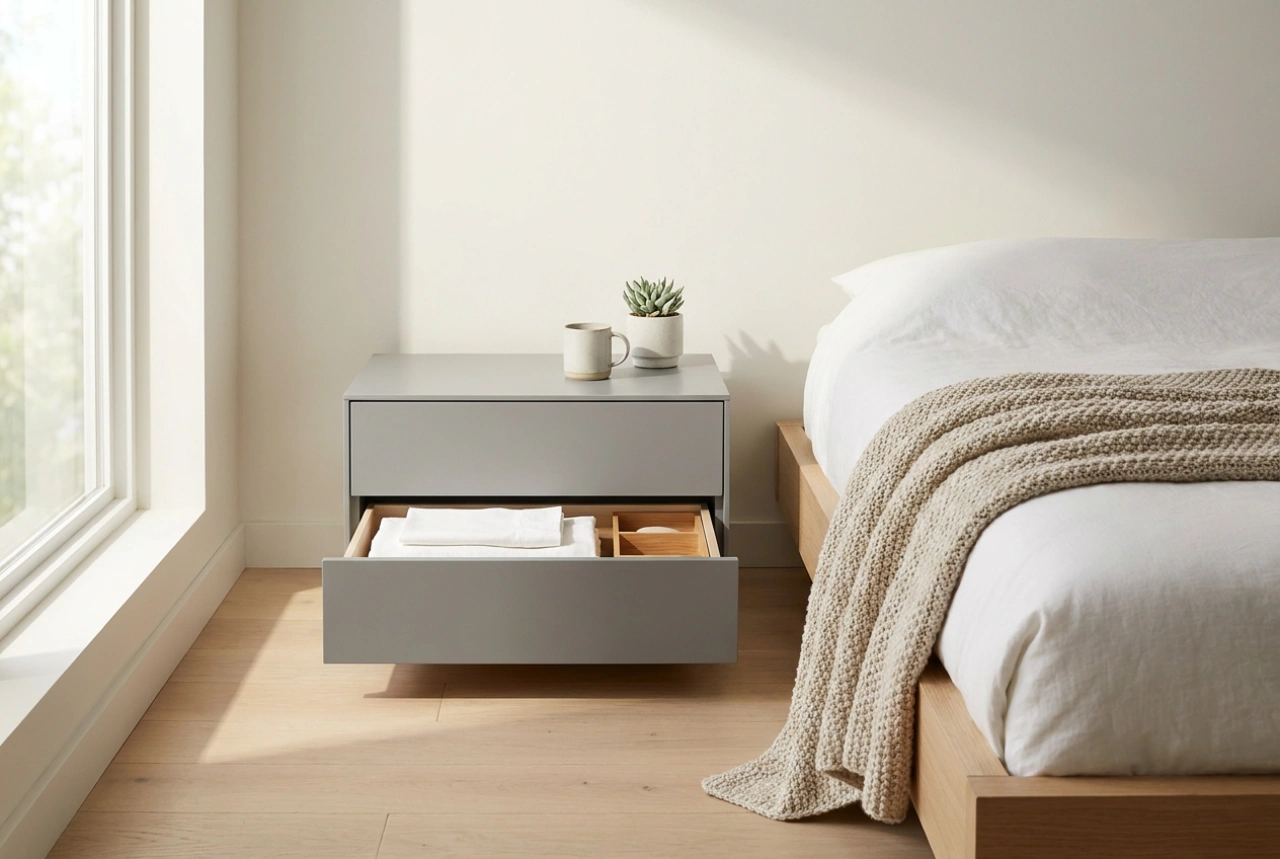
To resolve this, employ the vertical file-folding technique. Fold each garment into a compact, self-standing rectangle and place it upright in the drawer, front-to-back, like folders in a filing cabinet. This method distributes weight evenly, prevents fabric friction that causes pilling, and ensures every single garment is visible the moment you pull the drawer open. Use shallow drawer dividers to maintain structural integrity when the drawer is not fully packed.
Seasonal Transitions and Spatial Balance
To maintain this non-overlapping system year-round, utilize the upper shelves of your wardrobe for off-season storage. During summer, heavy woollen knitwear should be packed into breathable cotton storage bags and placed on the highest wardrobe shelves, completely clearing the chest of drawers for lightweight summer tees and shorts. This seasonal rotation prevents your drawers from becoming overstuffed, which causes friction damage to delicate fibers and ruins the systematic division of your wardrobe setup.