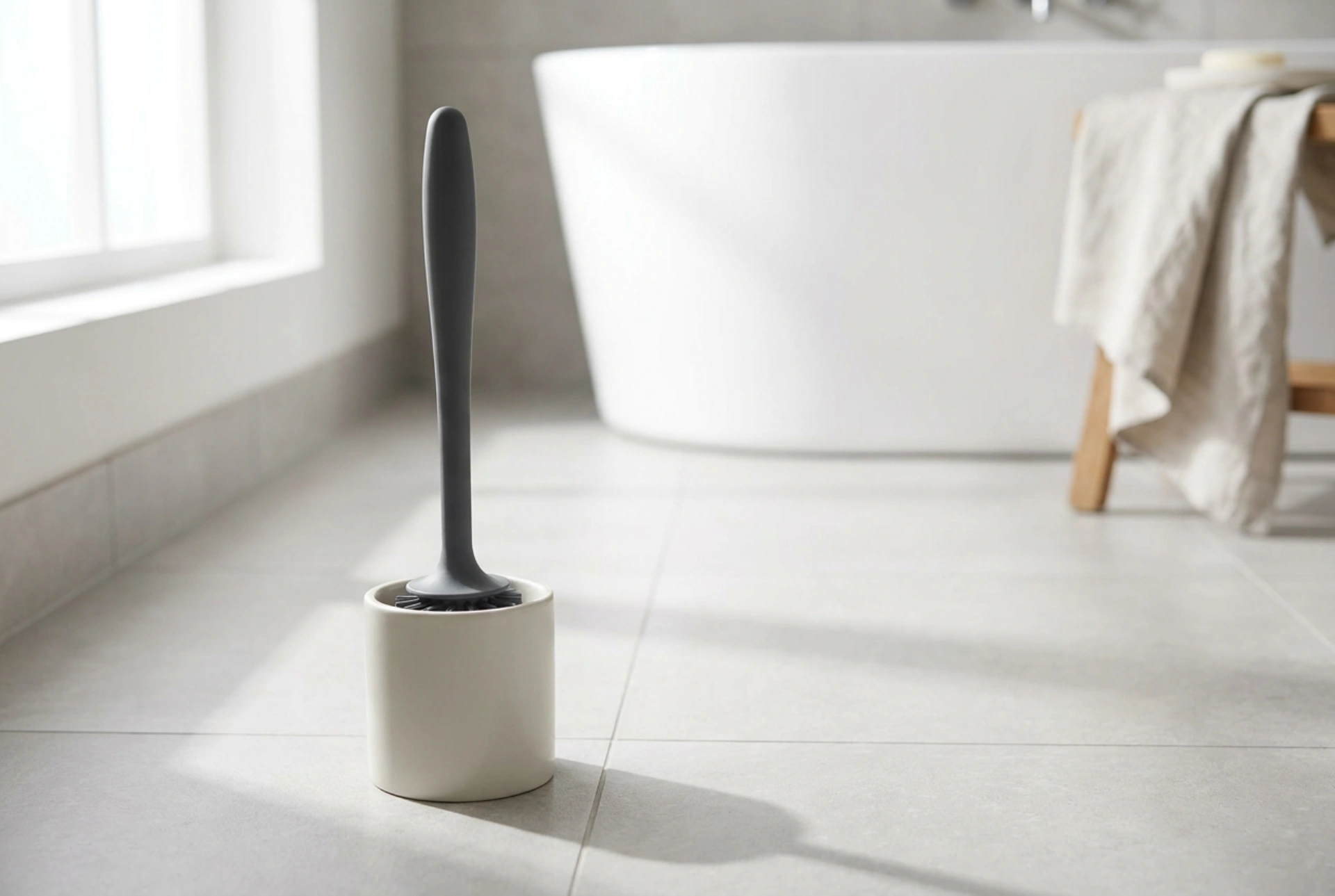


The traditional plastic toilet brush is increasingly being replaced by modern silicone alternatives, driven by fundamental principles of material science and fluid dynamics. Understanding how these modern tools interact with ceramic surfaces and water reveals why they offer superior hygiene and durability.
Material Science: Silicone vs. Nylon Bristles
Traditional toilet brushes rely on densely packed nylon bristles. While effective at creating friction, nylon is inherently hydrophilic and prone to wear. Over time, microscopic scratches develop on nylon fibres, creating ideal breeding grounds for biofilm and trapping organic waste through capillary action. When pulled from the bowl, these bristles retain significant amounts of water, leading to the familiar, unhygienic pooling in the holder.
Modern brushes utilise thermoplastic elastomers or silicone. Silicone is highly hydrophobic, meaning water molecules naturally repel from its surface. Instead of clinging to the brush, water forms distinct droplets that slide off easily due to gravity. Furthermore, silicone bristles are moulded as thicker, solid structures rather than fine fibres. This lack of porous space prevents organic matter from becoming physically trapped between fibres, ensuring the tool remains clean after rinsing.
Mechanics of Contact and Rim Geometry
The mechanical efficiency of a toilet brush depends on its ability to conform to the complex curvature of a ceramic toilet bowl, particularly the hard-to-reach area under the flush rim. Traditional stiff nylon bristles require considerable manual force to bend, often resulting in uneven pressure distribution where only a fraction of the bristles actually contact the surface.
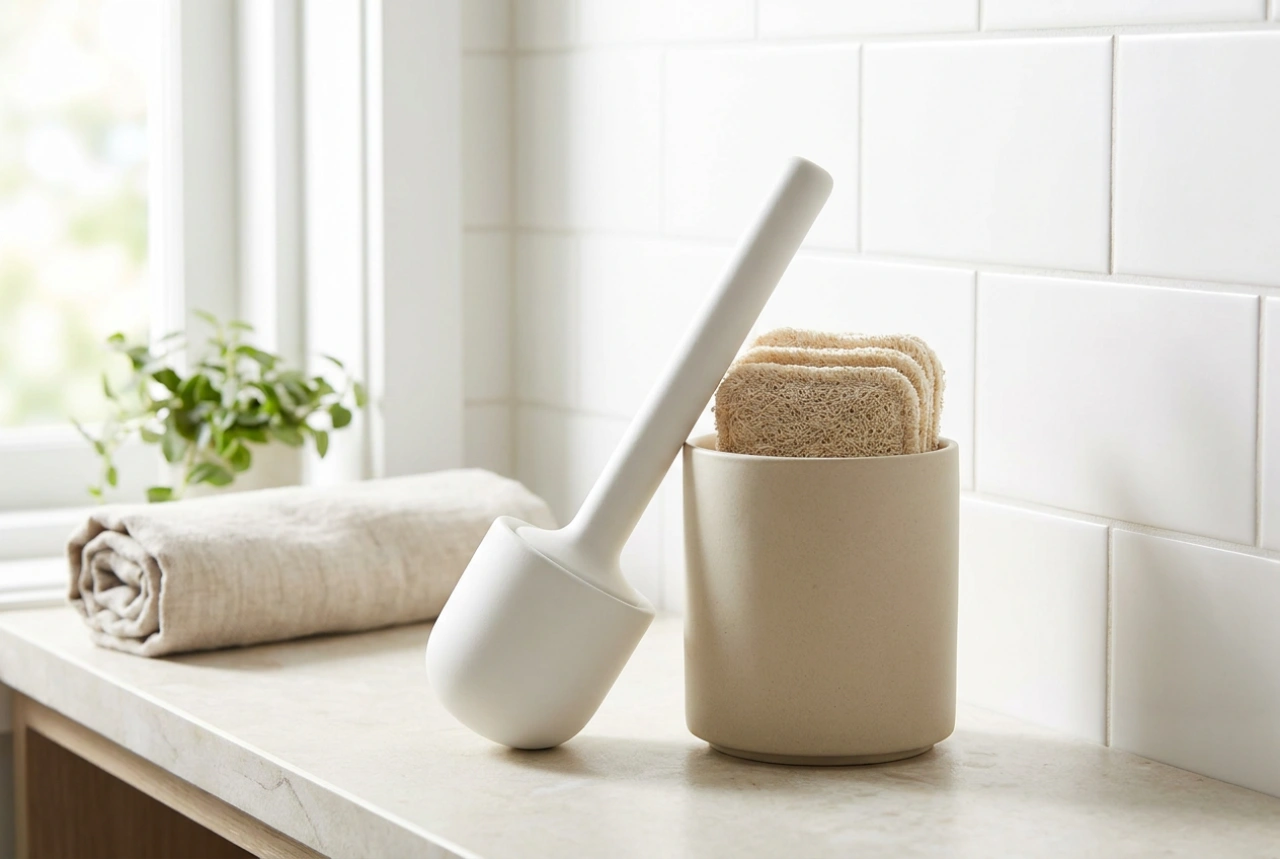
Modern silicone brushes are designed with highly flexible, paddle-like heads or tapered cylindrical shapes. Under gentle pressure, the silicone head deforms smoothly to match the exact contour of the ceramic. This maximizes the surface area of contact, allowing the flat nodes or wide-spaced ribs to scrape away mineral deposits and organic residues effectively. Because silicone is semi-elastic, it absorbs and distributes mechanical force evenly, reducing the risk of micro-scratching the protective glaze of the porcelain.
Drying Dynamics and Holder Hygiene
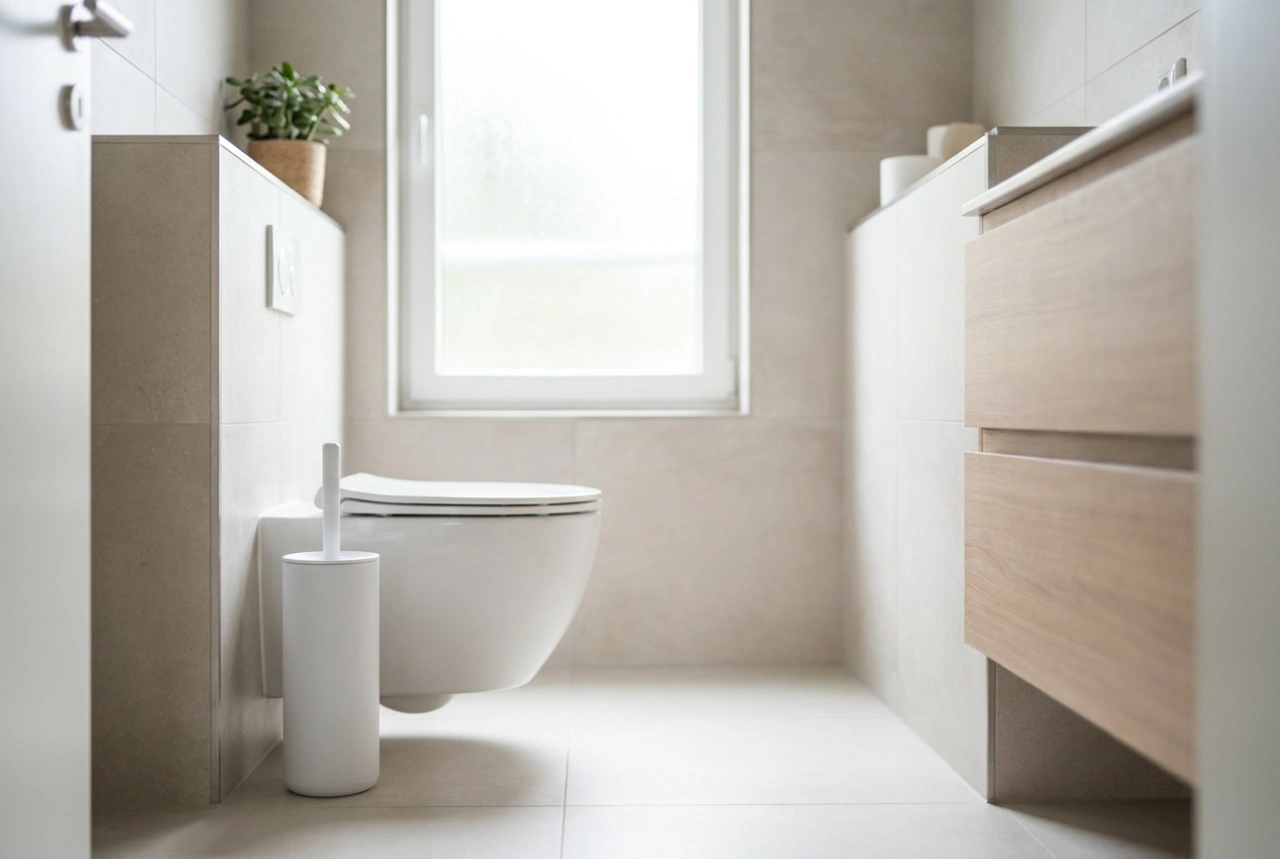
The environment inside a toilet brush holder is a critical factor in household hygiene. Traditional holders keep the wet brush head in a dark, stagnant, and highly humid enclosed space, which accelerates the growth of anaerobic bacteria and pathogens. Modern brush systems address this through thermodynamic and physical design alterations.
Because silicone sheds water almost instantly upon shaking, minimal moisture is transferred back to the holder. Many modern holders feature suspended designs where the brush head does not touch the base, or they incorporate ventilation slots. This allows air to circulate freely around the head, facilitating rapid evaporation. By keeping the humidity levels low, the conditions required for bacterial proliferation and unpleasant odours are virtually eliminated.
Optimising Your Cleaning Protocol
To maximise the performance of a modern silicone toilet brush, the cleaning technique should align with its physical properties. Unlike stiff nylon, which requires vigorous scrubbing, silicone works best with firm, steady strokes. The friction generated by the silicone polymer is sufficient to lift surface film without aggressive abrasion.
- Pre-treatment: Apply a mild acid-based cleaner to dissolve limescale before scrubbing, allowing the chemical agent to weaken the mineral bonds.
- The Contact Phase: Guide the flexible head under the rim, utilising the flat edge of the paddle to sweep along the water channel.
- Rinsing and Drying: After cleaning, rinse the brush head directly in the clean flush stream. Give the brush a gentle shake within the bowl to release any remaining droplets before returning it to the ventilated holder.
- Disinfection: Periodically sanitise the brush head by soaking it in a solution of warm water and sodium percarbonate, which breaks down organic residue without degrading the silicone material.