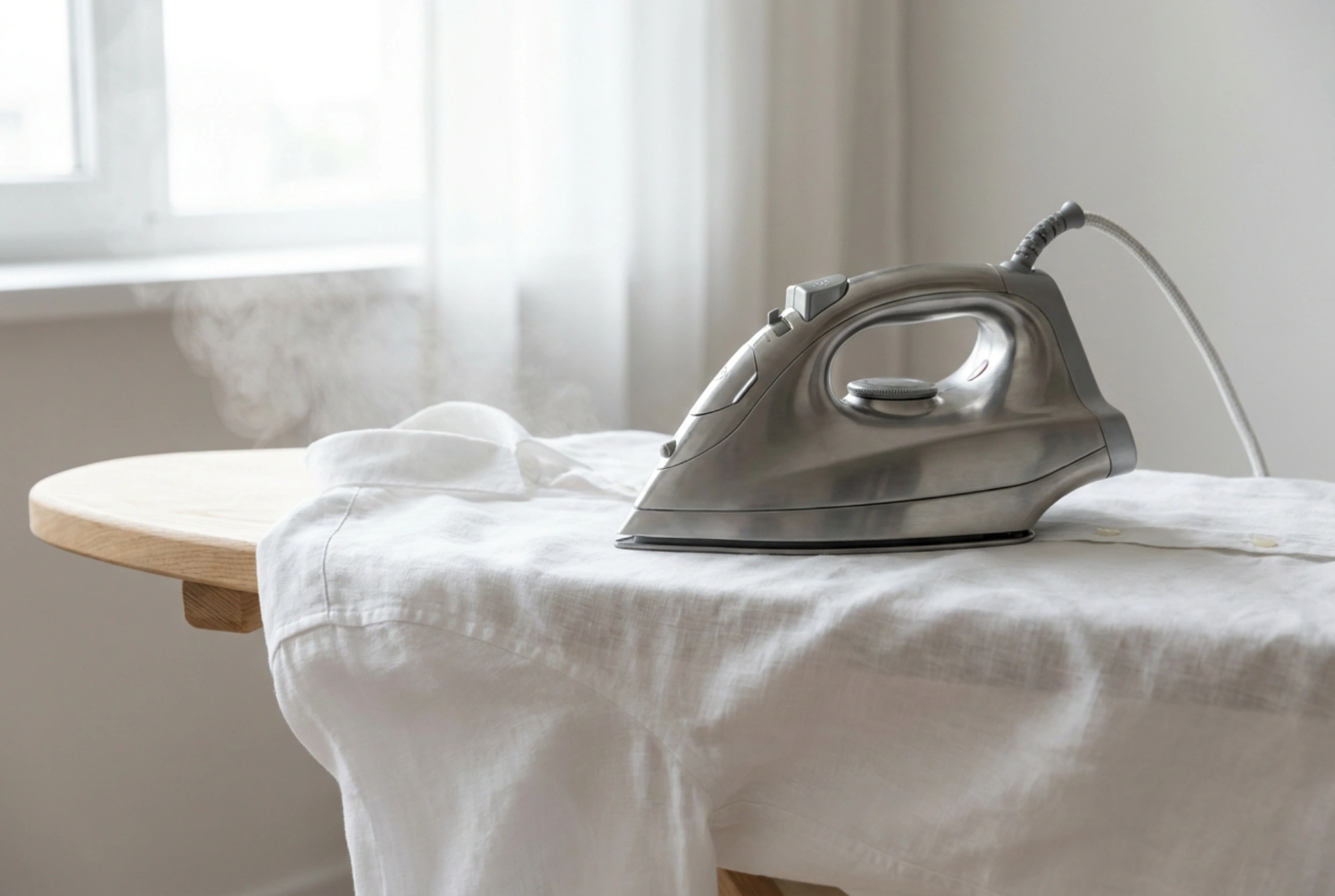


Stubborn wrinkles in natural fabrics like cotton and linen are more than just an aesthetic nuance; they are locked-in structural distortions at the molecular level. Standard irons often struggle with these deep creases, whereas a high-pressure steam generator iron uses a combination of heat, moisture, and tension to permanently realign the fibers.
The Molecular Physics of Fabric Creases
To understand why steam generator irons are so effective, one must look at the chemistry of plant-based fibers. Materials such as cotton and linen are composed of cellulose chains held together by hydrogen bonds. When fabric is washed and dried, or crushed during wear, these hydrogen bonds break and reform in random, distorted configurations, locking the fabric in a wrinkled state.
Water acts as a natural plasticizer for cellulose. Introducing moisture breaks the temporary hydrogen bonds, allowing the polymer chains to slide past one another. However, simple surface moisture is not enough. High-pressure steam, typical of a steam generator station operating at 5 to 8 bars, penetrates deep into the core of dense textiles. The high pressure forces dry, micro-fine steam molecules completely through the weave, heating the fibers instantly from the inside out and rendering them highly malleable.
The Critical Role of Temperature and Fiber Classification
Successful ironing requires matching the thermal properties of the textile to the heat of the iron plate (soleplate). Different materials respond uniquely to heat and moisture:
- Linen and Cotton: These robust plant fibers have high thermal resistance. They require temperatures between 180°C and 220°C paired with maximum steam output to break their strong crystalline bonds.
- Wool and Silk: These animal protein fibers are highly sensitive to dry heat, which can scorch or weaken the protein structure. They require moderate temperatures (110°C to 150°C) and indirect, gentle steaming.
- Synthetics (Polyester, Nylon, Acrylic): These are thermoplastic polymers. Applying excessive heat will melt the fibers, causing permanent glaze marks or structural warping. They require low temperatures (usually below 110°C) and minimal to no steam.
Step-by-Step Technique: Tension, Direction, and the Dry Pass
Even the most powerful steam generator requires proper manual technique to achieve a professional finish. Achieving a flat, crisp surface involves three primary phases: tension, direction, and moisture extraction.
1. Applying Mechanical Tension
Before the soleplate touches the fabric, use your non-dominant hand to pull the garment taut. Without mechanical tension, the steam will simply relax the fibers into their current, wrinkled position rather than smoothing them out. Pulling the fabric flat guides the relaxing fibers into a straight alignment.
2. Ironing Along the Grain
Always glide the iron parallel to the straight grain (the warp or weft threads) of the woven fabric. Ironing diagonally (on the bias) stretches the weave, leading to misshapen garments, puckered seams, and wavy hems.
3. The Moisture Extraction (Dry) Pass
This is the most common omission in household ironing. When you apply steam, you introduce moisture to break the hydrogen bonds. If you lift the iron immediately while the fabric is still damp, new hydrogen bonds will reform in random shapes as the fabric cools in the air, recreating wrinkles. To lock the flat structure in place, always follow a steamed stroke with a dry stroke (with the steam trigger released). The hot, dry soleplate evaporates the remaining moisture, setting the hydrogen bonds in a perfectly flat orientation.
Advanced Strategies for Stubborn Folds
For deep, set-in creases on heavy linen jackets or thick cotton tablecloths, standard gliding may fail. In these instances, utilize the "double-press" method. Position the steam iron slightly above the fabric, release a heavy burst of steam for three seconds to completely saturate the area, and then press the soleplate firmly down, applying downward physical pressure while moving the iron slowly in a single direction. For vertical surfaces like curtains or delicate suits, utilize the vertical steam function. Hold the fabric taut at the hem and sweep the iron vertically, letting the weight of the fabric pull the wrinkles flat under the relaxing influence of the steam.