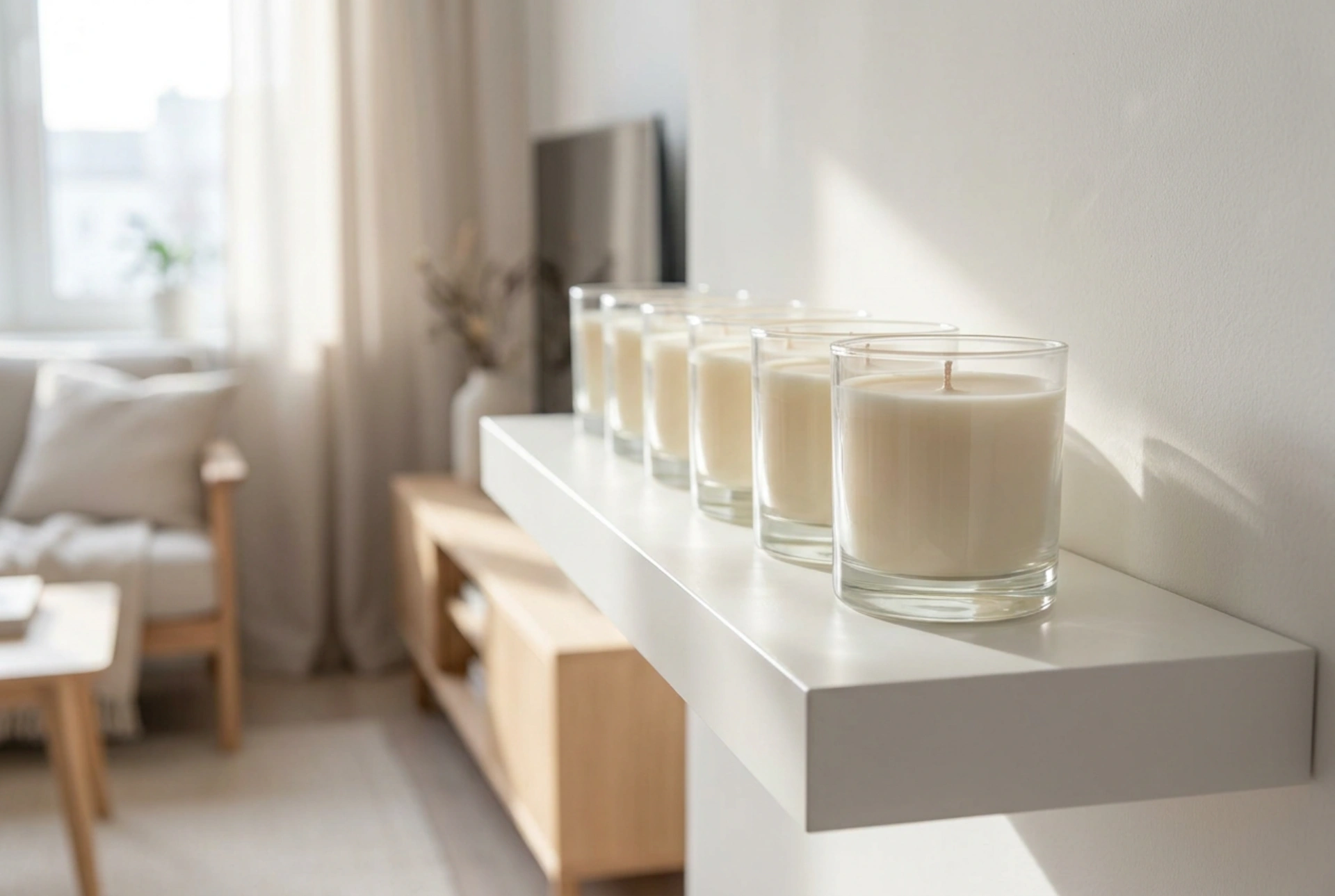


Repurposing high-quality glass candle jars is an effective, scientifically sound method for organising small household items while maintaining a cohesive and minimalist interior aesthetic.
The Structural Benefits of Candle Glass
Most premium candle jars are manufactured from thick, thermal-shock-resistant soda-lime glass or borosilicate glass. These materials are engineered to withstand the thermal stress of a burning wick, which can reach temperatures up to 250 degrees Celsius near the flame. Because of this structural durability, these containers are exceptionally robust compared to standard food-grade glass packaging. Glass is chemically inert, non-porous, and impermeable, meaning it will not absorb odours, chemical residues, or pigments from its previous contents. This makes it an ideal medium for storing sensitive items such as cosmetic tools, dry ingredients, or metal fasteners, as it prevents cross-contamination and oxidation caused by ambient moisture.
The Physics of Wax Extraction: Freezing and Melting Methods
To prepare a candle container for reuse, the residual wax must be completely removed. This can be achieved through two distinct thermodynamic processes: thermal contraction or liquefaction.
The freezing method relies on the thermal expansion coefficient of wax, which is significantly higher than that of glass. When placed in a freezer at approximately -18 degrees Celsius for two to three hours, the wax contracts rapidly, shrinking away from the rigid glass walls. Upon removal, a gentle tap on the bottom of the container or a light levering action with a wooden spatula will cause the hardened wax disk to pop out cleanly in one piece. This method is highly recommended as it avoids melting the wax and contaminating household drains.
The hot water method utilises the melting point of paraffin or soy wax, which typically ranges between 50 and 65 degrees Celsius. By filling the container with hot water (not boiling, to prevent thermal shock in non-tempered glass), the wax melts, rises to the surface due to its lower density than water, and solidifies into a floating disc as the water cools to room temperature. Once solid, this top layer can be lifted off, and the remaining water can be discarded safely.
Clearing Adhesive Residues and Carbon Soot
After the bulk wax is removed, two stubborn residues usually remain: black carbon soot on the inner walls and synthetic adhesive on the exterior base where the wick tab or label was secured.
- Soot Removal: Carbon soot is hydrophobic and resists plain water. Because soot particles are held together by oily organic binders, they require an alkaline surfactant or a mild abrasive. Applying a paste of sodium bicarbonate (baking soda) and water breaks down the oily binder through saponification, allowing the carbon particles to be wiped away easily with a microfibre cloth.
- Adhesive Dissolution: Industrial adhesives used for labels are typically lipophilic (oil-soluble). Water-based cleaners will fail to penetrate these polymers. Applying a small amount of vegetable oil, isopropyl alcohol, or a generic limonene-based solvent directly to the residue breaks down the molecular bonds of the adhesive. Allow the solvent to sit for five minutes, then scrape the softened adhesive away using a plastic scraper. Finish by washing the glass with a concentrated surfactant (dishwashing liquid) to remove any oily film.
Practical Applications in Home Organisation
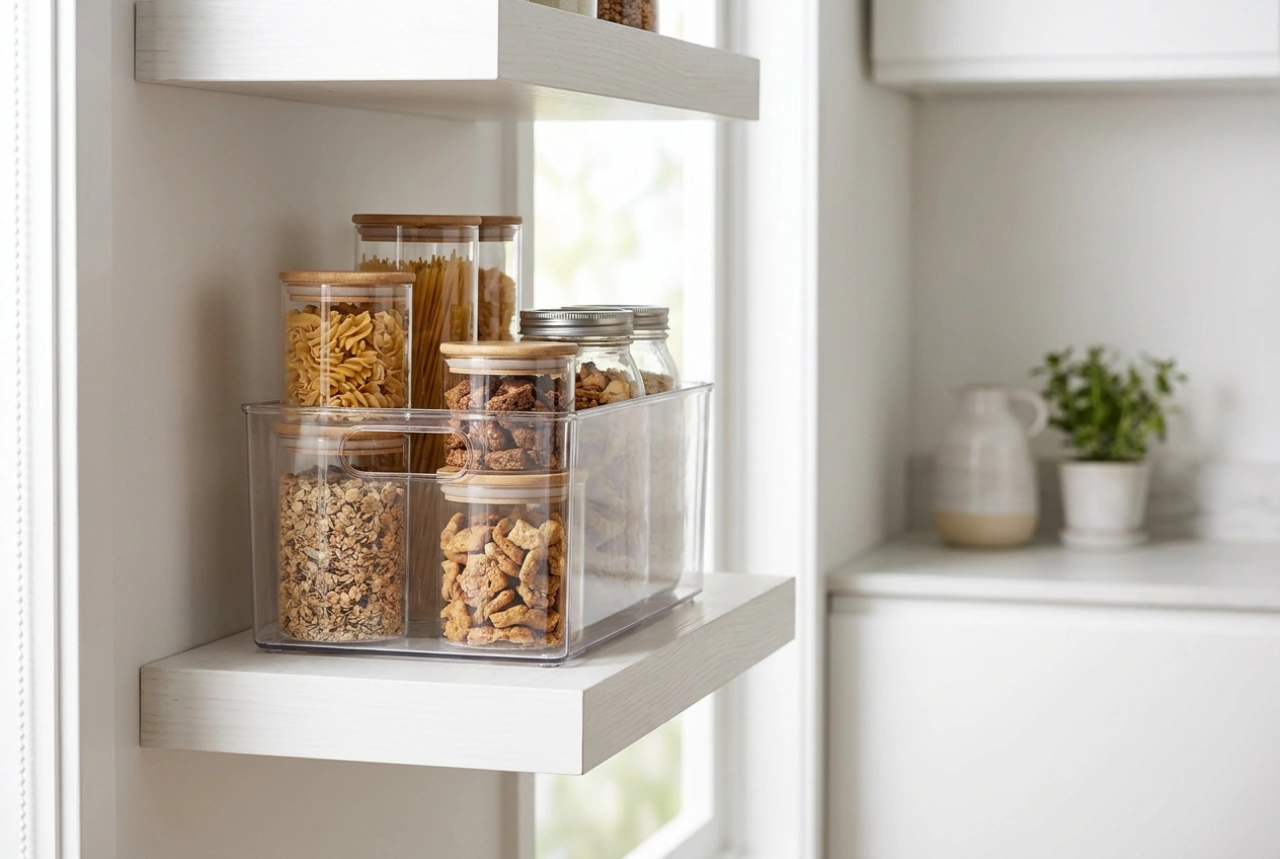
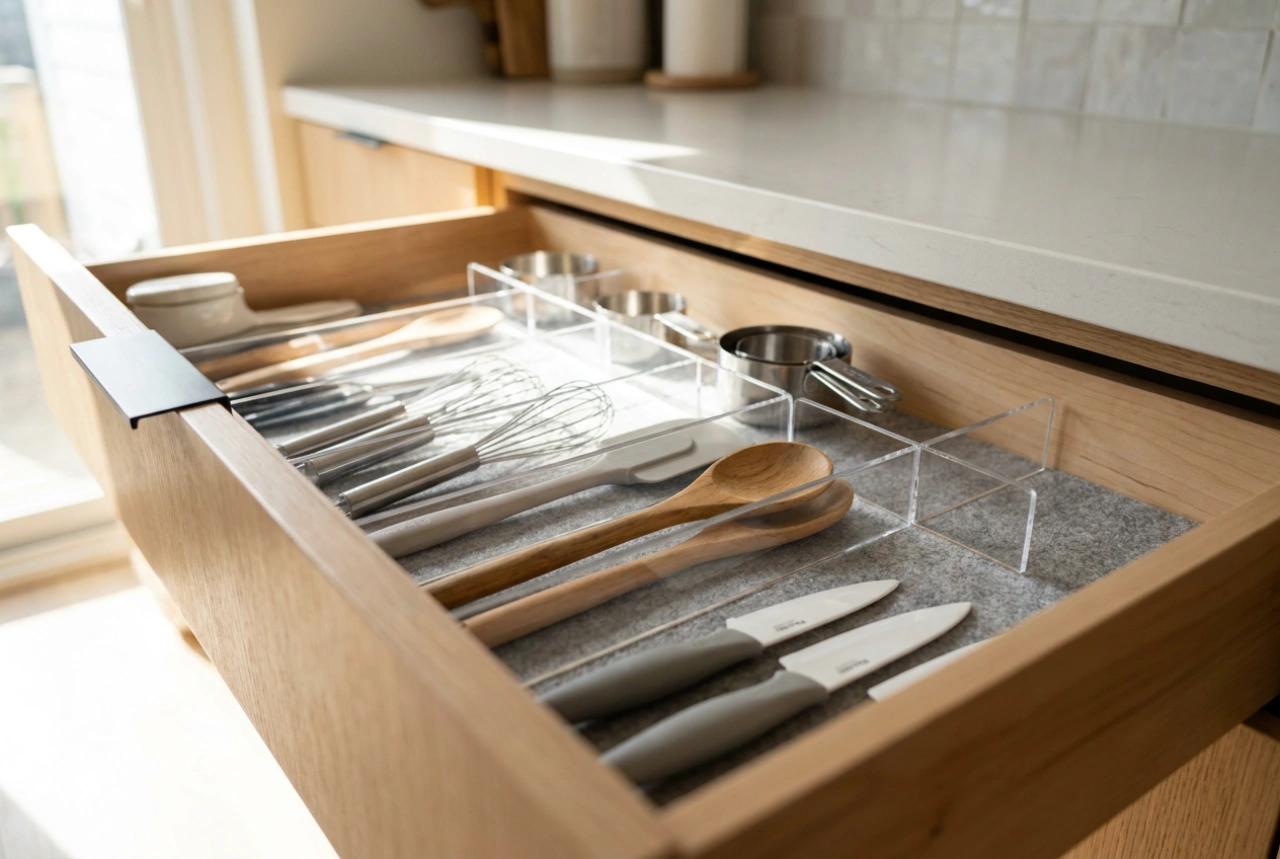
Once cleaned and polished, these transparent containers can be grouped systematically to reduce visual clutter. The optical clarity of glass allows for immediate identification of contents, eliminating the need for extensive labelling. In the bathroom, uniform glass jars are perfect for storing cotton swabs, reusable makeup pads, and cosmetic brushes, keeping them hygienic and dust-free. In the home workspace, they group metallic items like paperclips, pushpins, and binder clips. To maximise spatial efficiency, arrange containers of varying heights in odd-numbered clusters (typically groups of three) on shelves or inside shallow drawers. This configuration utilises vertical space while maintaining accessibility.