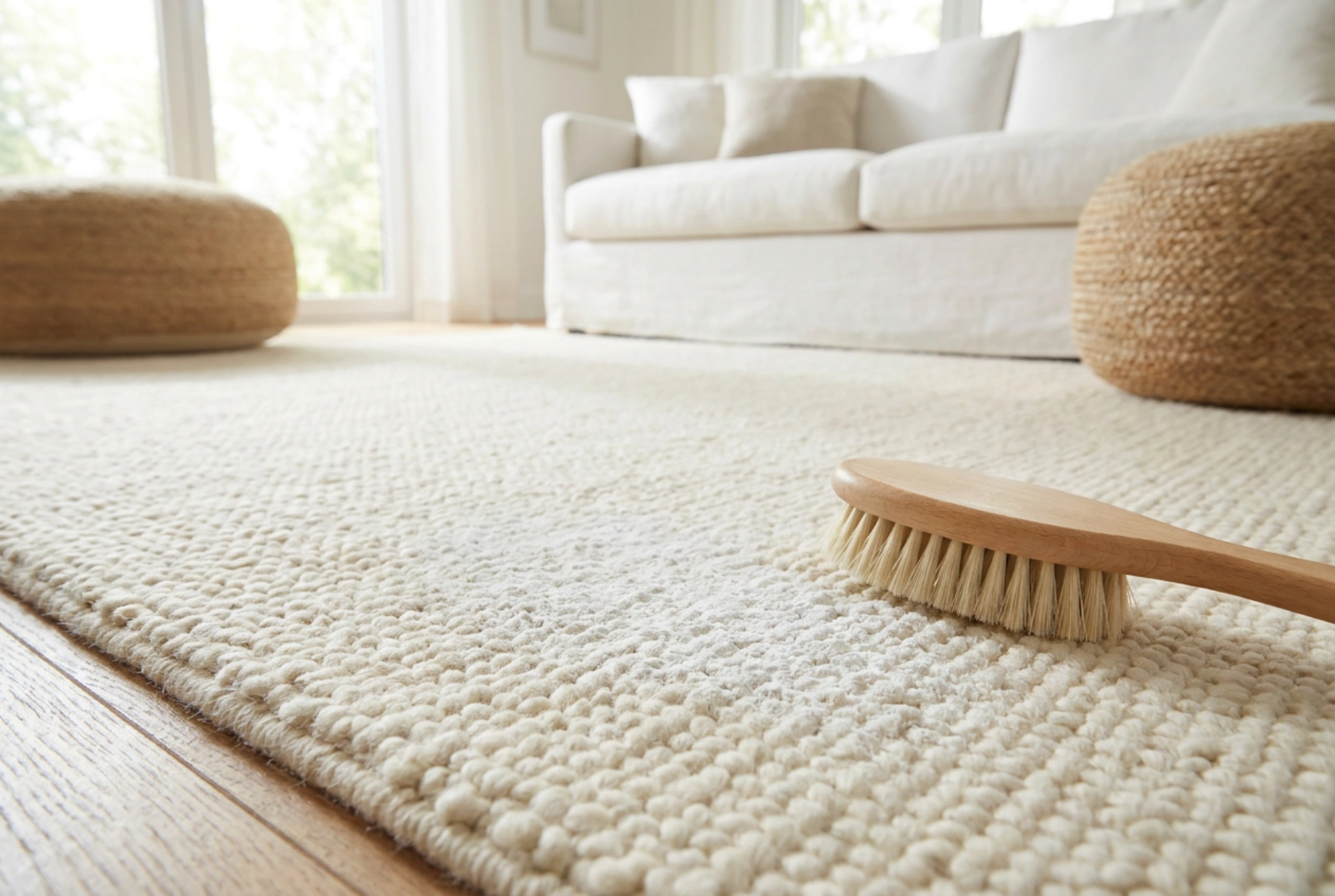


Cleaning carpets without saturating the backing is crucial to prevent structural adhesive breakdown, fiber shrinkage, and mold growth. Utilizing dry or low-moisture carpet cleaning powders allows you to lift deep-seated dirt through absorption rather than dilution.
The Science of Dry Carpet Powders: How They Work
Unlike liquid shampoos that penetrate deep into the carpet pile and soak the backing, specialized carpet cleaning powders rely on physical chemistry and surface science. These powders are typically made of highly porous cellulose, starch, or synthetic polymer granules. These carrier granules are pre-impregnated with a strictly controlled, minimal amount of liquid solvent and surfactants. When spread across the carpet, the solvent breaks down oily residues and greasy soils that bind dirt to the carpet fibers. Once these bonds are broken, the highly porous structure of the carrier granules draws the suspended soils up and away from the carpet fibers through capillary action. Because the moisture is chemically and physically bound within the solid carrier, it cannot migrate downward to reach the delicate latex adhesive or jute backing of the carpet, completely eliminating the risk of water damage, delamination, and microbial growth.
Pre-Cleaning Preparation: The Crucial First Step
Before applying any cleaning powder, you must remove all loose, insoluble dry soil. Thorough vacuuming is the foundation of any successful carpet cleaning process. Dry particulate matter, such as quartz sand, dust, and dander, makes up more than 70% of the total soil load in a typical carpet. If you skip this step, these dry particles will mix with the damp cleaning powder, forming a gritty paste that embeds itself deeper into the backing. Use a high-quality vacuum cleaner equipped with an adjustable brush roll or beater bar to lift the fibers and extract loose dirt from the very base of the carpet pile. Vacuum slowly in multiple directions, crossing both vertically and horizontally, to ensure the pile is fully opened and cleared of loose debris.
Correct Application and Mechanical Working Techniques
Sprinkle the cleaning powder evenly across the target area. Avoid depositing heavy clumps in single spots, as this leads to uneven soil absorption and complicates the eventual extraction process. Once the powder is distributed, you must mechanically work the granules into the carpet pile to facilitate direct contact with the soiled fibers. Use a soft-bristled brush, preferably one designed specifically for carpet pile, and work in gentle, overlapping circular or linear motions. This physical agitation slides the powder granules along the length of each fiber, maximizing the surface area contact and allowing the micro-sponges to strip away oily residues. For delicate fibers such as wool or loop-pile carpets, keep the pressure moderate to prevent fraying or untwisting the yarn structure.
Contact Time and the Mechanics of Evaporation
Allow the powder to rest undisturbed on the carpet surface for the recommended duration, typically between 20 and 30 minutes. This dwell time is not just for absorption; it is a critical phase where the solvent carrier evaporates. As the liquid solvent evaporates, the dissolved oily soils solidify and become permanently locked inside the porous structure of the dry powder granules. Walking on the carpet during this time should be avoided to prevent pressing the dry soil back onto the cleaned fibers. The carpet is ready for extraction once the powder feels completely dry to the touch, indicating that the encapsulation and absorption process is complete.
Thorough Extraction and Post-Clean Maintenance
The final phase is the complete extraction of the soil-laden powder from the carpet pile. Using a high-suction vacuum cleaner, systematically vacuum the entire treated area. It is vital to perform multiple slow, deliberate passes in different directions. The brush roll of your vacuum is essential here, as it helps to flick the heavy, dirt-filled particles out from between the fibers and into the airflow of the machine. Do not rush this step; any powder left behind will act as an abrasive agent under foot traffic and may attract fresh dirt over time. Once fully vacuumed, the carpet is immediately ready for use, completely dry, fresh, and free from the risks associated with overwetting.