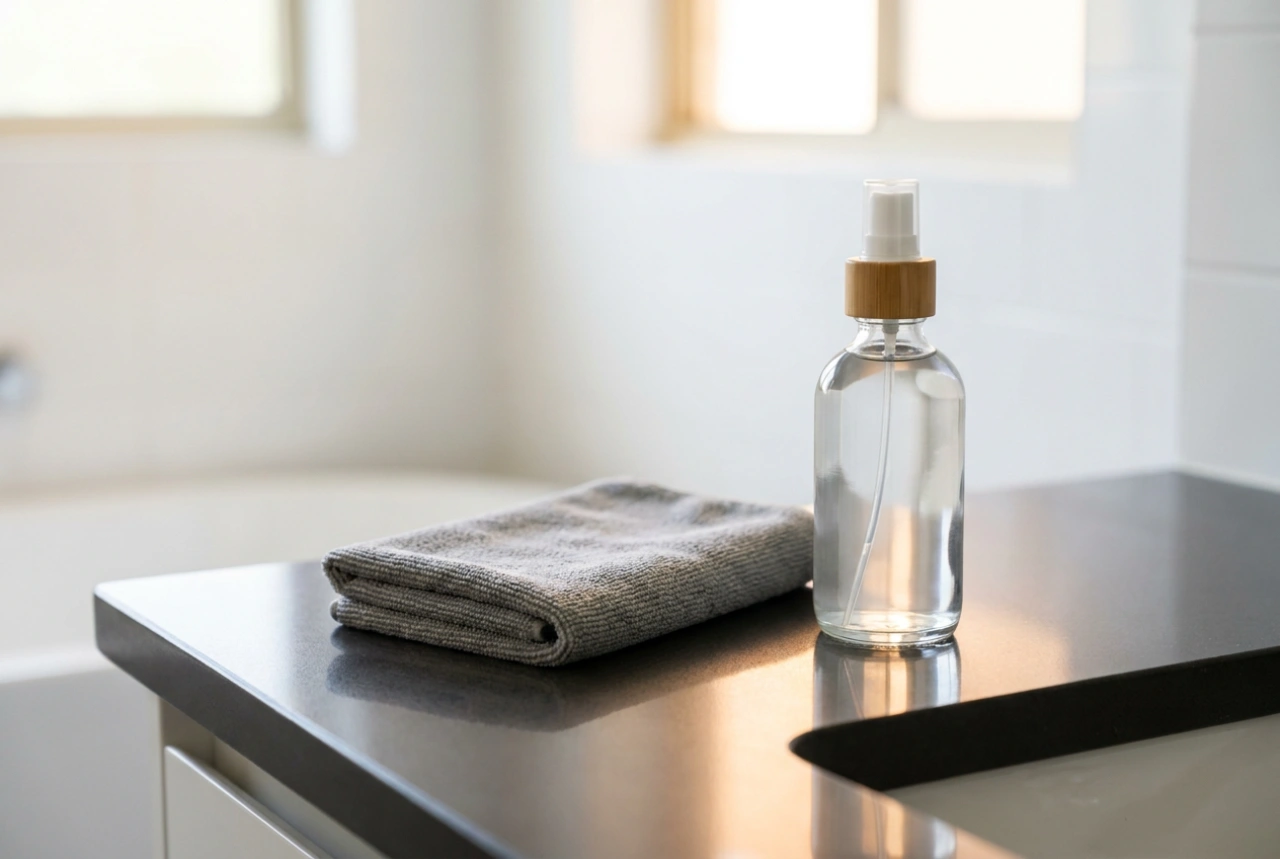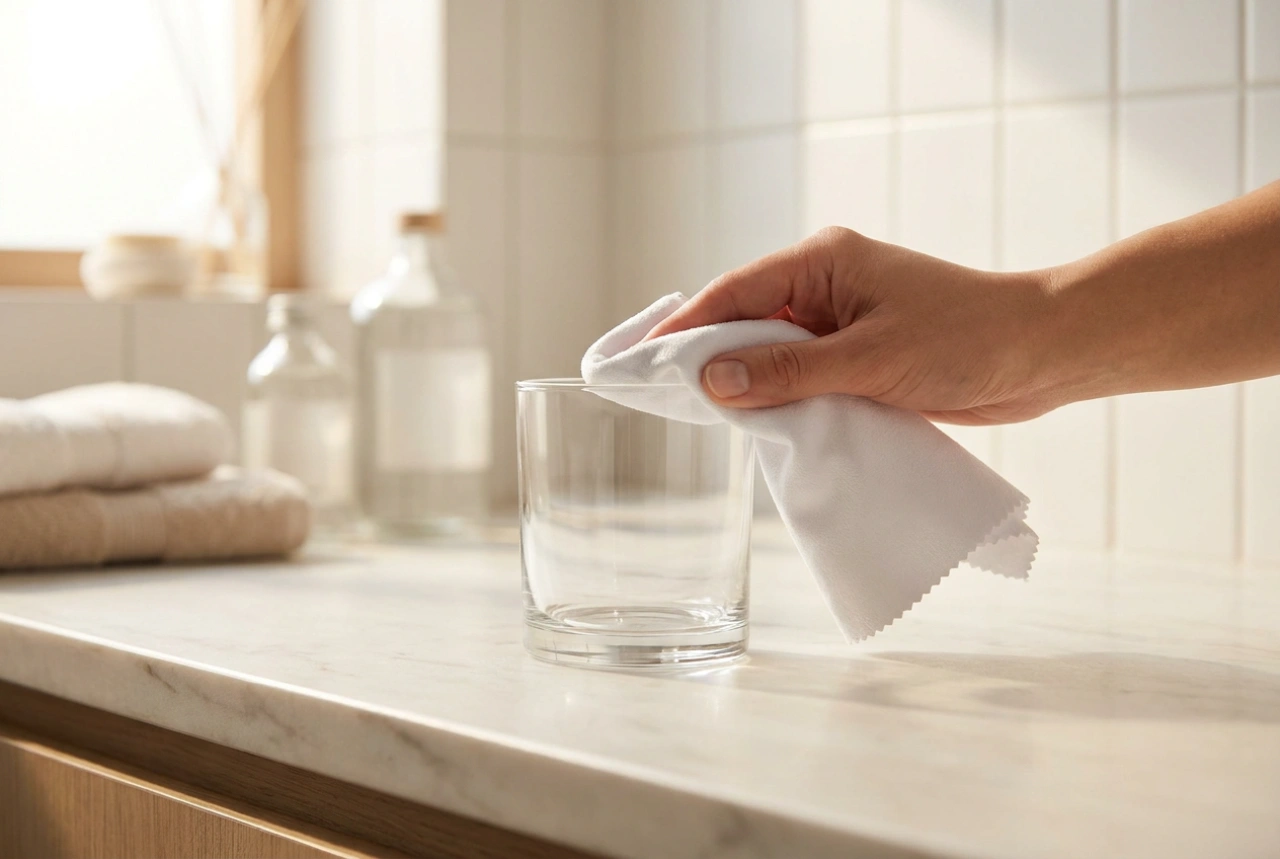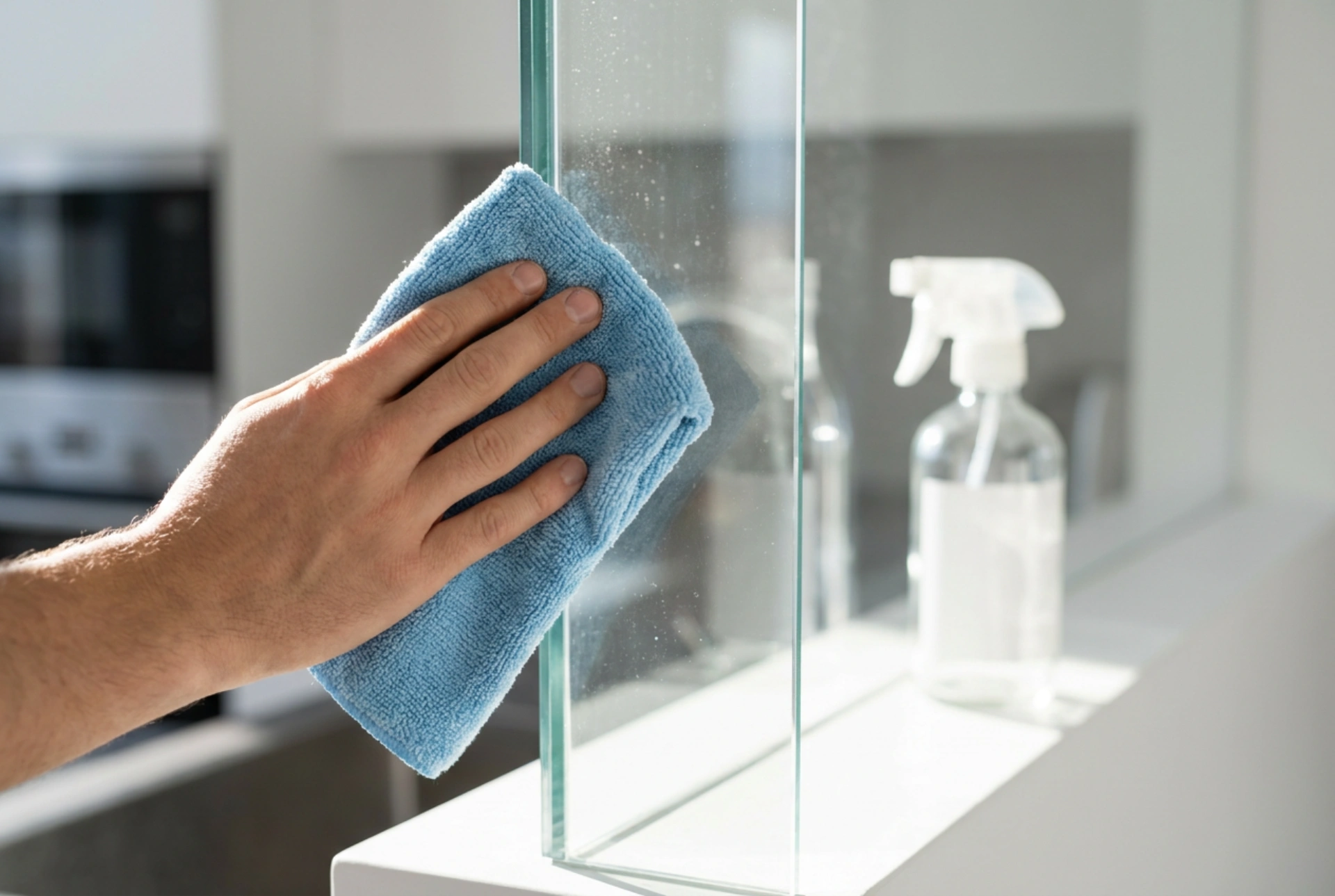


Glass cleaners rely on a precise balance of volatile solvents and surface-active agents to dissolve oily films and evaporate rapidly before streaks can form. Understanding the chemistry behind these formulations allows you to maintain crystal-clear windows, mirrors, and glazed surfaces with minimal physical effort.
The Chemical Mechanism of Glass Cleaners
Unlike general-purpose detergents that leave behind heavy surfactant residues, specialized glass cleaners are formulated for rapid evaporation and zero residue. The effectiveness of these solutions lies in three core chemical components: solvents, surfactants, and purified water.
- Volatile Solvents: Isopropyl alcohol or specific glycol ethers serve as the primary active solvents. They readily dissolve non-polar substances, such as skin lipids from fingerprints, grease, and oily atmospheric soot. Because of their low boiling points, these alcohols evaporate almost instantly at room temperature, preventing water pools from drying slowly and leaving spots.
- Surfactants: These molecules contain both hydrophilic (water-attracting) and hydrophobic (water-repelling) ends. They lower the surface tension of water, allowing the cleaner to wet the glass surface evenly rather than forming beads. Surfactants emulsify stubborn dirt, lifting it off the silica surface so it can be trapped by a cloth.
- Demineralised Water: Tap water contains dissolved minerals like calcium and magnesium carbonates. When tap water evaporates, these minerals remain behind as white crystalline spots (limescale). High-quality glass cleaners use distilled or demineralised water to eliminate this source of spotting entirely.
The Physics of Streaking: Temperature and Technique
Even the best chemical formulation can fail if physical factors like heat and mechanical movement are ignored. Streaks are essentially microscopic deposits of dissolved dirt or unevaporated surfactant residue left behind on the glass.
Ambient temperature plays a critical role in the cleaning process. Working on glass heated by direct sunlight causes the solvent to evaporate too quickly. When evaporation occurs instantly, the dissolved grime cannot be wiped away in time; instead, it dries back onto the glass in uneven lines. For optimal results, clean glass when the surface is cool to the touch, typically in the morning or on overcast days.
Mechanical technique is equally vital. Wiping in circular motions simply redistributes lifted dirt across the surface. Instead, employ a tight "Z-pattern" or "S-pattern," overlapping each stroke slightly. This linear movement forces the suspended dirt toward the edges of the pane, where it can be completely removed.
Selecting the Right Textile: Why Microfiber Matters
The wiping tool is just as important as the liquid cleaner. Standard cotton towels or paper tissues often shed cellulose fibers or have low absorption capacities, leading to lint deposits and smearing. Specialist glass-cleaning microfibers are engineered with a tight, flat weave (often a waffle or smooth texture) and a high polyamide-to-polyester ratio.
Polyester fibers have an affinity for oils, pulling lipid-based grime directly off the glass, while polyamide fibers are highly absorbent, trapping water and dissolved salts. The microscopic split fibers create high capillary action, drawing liquid deep into the cloth's structure rather than pushing it across the glass surface.
Optimal Domestic Applications and Limitations
While formulated primarily for windows and mirrors, glass cleaners excel at maintaining other non-porous surfaces in the home. They are highly effective on glazed ceramic tiles, chrome fixtures, and high-gloss lacquer kitchen cabinets. Because they do not leave a soapy film, they prevent the dust-attracting buildup common with multi-surface sprays.
However, certain materials must not be treated with glass cleaners. Liquid crystal displays (LCDs, LEDs, and OLEDs) on televisions and monitors feature delicate polymeric anti-glare coatings that can be permanently degraded by alcohols or ammonia. Similarly, natural stone surfaces such as marble or granite can suffer chemical etching if exposed to acidic glass cleaners.
A Systematic Glass Cleaning Protocol
To achieve professional results, follow a structured sequence that prevents mechanical scratching and chemical spotting:
- Dry Dusting: Always dry-wipe the glass or frame first with a clean, dry microfiber cloth to remove loose silica dust. Skipping this step turns dust into an abrasive paste when wet, which can cause micro-scratches.
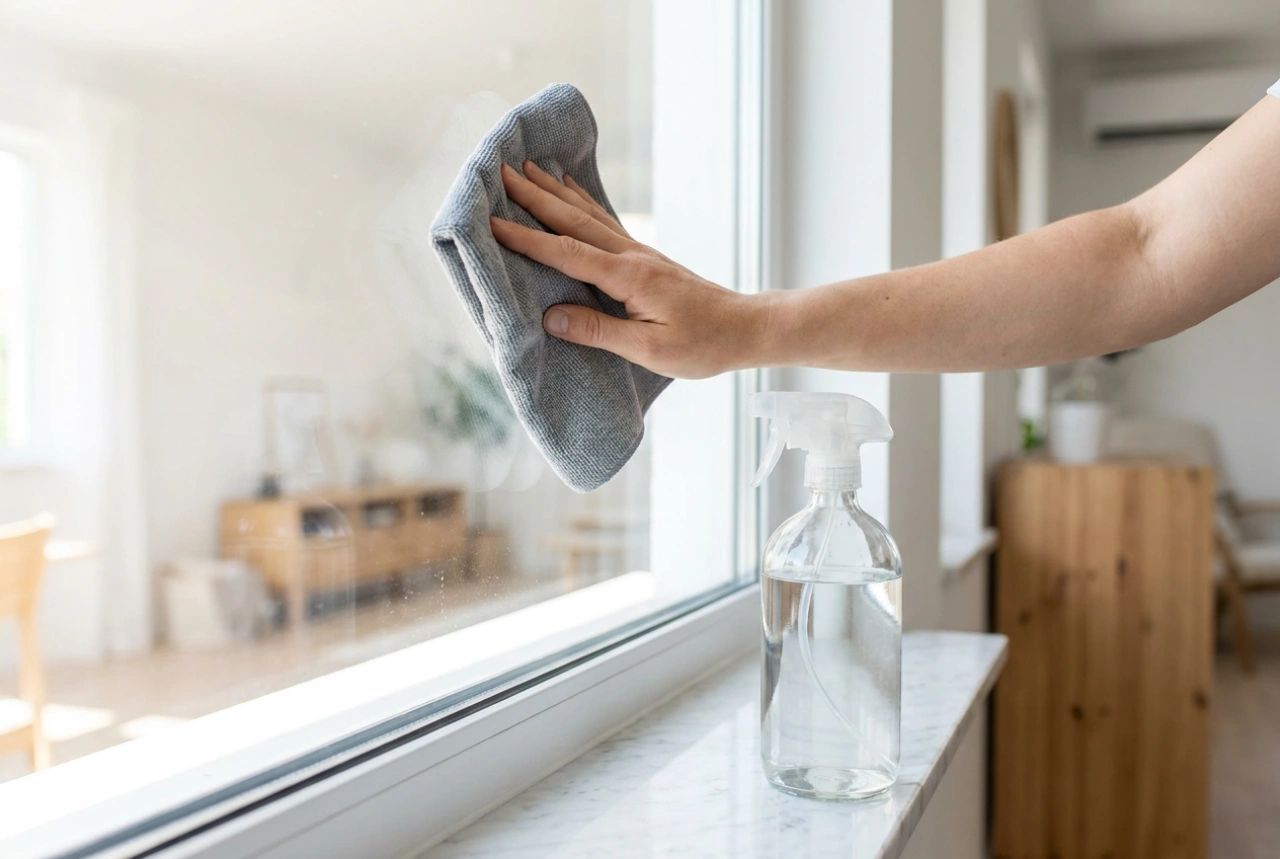
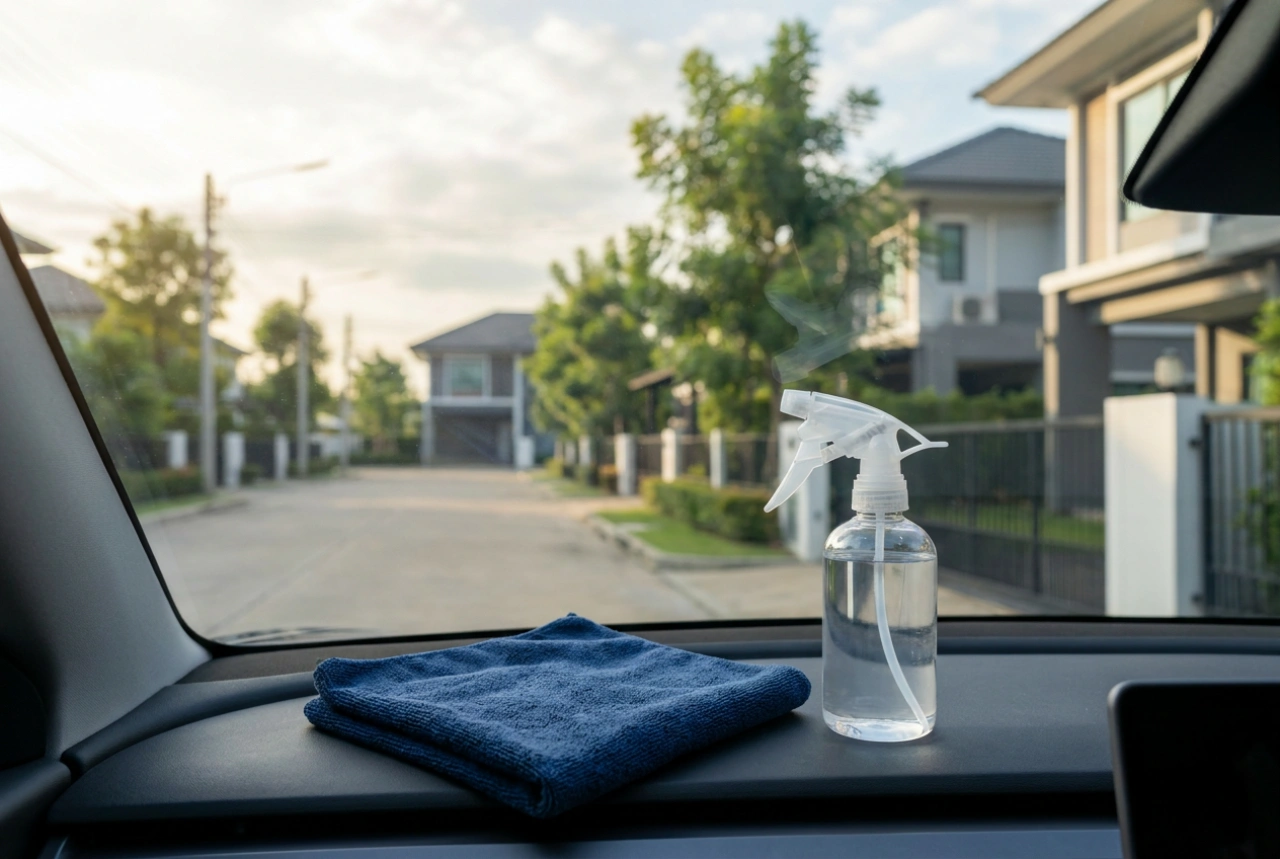
- Controlled Misting: Apply a light mist of glass cleaner. Avoid soaking the surface, as excess liquid saturates the cloth too quickly and prolongs evaporation times.
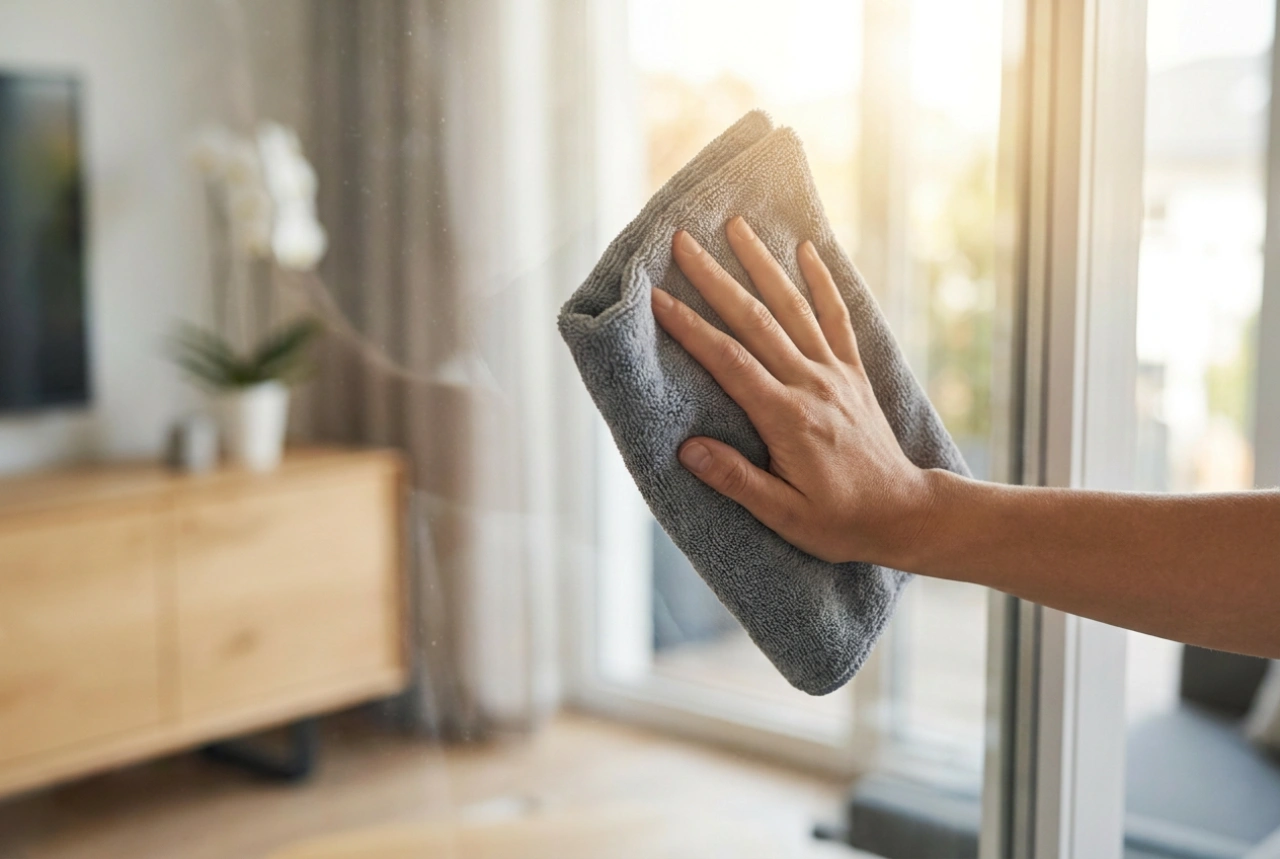
- Linear Wiping: Use a clean, folded microfiber cloth to wipe the surface in horizontal strokes on one side of the glass, and vertical strokes on the other. This allows you to instantly identify which side a remaining streak is on.
- Final Polish: Buff the surface immediately with a second, dry microfiber cloth to remove any microscopic droplets before they air-dry.