

Removing blood stains successfully relies on immediate action and a strict temperature threshold to prevent the proteins from permanently bonding with textile fibers. Understanding the chemical behavior of blood under physical and chemical influences allows for highly effective stain removal without damaging the integrity of the material.
The Chemistry of Blood Stains: Why Heat is the Enemy
Blood is primarily composed of cellular elements and plasma, which contains a high concentration of proteins such as hemoglobin and albumin. When these proteins are exposed to heat—specifically temperatures exceeding 40 degrees Celsius—they undergo a process called denaturation. During denaturation, the complex, three-dimensional structure of the protein molecules unfolds, and they form strong, insoluble covalent bonds with the organic fibers of the fabric, such as cotton, linen, or wool. Once this thermal setting occurs, the stain becomes a permanent part of the textile matrix.
Using cold water prevents this chemical binding. At low temperatures, blood proteins remain in a soluble state, allowing them to dissolve in water and be washed away from the fabric fibers. Therefore, the absolute first step in treating any blood stain must always be a thorough flush with cold running water, directing the flow from the reverse side of the fabric to push the stain outwards rather than deeper into the weave.
The Cold Water Soaking and Extraction Protocol
To eliminate the stain completely, a systematic approach involving temperature control and mechanical action must be followed:
- Reverse Flushing: Hold the stained area under a strong stream of cold running water. Ensure the water enters from the back of the stain, forcing the blood particles out of the capillary spaces between the threads.
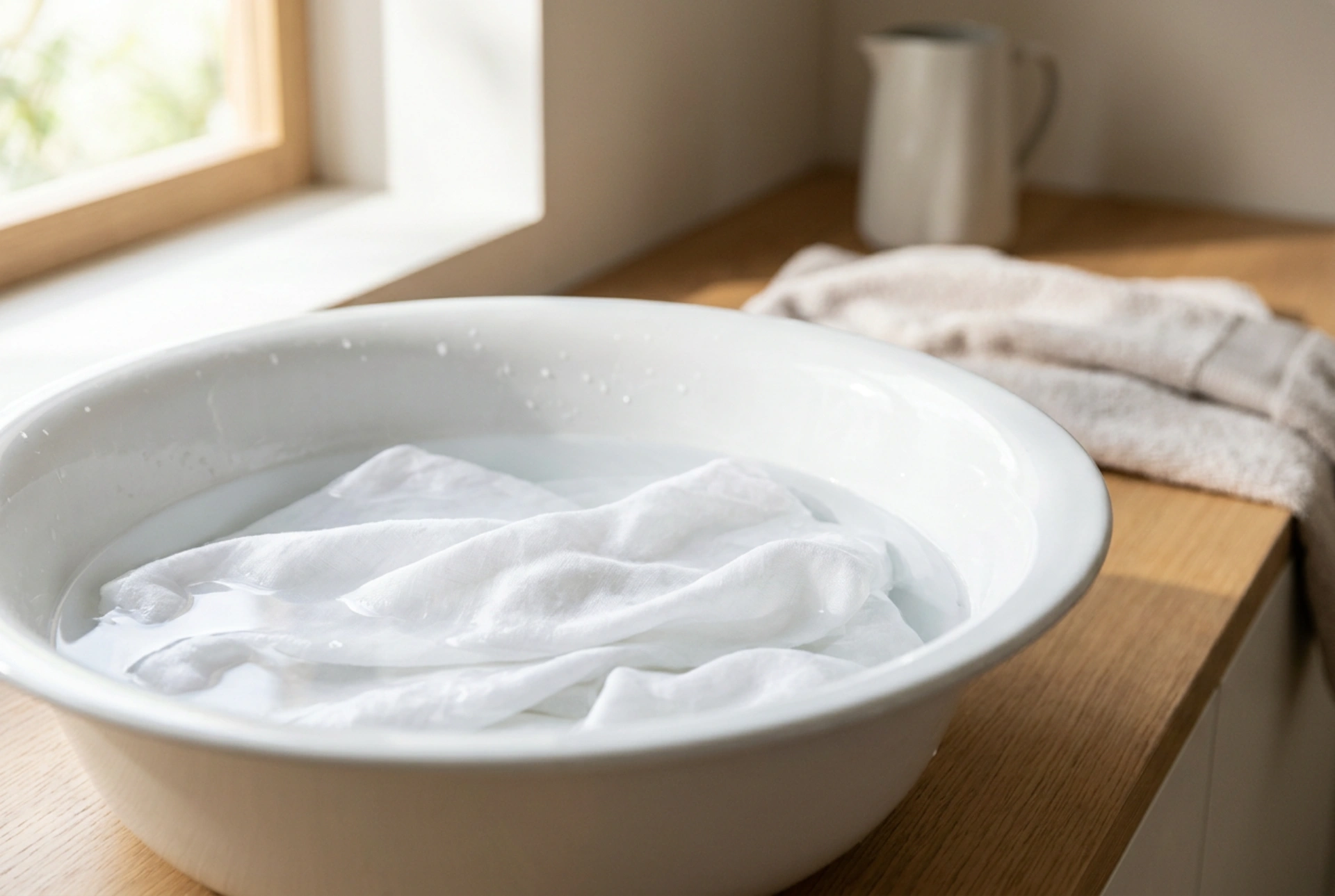
- Cold Immersion: Submerge the entire garment in a basin filled with ice-cold water. For fresh stains, a soak of 30 to 60 minutes is usually sufficient to loosen the remaining hemoglobin particles.
- Gentle Agitation: Work the fabric against itself under the cold water. Use circular, non-abrasive movements. Vigorous scrubbing can fray the textile fibers and spread the pigment particles laterally, enlarging the stained area.
Enhancing Dissolution with Natural Salts and Enzymes
When cold water alone is insufficient, household chemistry provides effective, non-destructive solutions. Sodium chloride, or common table salt, is highly effective due to its osmotic properties. A concentrated saline solution (approximately two tablespoons of salt per liter of cold water) creates an osmotic gradient that draws the water-soluble blood components out of the dense fiber network. This method is particularly safe for delicate materials like silk and wool, which cannot tolerate aggressive mechanical action.
For more resilient fabrics, enzymes are highly effective. Applying a small amount of neutral, enzyme-based detergent directly to the wet stain targets the chemical bonds. Enzymes like proteases specifically catalyze the hydrolysis of proteins, breaking the large, insoluble molecules down into smaller, water-soluble peptides and amino acids that are easily rinsed away.
Treating Dried Stains: Catalytic Reactions and Capillary Pull
If the blood stain has already dried but has not been exposed to heat, it can still be treated using chemical catalysts or physical absorption:
The Hydrogen Peroxide Reaction
For light-colored or white fabrics, a 3% hydrogen peroxide solution can be applied. Blood contains catalase, an enzyme that rapidly decomposes hydrogen peroxide into water and oxygen gas. This reaction produces a vigorous, effervescent foam. The rapidly expanding oxygen bubbles physically lift the microscopic blood particles out of the weave. After the fizzing stops, flush the area immediately with cold water to remove the residue.
The Cornstarch Absorption Method
On dark or highly sensitive fabrics where chemical bleaching is a risk, a physical extraction method is preferred. Mix cornstarch or potato starch with a small amount of cold water to form a thick paste. Apply this paste directly over the damp stain. As the starch paste dries, it acts like a sponge, drawing the moisture and suspended blood pigments out of the fabric through capillary action. Once fully dry, brush the crust away and rinse the fabric in cold water.