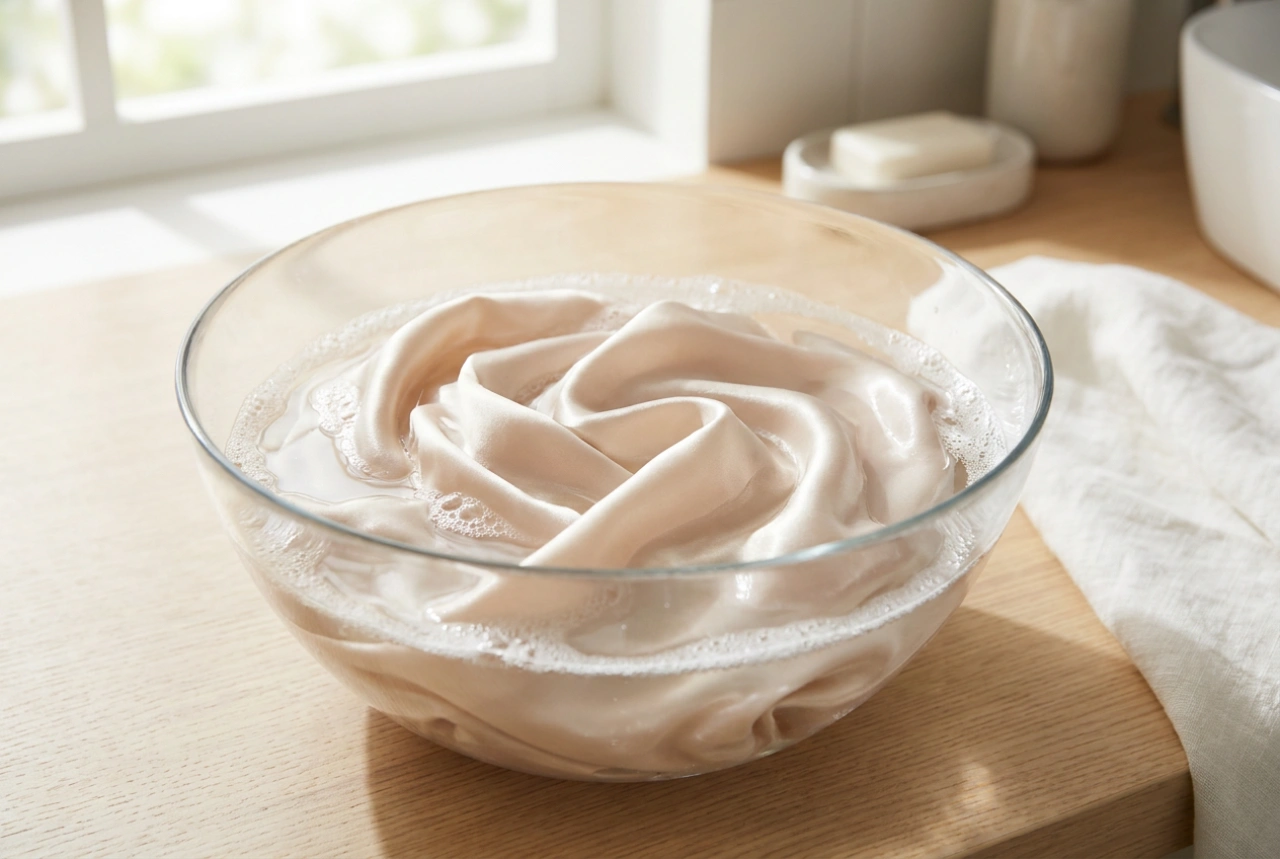


Washing a down jacket at home often causes anxiety due to the risk of ruining its insulation through clumping. By understanding the physics of down plumage and using precise mechanical and chemical techniques, you can safely clean your jacket while fully restoring its loft.
The Physics of Down and Why Clumping Occurs
Natural down is not a flat feather; it is a three-dimensional cluster consisting of thousands of tiny, interlocking filaments radiating from a central point. These filaments trap microscopic pockets of air, creating an insulating barrier that retains body heat. The high warmth-to-weight ratio of down relies entirely on this "loft."
When down gets wet, the surface tension of water pulls the delicate filaments together, collapsing the air pockets and forming dense clumps. Additionally, down feathers possess a natural lipid coating that provides mild water resistance and keeps the filaments flexible. Standard laundry detergents contain aggressive surfactants and enzymes (such as proteases) that strip these natural oils. Once the protective lipids are washed away, the down becomes brittle, highly susceptible to clumping, and loses its ability to loft permanently. Therefore, selecting the correct cleaning agent and cycle is a matter of material science, not just laundry preference.
Preparation and the Chemistry of Detergents
Before introducing water, you must prepare the garment to protect both its outer membrane and inner filling. Close all zippers, snaps, and hook-and-loop fasteners. Loose metal or plastic teeth can abrade the shell fabric, leading to down leakage. Turn the jacket inside out to minimize friction on the outer face fabric, which often features a durable water repellent (DWR) coating.
Never use standard household detergents, fabric softeners, or bleach. Fabric softeners leave a chemical residue that coats the down filaments, gluing them together and permanently destroying their loft. Instead, use a specialized liquid down wash or a mild, non-biological liquid detergent formulated for delicate fibers. These formulations clean the fabric without stripping the natural lipids from the feathers. If you are dealing with stubborn dirt on the collar or cuffs, pre-treat those areas by gently dabbing them with a soft brush and diluted down wash before putting the jacket into the drum.
The Washing Cycle: Parameters and Mechanics
The physical action of the washing machine plays a critical role in preserving the down structure. Always use a front-loading washing machine if possible. Top-loading machines with a central agitator exert too much mechanical stress, which can tear the internal baffles that keep the down evenly distributed.
- Program: Select a delicate, wool, or specific down cycle. These programs feature a gentle drum rotation pattern with longer pause intervals to minimize mechanical strain.
- Temperature: Set the water temperature to 30°C. Cold water is insufficient to dissolve body oils on the shell, while hot water can damage both the synthetic face fabric and the delicate feather proteins.
- Rinse Cycle: Program at least two or three extra rinse cycles. Any surfactant residue left in the down will cause the feathers to clump together as they dry. The rinse water must run completely clear.
- Spin Speed: Set the final spin speed between 800 and 1000 RPM. A lower spin speed leaves too much water in the jacket, causing the down to rot or mildew before it dries. A higher spin speed (above 1200 RPM) can force the wet, heavy down against the baffles with enough force to rupture the stitching.
Drying and Restoring Loft
The drying phase is where the loft is actually restored. The goal is to evaporate water while constantly breaking up the wet clumps of feathers. A tumble dryer is the most effective tool for this process, provided it is used correctly.
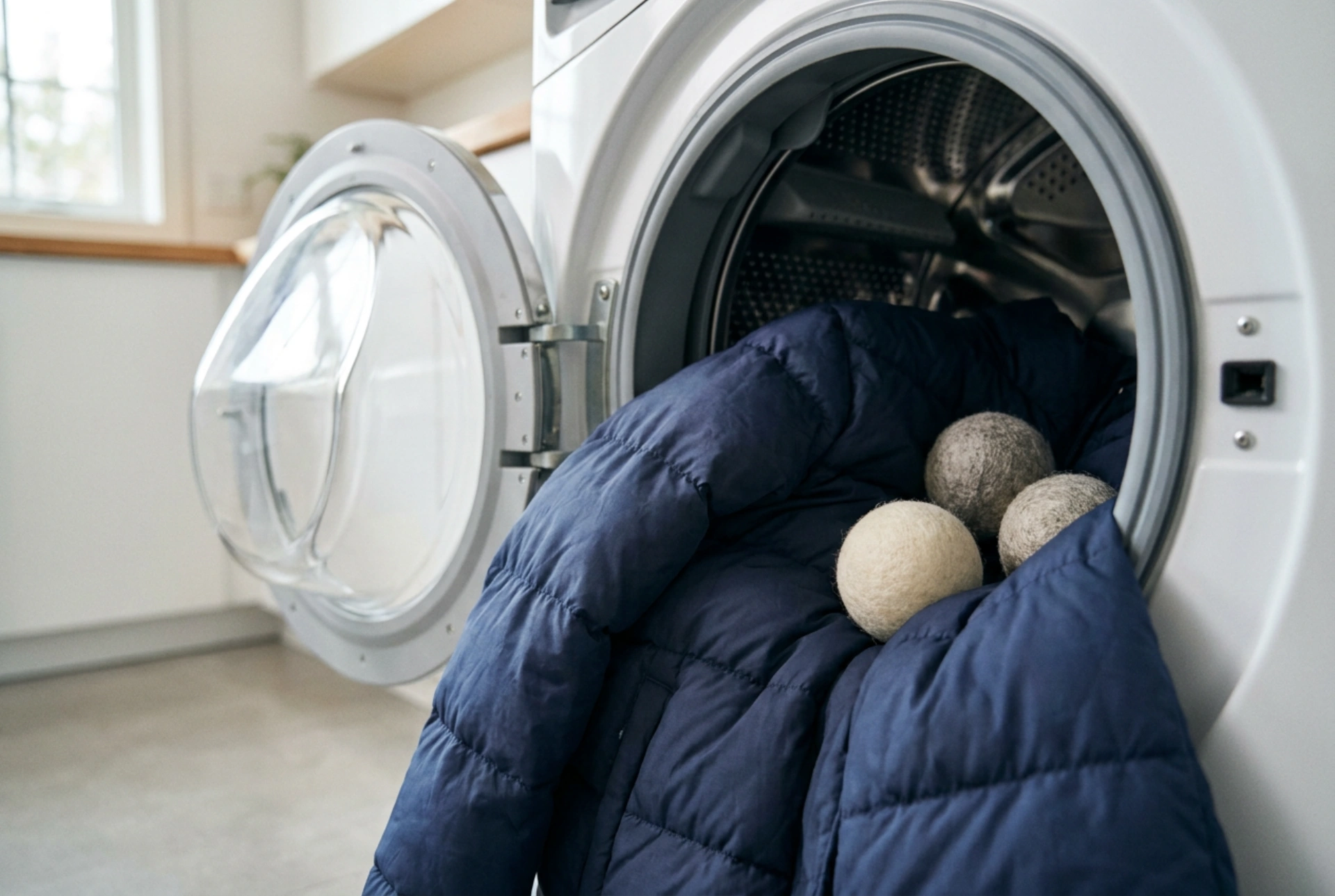
Place the wet jacket in the dryer along with three to four clean wool dryer balls or tennis balls. As the drum rotates, these balls physically strike the jacket, mechanically separating the wet, clumped down clusters and forcing air back into the microscopic pockets. Set the dryer to a low-heat or synthetic cycle (not exceeding 40°C to 50°C). High heat can melt the nylon or polyester shell and scorch the down. The drying process can take several hours; run multiple low-heat cycles rather than one hot cycle. Every 30 minutes, pause the dryer, take the jacket out, give it a vigorous shake, and manually break up any remaining large clumps of down before resuming.
If you do not have a tumble dryer, you must dry the jacket flat on a drying rack in a well-ventilated room. Never hang a wet down jacket, as gravity will pull all the wet, heavy down to the bottom of the baffles, causing permanent clumping. Lay the jacket flat on a clean towel and shake it vigorously every hour, manually massaging and separating the clumps of feathers through the fabric. This process can take up to several days, and success relies entirely on your regular manual intervention.