

Steam generator irons produce up to three times more vapor than conventional steam irons, which often leads to water pooling underneath the ironing surface. Understanding the physical principles of steam permeability and thermodynamics is essential for selecting the right ironing board to eliminate condensation and protect your flooring.
The Physics of Condensation in Ironing
To understand why standard ironing boards fail under steam generators, one must look at the phase transition of water. A steam generator heats water under pressure, releasing dry, highly energized vapor. When this hot vapor hits a cool, solid surface—such as a traditional wooden or solid metal ironing board plate—it undergoes rapid thermal transfer. The vapor loses its latent heat of vaporization to the cooler surface, instantly condensing back into liquid water.
As the ironing session continues, the padding of a standard board becomes saturated. Once the material reaches its maximum absorption capacity, gravity pulls the condensed water downward, resulting in puddles on the floor. To prevent this, the steam must either pass entirely through the board without cooling down, or the board must actively maintain a temperature high enough to prevent condensation.
Essential Structural Features of a Steam-Permeable Board
An effective board for a steam generator must be designed with materials that facilitate rapid vapor transit. Look for the following mechanical and material specifications:
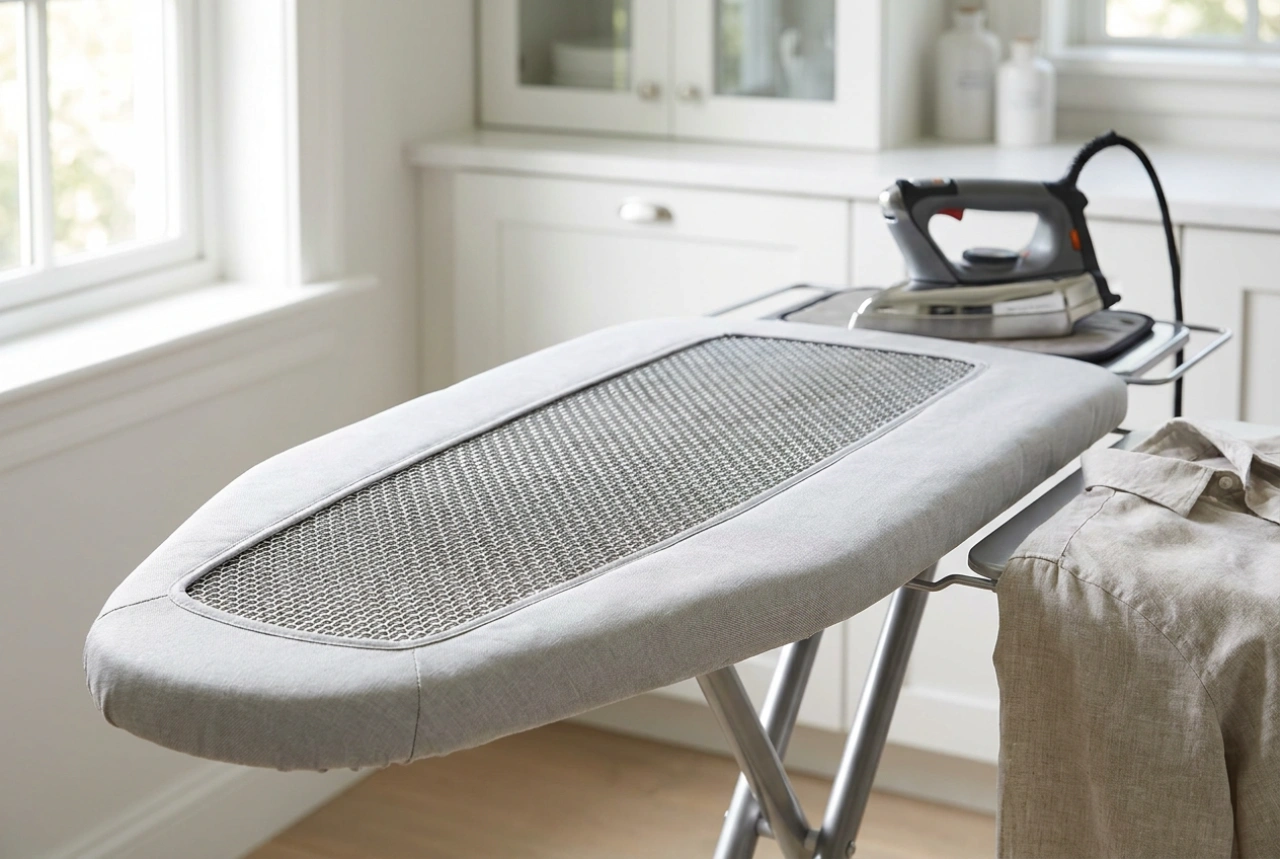
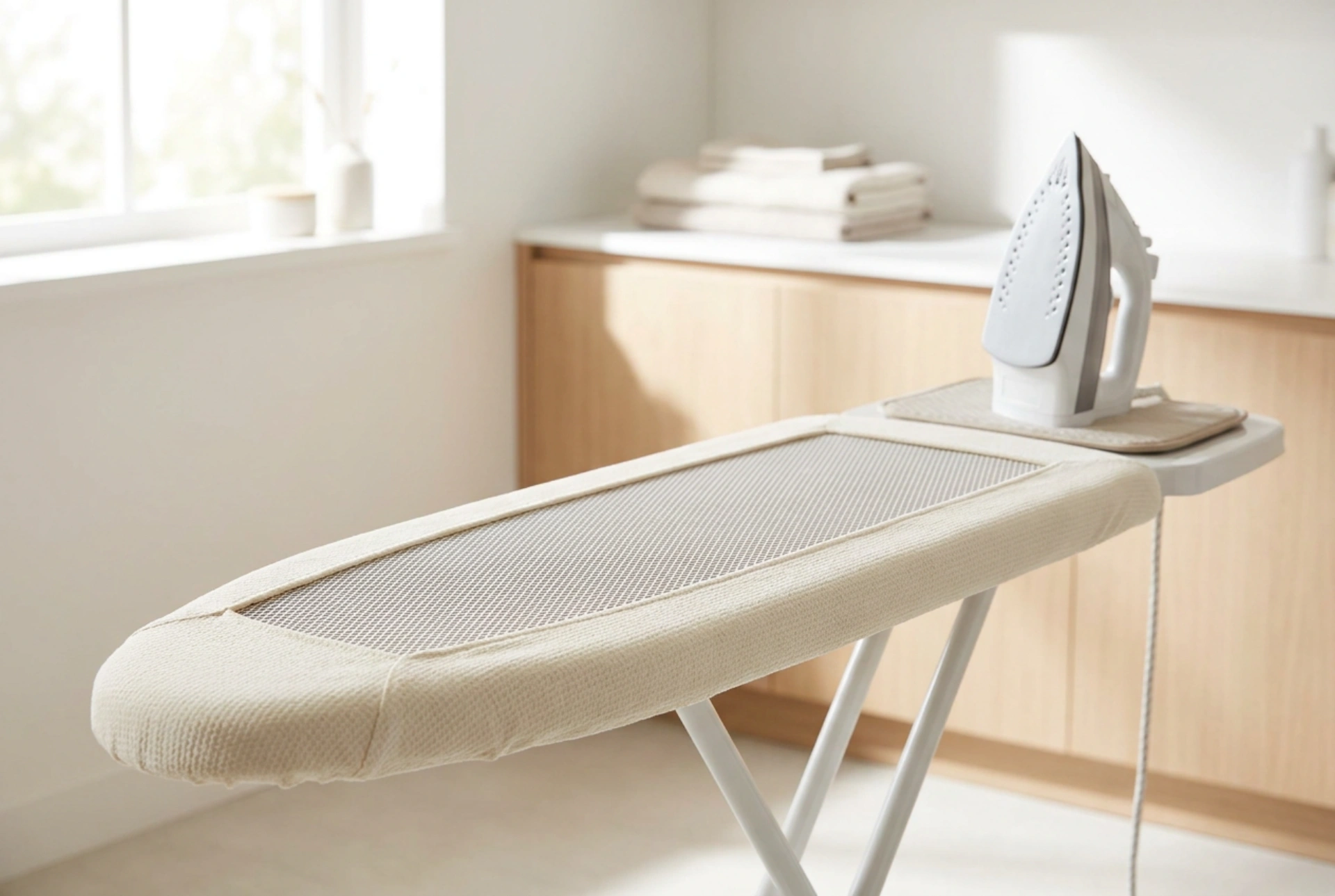
- Expanded Metal Mesh Base: The core of the board must not be solid. A high-quality mesh grid made of treated steel or aluminum allows vapor to escape freely underneath. The wire gauge should be thick enough to support the weight of the steam station without bending, while the openings must be wide enough to prevent air pockets.
- Multi-layered Breathable Cover: The cover must consist of at least three functional layers. The top layer should be durable, high-density cotton which allows steam to penetrate. The middle layer should feature a highly porous foam or needle-felt padding that distributes the steam evenly. The bottom layer must be a breathable textile that does not trap moisture but permits it to pass through to the mesh.
- Heavy-Duty Frame and Wide Platform: Steam generator bases are heavy, weighing up to five kilograms when filled with water. The frame must have a wide stance, non-slip feet, and robust locking mechanisms to withstand the lateral force applied during deep-crease pressing.
Active Ironing Boards: The Thermodynamic Solution
For heavy usage, passive mesh boards may still struggle with the volume of vapor. Active ironing boards resolve this through integrated electromechanical systems that control airflow and temperature:
The Suction Function
By utilizing an integrated electric fan, active boards pull air and steam downward through the fabric and board structure. This vacuum effect serves two purposes. First, it holds the garment flat against the surface, preventing slippage. Second, it forces the steam through the fibers instantly, cooling and drying the fabric before condensation can form inside the board layers.
The Inflation Function
Operating in the opposite direction, the fan blows air upward, creating a pressurized air cushion. This is ideal for delicate materials like silk or wool. It allows the iron to glide over the fabric without pressing the seams or creating shiny patches, relying entirely on the heat and steam to relax the fibers.
Integrated Heating Element
Some premium active boards feature a heated surface. By warming the board to a temperature close to the steam itself, the thermal gradient is minimized. Because the surface is warm, the steam does not undergo rapid cooling, completely eliminating the physical conditions required for condensation to occur.
Operational Techniques to Prevent Moisture Buildup
Even with the correct board, proper technique is vital to manage moisture. Always preheat both the iron and the heated board surface for several minutes before starting. When pressing, apply steam only on the forward stroke to relax the fabric fibers, and use a dry stroke (without steam) on the return path. This dry pass utilizes the residual heat of the soleplate to evaporate any moisture remaining in the garment and the board padding. After ironing, leave the board erected in a well-ventilated room for at least fifteen minutes to allow any retained humidity to evaporate completely.