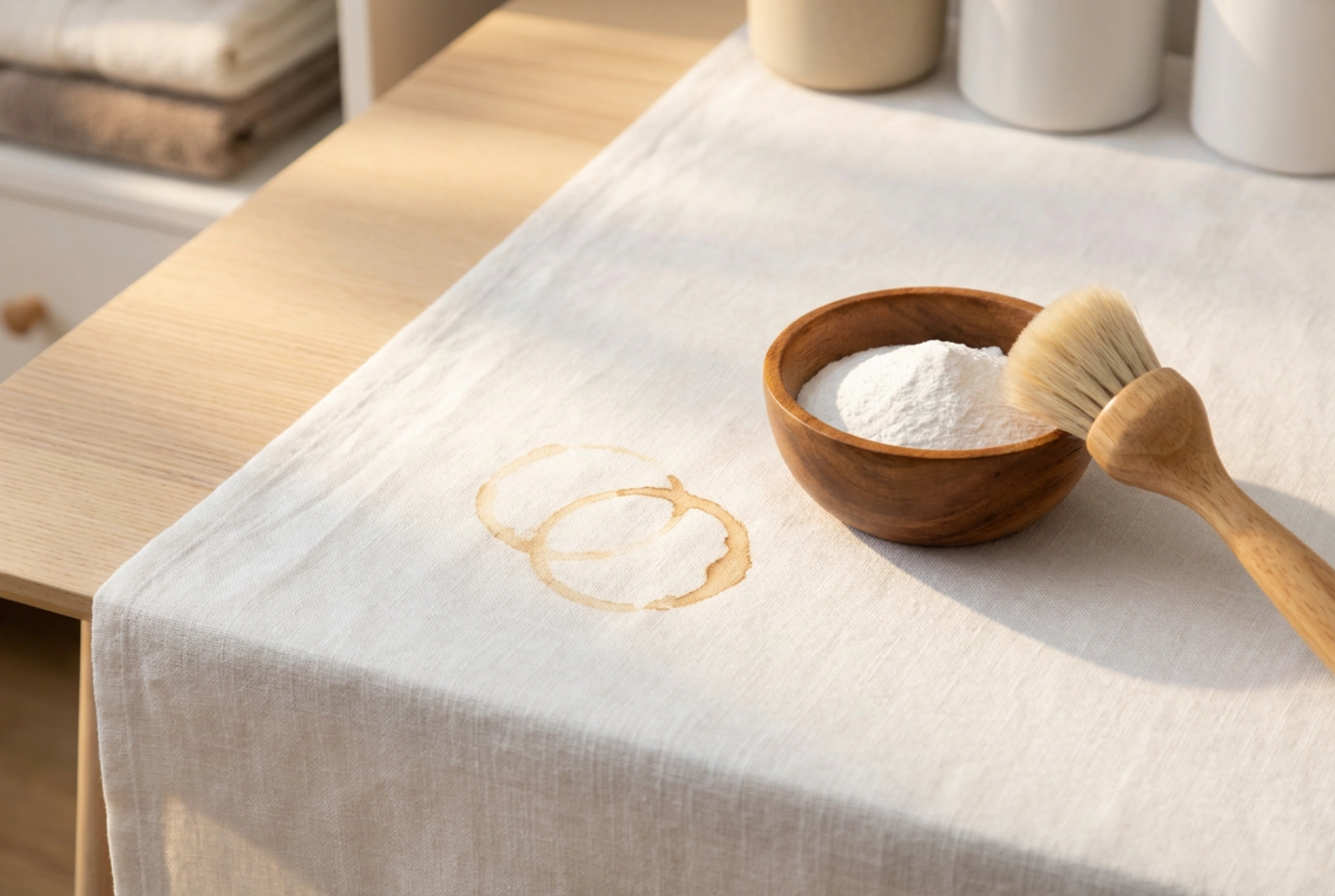


An old coffee stain that has already survived a cycle in the washing machine—and potentially the heat of a tumble dryer or iron—presents a difficult chemical challenge. Once heat is applied to organic pigments, they undergo a process called thermal fixation, binding tightly to the textile fibres.
The Science of a Set Tannin Stain
Coffee contains complex organic compounds called tannins (polyphenolic molecules), alongside lipids and proteins if milk was added. When these tannins are subjected to heat during an unsuccessful washing or drying cycle, they form strong covalent bonds with the hydroxyl groups in natural cellulose fibres like cotton and linen, or amide groups in protein fibres like wool and silk. This process essentially dyes the fabric. To break this bond, you must reverse the chemical fixation through targeted pH manipulation and controlled oxidation, rather than relying on standard laundry detergents which are formulated for fresh, water-soluble soils.
Step 1: Rehydrating and Weakening the Bonds with Mild Acids
Standard detergents are alkaline, which can actually lock tannin stains further into natural fibres. To initiate the removal of a set stain, you must shift the pH to the acidic side. This neutralises the ionic charge of the tannins, weakening their grip on the textile substrate.
- The Solution: Prepare a mixture of equal parts distilled white vinegar (acetic acid) or a 5% citric acid solution and lukewarm water.
- The Application: Submerge the stained area in this acidic solution. Let it soak for 30 to 60 minutes. The acid slowly breaks down the metal-tannin complexes that lock the brown pigments into the weave.
- The Mechanism: Acetic and citric acids act as mild chelating agents, binding to the microscopic mineral ions that hold the organic pigments to the thread.
Step 2: Oxidative Decolourisation Using Oxygen Bleach
Once the tannin bonds are weakened, the remaining brown pigments (chromophores) must be chemically altered so they no longer reflect light as brown. This requires an oxygen-based bleaching agent, such as sodium percarbonate, which is highly effective and safer for fabrics than chlorine-based alternatives.
Dissolve one tablespoon of sodium percarbonate powder in a litre of warm water (ideally between 40°C and 50°C). This temperature is critical: it is warm enough to trigger the release of active oxygen but not hot enough to cause further thermal shrinkage or fiber damage. Immerse the fabric and let it soak for up to four hours. The sodium percarbonate breaks down into sodium carbonate and hydrogen peroxide. The hydrogen peroxide oxidises the double bonds in the pigment molecules, turning them colourless and water-soluble.
Step 3: Capillary Extraction and Mechanical Action
Rubbing a stubborn stain back and forth damages the fabric's physical structure, causing pilling and forcing the pigments deeper into the yarn twist. Instead, employ physical capillary action to draw the loosened particles out of the fabric.
Place a clean, dry, absorbent white cotton cloth or heavy paper towel directly underneath the stain. Working from the reverse side of the fabric, use a soft-bristled brush or a clean sponge saturated with water to gently tap the stain. This physical tapping forces the dissolved coffee particles out of the garment's fibres and directly down into the absorbent backing material. Periodically shift the backing cloth to a clean section to prevent the extracted coffee from re-depositing onto the garment.
Final Rinse and Inspection
Rinse the treated area thoroughly with cold, soft water to remove all traces of the acidic and oxidising agents. Before allowing the garment to dry, inspect the spot under natural light. If a faint shadow remains, repeat the oxygen-bleach soak before drying, as drying the fabric in a dryer or under direct sunlight will permanently seal any remaining pigment residues.