

Maintaining order inside a handbag is more than an aesthetic preference; it directly preserves the structural integrity of the bag and protects sensitive personal items from mechanical friction and chemical damage.
The Physics of Handbag Distortion and Wear
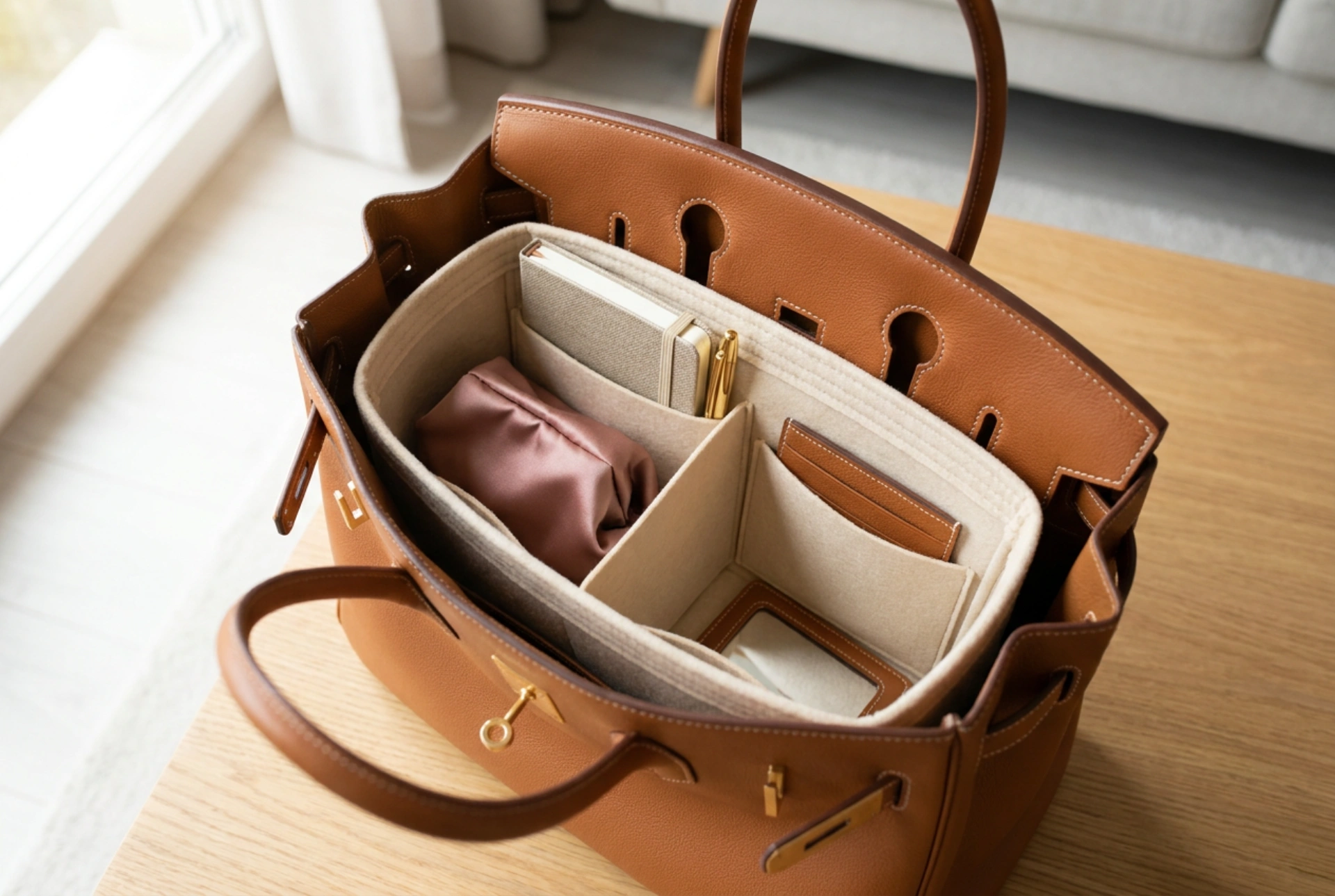
When loose items gather at the bottom of a soft-sided bag, they create localized pressure points. Gravity forces these items to the lowest point, stretching the leather or textile fibers unevenly. Over time, this results in sagging, creasing, and permanent distortion of the handbag's base. An internal organiser acts as a load-bearing skeleton. By distributing the weight of your belongings across a wider surface area, the organiser prevents concentrated stress on the bag's bottom panel and seams. Furthermore, preventing loose items from sliding around eliminates internal abrasion. Hard objects like keys, metal pens, and cosmetic containers can wear down delicate silk, canvas, or microfibre linings, leading to premature thinning and tears.
Choosing the Ideal Material: Felt versus Synthetic Fabrics
The choice of material for a handbag organiser determines its structural support and how it interacts with the bag's lining. Felt is a highly favored material due to its unique mechanical properties. Made from compressed wool or synthetic fibers, felt possesses natural density and rigidity, allowing it to hold its shape even when empty. Its high-friction surface keeps the organiser securely in place inside the handbag, preventing it from shifting during movement. However, wool felt requires dry cleaning or careful hand-washing to avoid shrinkage.
Conversely, lightweight nylon or polyester organisers offer superior chemical resistance and ease of maintenance. These synthetic fabrics are hydrophobic, meaning they do not readily absorb liquid spills, such as cosmetics or ink. A simple wipe with a damp cloth and a mild surfactant is usually sufficient for cleaning. While synthetic organisers are highly flexible and easy to clean, they lack the self-supporting rigidity of thick felt, making them less effective at maintaining the shape of very soft leather handbags.
The Science of Packing: Weight Distribution and Chemical Safety
To maximize the efficiency of an insert, items must be arranged according to basic principles of physics and chemical stability. Placing the heaviest objects, such as a wallet or a portable charger, in the center-bottom compartments lowers the bag's overall center of gravity. This prevents the handbag from tipping over when placed on flat surfaces, reducing the risk of exterior scuffing.
Compartmentalization also prevents harmful chemical interactions. Many cosmetics, hand sanitizers, and perfumes contain volatile organic solvents like ethanol or acetone. If a container leaks directly onto leather or polyurethane linings, these solvents can dissolve the protective top coats, causing permanent discolouration, stickiness, or cracking. Keeping these substances sealed inside designated, easily cleanable compartments within the organiser minimizes the risk of accidental exposure to the handbag itself.
Preventing Material Oxidation and Friction
Metal hardware, such as keys, zippers, and clasps, can oxidise over time when exposed to humidity and air. When loose metal items rub against each other or the bag's interior, they cause micro-scratches and transfer metal dust, which leaves dark, stubborn stains. By utilizing individual slots in an organiser, you physically isolate metallic objects. This simple separation prevents friction-induced wear and slows down the oxidative process by reducing contact with atmospheric moisture trapped in the bag's deeper corners.
Maintenance Protocol for Handbag Organisers
Even inside a closed bag, dust, lint, and organic debris accumulate quickly. To maintain hygiene and protect your belongings, establish a routine cleaning protocol. Remove the organiser completely from the handbag once a month. Invert it over a bin to shake out loose debris, then use a lint roller or a vacuum cleaner with a brush attachment to extract fine dust from the corners. For spot cleaning, use a dilute solution of a neutral surfactant in lukewarm water, applying it with a soft microfibre cloth. Ensure the insert is thoroughly dry before reintroducing it to the handbag to prevent trapping residual moisture, which could encourage mold growth on the surrounding leather.